The IMU is an international non-governmental and non-profit scientific organization. IMU's objectives are:
To promote international cooperation in mathematics.
To support and assist the International Congress of Mathematicians and other international scientific meetings or conferences.
To encourage and support other international mathematical activities considered likely to contribute to the development of mathematical science in any of its aspects, pure, applied, or educational.
International Congress of Mathematicians (ICM) 2026 in Philadelphia, USA| 23–30 July 2026
20th IMU General Assembly in New York City, USA | 20–21 July 2026
At its meeting in Helsinki, Finland, in July 2022, the 19th IMU General Assembly voted to accept the bid from the United States of America to host ICM 2026 and the 20th IMU General Assembly, with Philadelphia as venue for the ICM and New York City for the General Assembly. The official website of the Congress is www.icm2026.org
As announced in IMU News 115, the ICM 2026 Program Committee Chair is Claire Voisin, CNRS, Institut de Mathématiques de Jussieu-Paris Rive Gauche.

International Congress of Mathematicians (ICM) 2022
The International Congress of Mathematicians 2022 (ICM 2022) took place between 6–14 July 2022 as a virtual event. Videos of the virtual ICM 2022 lectures are available to watch on the IMU's YouTube channel.
News from the community
IMU-Simons Research Fellowship Program for Developing Countries
The IMU's Commission for Developing Countries is proud to announce its new grant program the IMU-Simons Research Fellowship Program for Developing Countries, which is fully funded by the Simons Foundation as part of its Targeted Grants to Institutes scheme.

IMU Reserve Fund
As decided at the 19th IMU General Assembly, an IMU Reserve Fund has been established (AO CL 24/2022) to assist Members whose dues are in arrears due to temporary extreme, adverse circumstances. The IMU accepts contributions to the fund from countries, organizations, and individuals. Further details are outlined in the regulations governing the fund.
IMU Executive Committee Meeting 2024
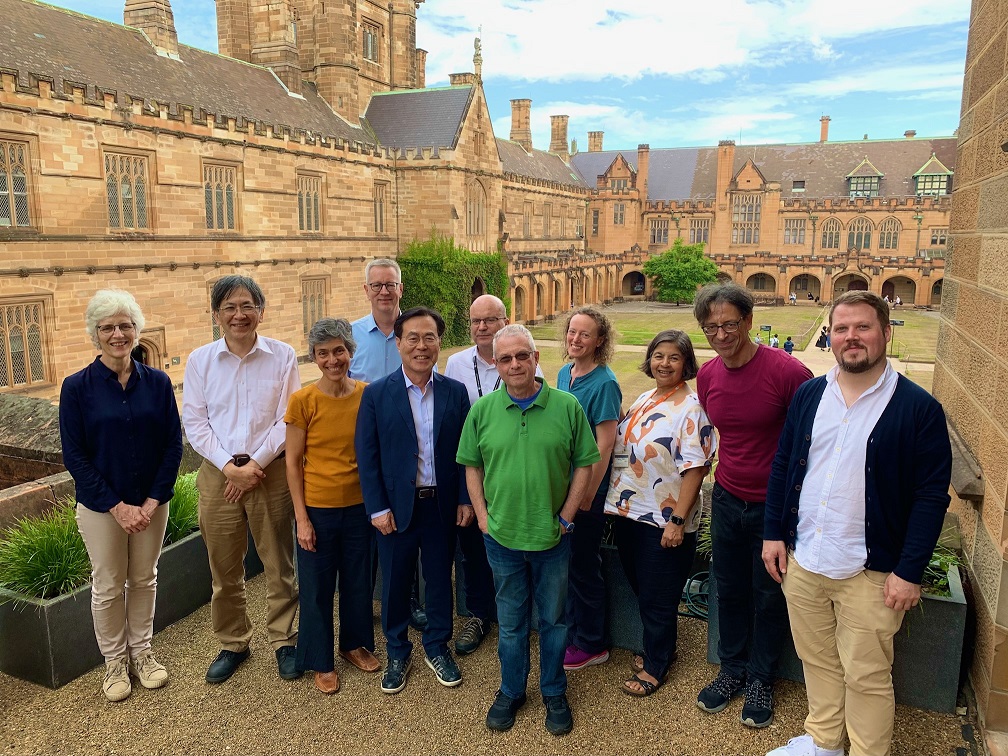
The IMU Executive Committee held its annual meeting over March 23-24, 2024 in Sydney Australia. The meeting was hosted by the Sydney Mathematical Research Institute (SMRI).

Abel Prize Laureate 2024 Announced
The Norwegian Academy of Science and Letters has announced Michel Talagrand (Centre national de la recherche scientifique (CNRS), Paris, France) as the recipient of the Abel Prize for 2024.

Crafoord Prize in Mathematics
ICM 2026 Program Committee Chair Claire Voisin (CNRS, Institut de Mathématiques de Jussieu-Paris Rive Gauche) has been awarded the Crafoord Prize in Mathematics 2024 by the Royal Swedish Academy of Sciences. You can watch the prize video on YouTube.

2024 Ramanujan Prize Nominations
Nominations for the 2024 ICTP-IMU Ramanujan Prize are now open. The deadline for receipt of nominations is 1 February 2024. The Ramanujan Prize for outstanding, young mathematicians from developing countries has been awarded annually since 2005 and is administered jointly by the ICTP and IMU.
Mathematical Congress of the Americas 2025
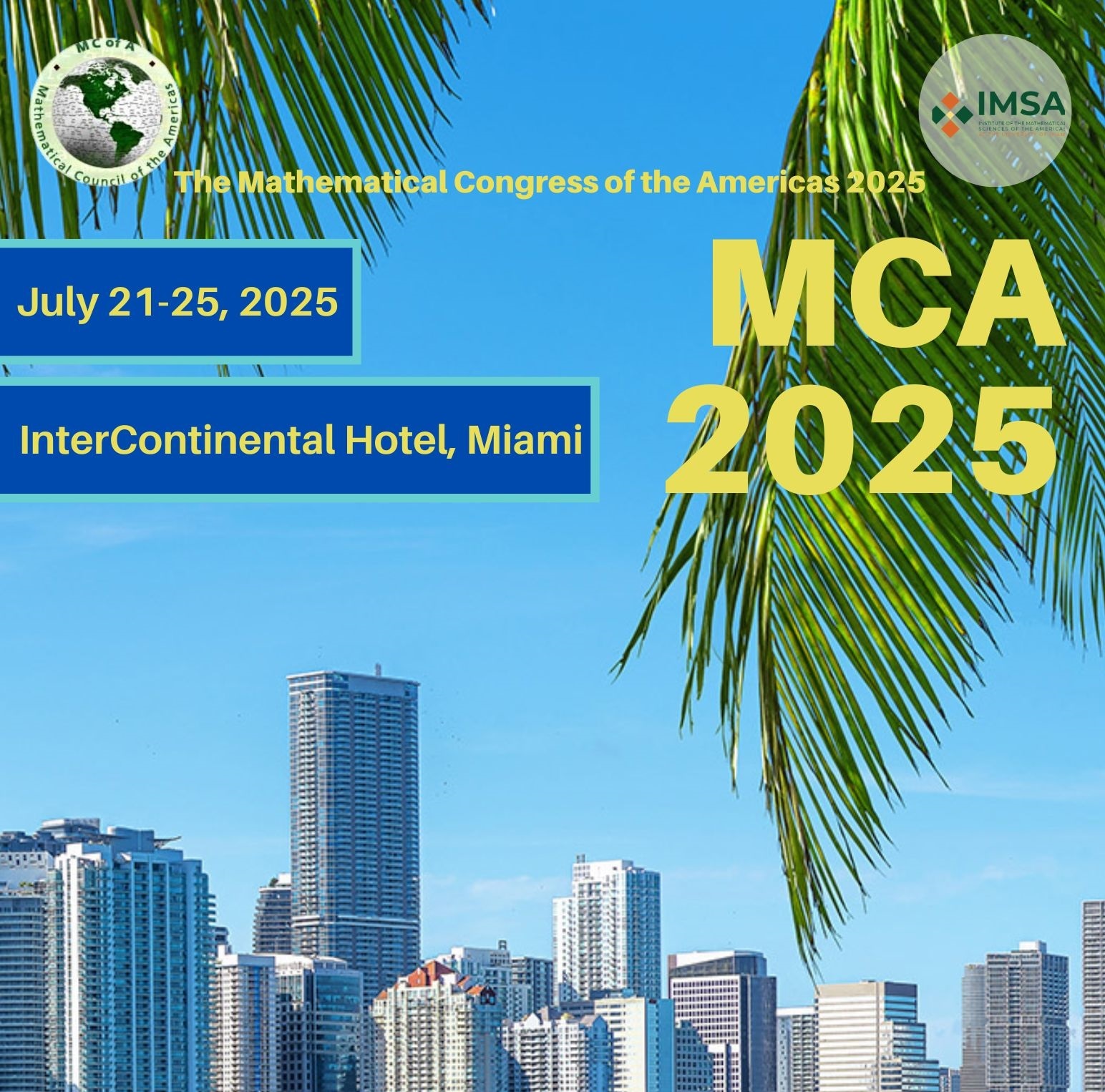
The Mathematical Congress of the Americas (MCA) 2025 will take place over 21-25 July 2025 in Miami, USA. Further information can be found via the congress website www.mca2025.org.

2023 Tate Medal
Mathematical Physicist and CDC Member Mahouton Norbert Hounkonnou selected as the winner of the 2023 Tate Medal for International Leadership in Physics by the American Institute of Physics (AIP) in March 2021.
International Day of Mathematics
The fifth edition of the International Day of Mathematics (IDM) takes place on March 14, 2024. The theme for 2024 is Playing with Math, celebrating mathematical games, puzzles and other entertaining activities, as well as "playing" with mathematics itself - exploring, experimenting, and discovering!
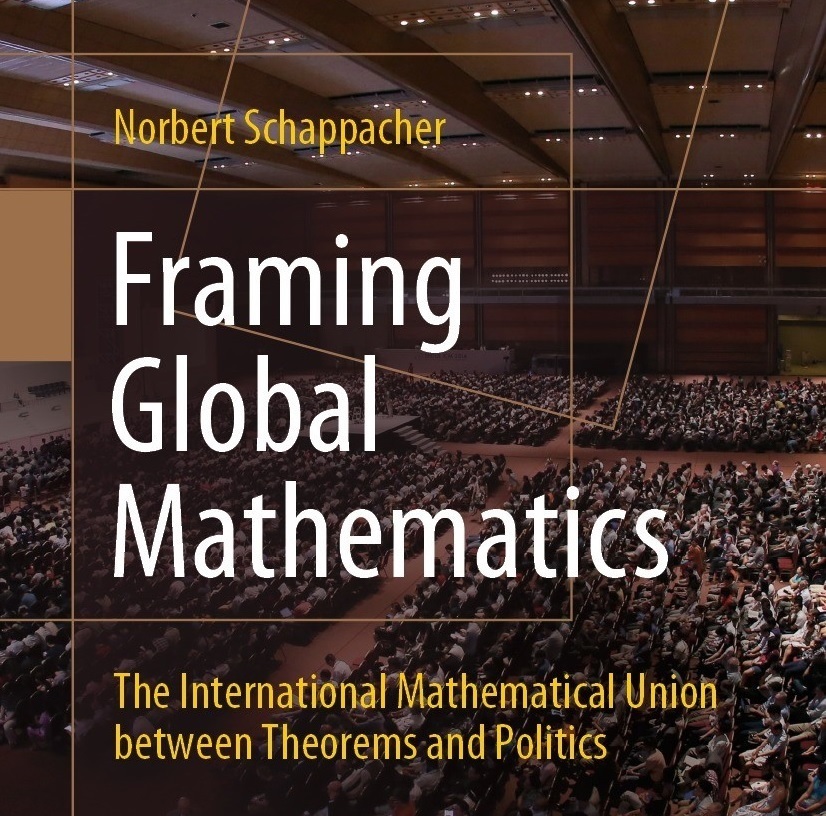
New book on the history of the IMU!
The book "Framing Global Mathematics: The International Mathematical Union between Theorems and Politics” by Norbert Schappacher on the history of the IMU has now been published (Springer, Cham, 2022). The IMU solicited the writing of the book to mark the occasion of the centennial of the founding of the IMU in 1920. It is available in open access and can be freely downloaded here.
Ad hoc Committee on Permissions
The IMU Executive Committee has created an ad hoc Committee on Permissions (CoP) to advise the IMU on a negotiating strategy regarding open access. Further information is available here.


Carlos E. Kenig: The International Mathematical Union (IMU) at 100
IMU President Carlos E. Kenig's article The International Mathematical Union (IMU) at 100 appeared in Notices of the American Mathematical Society Volume 67, Number 3, pages 404–407 published in March 2020.
The article is posted here with the permission of the American Mathematical Society.
Further information on Notices of the AMS can be found at https://www.ams.org/notices.
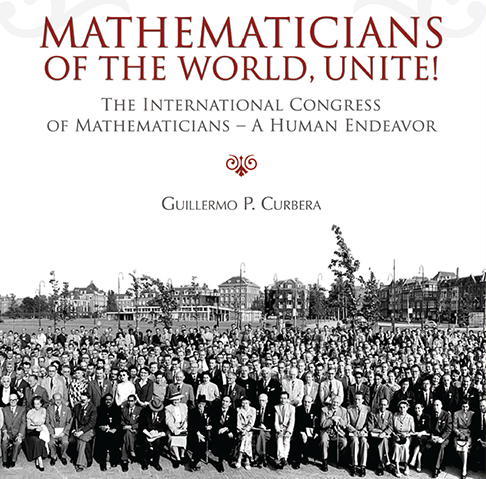
Illustrated history of the ICM
The book "Mathematicians of the World, Unite!" by G. Curbera is now electronically available on the IMU website. For more information click here


Pending Business for IMU Adhering Organizations

Updated Contact Information
IMU members are requested to check their contact information, see AO CL 1/2024.
-
Date

IMU Membership Dues
IMU members are requested to settle current invoices and any dues in arrears in due time.
-
Date
-
Due