
ICMI Newsletter - June 2026
Editors:
Jean-Luc Dorier (ICMI Secretary-General)
Jinfa Cai (ICMI Vice President)
Lena Koch (ICMI Administrative Manager)
Publishing dates:
March 15, June 15, September 15, December 15
Editorial
– A Research Mathematician in the ICMI Executive Committee - From the desk of Paolo Piccione, IMU EC Member and ICMI Liaison (2019-2026), University of São Paulo (Brazil) and Great Bay University (China)
Over the last eight years, I have had the privilege of serving as the liaison representative of the IMU Executive Committee to the ICMI Executive Committee. During this period, I participated in several ICMI EC meetings and activities, including the meetings in Sydney in 2024, Berlin in 2025, and China in 2026, as well as online meetings and discussions related to ICMI Studies, ICME congresses, outreach activities, affiliate organizations, and interactions between mathematics and mathematics education.
As a research mathematician working primarily in Differential Geometry and Geometric Analysis, my participation in the ICMI EC naturally came from a somewhat unusual perspective. I have always seen myself, in a certain sense, as an outsider in an environment composed mostly of distinguished mathematics educators and researchers in mathematics education. Precisely because of this, the experience has been particularly enriching for me.
Before joining the ICMI EC meetings, my contact with mathematics education had mainly been through activities related to mathematical olympiads, teacher education, outreach initiatives, and broader discussions within mathematical societies. I certainly knew of the enormous importance of mathematics education, but participating directly in the work of ICMI allowed me to appreciate much more deeply the complexity, breadth, and international impact of this field.
One aspect that impressed me from the beginning was the remarkable diversity of perspectives represented within the ICMI EC. The discussions involve not only scientific and academic questions but also cultural, linguistic, social, and political dimensions connected with mathematics education around the world. Topics such as capacity building in developing countries, support for regional communities, language diversity, teacher education, international cooperation, and the dissemination of mathematical knowledge appeared repeatedly in our meetings and discussions.
I was also impressed by the extraordinary amount of work carried out by the Commission. The preparation of the International Congresses on Mathematical Education (ICMEs), the coordination of ICMI Studies, the support for affiliate organizations, the CANP initiatives, the AMOR project, the Klein project, and many other activities require an enormous collective effort and a truly international vision.
Throughout these years, I always felt extremely welcome in the ICMI EC. Although, as liaison representative from the IMU EC, I did not have voting rights, I never had the feeling of being merely an observer. On the contrary, all members of the Committee consistently made me feel at ease and encouraged me to participate actively in discussions. I was always treated with generosity, kindness, and genuine collegiality.
I am particularly grateful for the friendship and openness shown by the ICMI Presidents, Secretaries-General, EC members, and staff members with whom I interacted during these years. I learned a great deal from them, not only about mathematics education itself but also about the importance of dialogue between different mathematical communities.
For me personally, one of the most valuable aspects of this experience was precisely this opportunity for dialogue between research mathematics and mathematics education. The two communities sometimes evolve somewhat separately, despite sharing a common mathematical culture and many common goals. ICMI plays a fundamental role in building bridges between these worlds, and participating in its activities allowed me to appreciate much better both the challenges and the possibilities involved in this interaction.
I also found it especially inspiring to observe how strongly the members of the ICMI EC care about inclusion, international representation, and support for developing regions. The discussions were always guided by a genuine concern for the global mathematical community and for expanding opportunities for mathematics education in different parts of the world.
As my second and final term as liaison representative comes to an end, I would like once again to express my sincere gratitude to all present and past members of the ICMI Executive Committee for their kindness, generosity, collegiality, and friendship throughout these years. It was a true privilege to accompany the work of such a dedicated and thoughtful international community. I leave this experience with a much deeper appreciation for the richness, complexity, and importance of mathematics education and with renewed admiration for the remarkable work carried out by ICMI around the world. The challenges ahead are certainly significant, involving education, inclusion, international cooperation, technological change, and the strengthening of mathematical communities in many different contexts, but so is the importance of this mission. I would therefore like to wish continued success to ICMI and to all those who contribute to its activities and leadership. I am certain that the Commission will continue to play a fundamental role in fostering dialogue, collaboration, and progress in mathematics education internationally.
Finally, I would also like to wish all the best to the next IMU liaison representative to the ICMI EC. I sincerely hope that he or she will have the same positive, enriching, and welcoming experience that I had the privilege to enjoy during these years.
Call 2028 ICMI Awards
Call for the 2028 ICMI Awards:
- Felix Klein Award for lifelong achievement in mathematics education research
- Hans Freudenthal Award for a major program of research on mathematics education
- Emma Castelnuovo Award for outstanding achievements in the practice of mathematics education
Deadline for nominations for the three awards is: November 30, 2026.
Call to host ICME-17 (2032)
Call for intention to bid to organize and host ICME-17 in 2032
ICME is the largest international conference on mathematics education. It is held every leap year and it is the meeting point for mathematics educators, curriculum developers, mathematicians, researchers in mathematics education, teachers, teacher educators, and resource producers.
The three ICMI Awards to recognize outstanding achievement in mathematics education are presented at the ICME Opening Ceremony. The Felix Klein Award and Hans Freudenthal Award were established in 2000 and first presented in 2003. While the Felix Klein Award honors lifetime achievement in mathematics education research, the Hans Freudenthal Award instead recognizes a major cumulative program of research. The Emma Castelnuovo Award, first presented in 2016, acknowledges outstanding achievements in the practice of mathematics education.
On the day before the ICME Opening Ceremony, the ICMI hosts a one-day meeting of its General Assembly (GA). Recent ICMEs have also featured a separate Early Researcher Day, usually held before the Congress begins.
ICMI is hereby inviting the ICMI community (ICMI country representatives, national/regional mathematics education and mathematics organizations, and academic institutions) to consider the possibility of organizing and hosting the International Congress on Mathematical Education in July/August 2032.
Please note: Applications by convention centers, tourist agencies, or any other commercial organization will not be considered.
ICME-15 Proceedings
ICME-15 proceedings are now available online
We are delighted to announce that the proceedings of ICME-15 are now available online open access on the ICMI website here.
Thank you to all those who made that possible.
Obituary for Yves Chevallard
In Memoriam – Obituary for Yves Chevallard, 1946 – 2026
Michèle Artigue, Marianna Bosch, Jean-Luc Dorier and Carl Winsløw
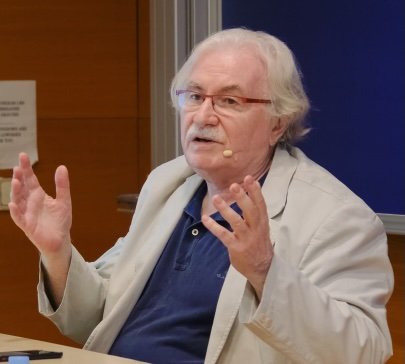
Yves Chevallard in 2022
The educational community is in mourning. Yves Chevallard passed away on March 16, 2026. In him we have lost the third pillar of what is often referred to as the French tradition of mathematics education, following Guy Brousseau and Gérard Vergnaud.
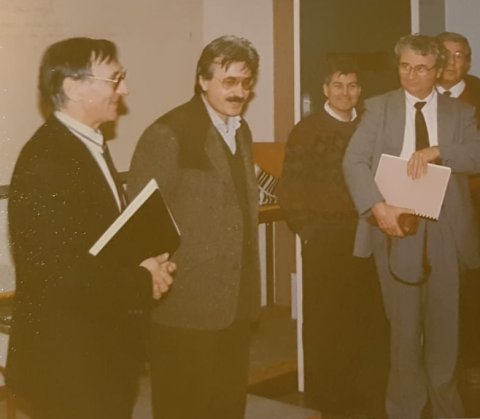
A very rare picture taken around 1990 with Brousseau, Chevallard, and Vergnaud
Born in Tunisia in 1946, Yves Chevallard spent his childhood near Marseille. After his studies at the École Normale Supérieure in Paris, he was recruited by the University of Aix-Marseille, where he soon began to take an interest in the teaching of mathematics. He met Guy Brousseau in the 1970s and became involved in mathematics education research, which was then in its infancy. He immediately embraced Guy Brousseau’s project to establish the didactics of mathematics as a true science, with both its fundamental and applied dimensions, viewing it as an experimental epistemology of mathematics. He quickly became one of the key figures in this development. Starting with the very first summer school on the Didactics of Mathematics in 1980, he presented the foundations of what would become known as the Theory of Didactic Transposition, refusing to view the knowledge taught as mere simplifications of scholarly mathematical knowledge and questioning the constraints to which it was subjected and the multiple transformations it underwent. This was a radically new vision at the time, contested by some mathematicians, but it quickly gained acceptance.
A few years later in 1986, at the first Franco-German Symposium on the Didactics of Mathematics and Computer Science in a paper entitled ‘Outline of a formal theory of the didactic,’ he placed this initial approach within a broader perspective: that of an anthropology of the didactic. This marked the emergence of what is now known as the Anthropological Theory of the Didactic (ATD), used by a large number of researchers worldwide and recognized as a major theory in mathematics education. From then on, Yves worked tirelessly to develop this theory until his very last breath. This important work was recognized in 2009 with the prestigious Hans Freudenthal Medal from the ICMI as well as three honorary doctorates from Liège University in Belgium (2010), the University of Córdoba in Argentina (2013), and the University of Santiago de Chile (2020). For more bibliographical details, we refer to Wozniak, Bosch, and Artaud (2006).
The initial developments of the ATD in the 1990s were closely linked to Yves Chevallard’s collaborations with French- and Spanish-speaking researchers through PhD courses and supervisions. The Marseille group of teachers, teacher educators, and researchers was quickly expanded to Barcelona and beyond, with tentacles in different universities in Spain, Argentina, Brazil, Chile, and Mexico. The publication of the book “Estudiar matemáticas: el eslabón perdido entre la enseñanza y el aprendizaje,” co-authored with Marianna Bosch and Josep Gascón, greatly contributed to this expansion. The fact that ATD conferences have alternated between Spain and France since 2005 demonstrates the transnational nature of the ATD research community.
Chevallard mastered the English language impeccably and was fluent in Spanish, but his native French was naturally closer to his heart. Indeed, most of his scientific works were published in French and are striking examples of the precision and stylistic beauty that this language lends to science, literature, and philosophy. As mentioned, his ideas were rapidly disseminated across the Spanish-speaking world, which is linguistically close to the French one. In contrast, despite early efforts such as Kang and Kilpatrick (1992), Chevallard’s ideas remained much less accessible to researchers restricted to English until the publication of the highly cited paper by Barbé, Bosch, Espinoza, and Gascón (2005). His plenary address at the 2005 CERME4 European conference, as well as the increasing international participation in the ATD congresses, shows that his work began to attract scholars from a wider range of countries. For instance, ATD basics have been compulsory content in the numerous master’s and PhD courses in Didactics of Mathematics at the University of Copenhagen since 2004. Over 50 doctoral students from countries in Europe, the Americas, and Asia have attended these courses, and many have adopted ATD elements in their work. Papers firmly grounded in ATD have increasingly appeared in English-language conferences and journals. Consequently, Chevallard’s research program has grown far beyond the Francophone and Hispanophone spheres. Currently, strong teams of senior researchers working within ATD can be found in countries such as Croatia, Canada, Denmark, Germany, Indonesia, Japan, Norway, the Philippines, Portugal, Sweden, and Switzerland, to name but a few. The international visibility of Chevallard’s work has also been enhanced through the unit devoted to him in the ICMI AMOR project (Bosch, 2023).
Over the years, ATD has evolved, incorporating new concepts and research methods, drawing on new fields of experience beyond mathematics, and adapting to the diversity of its users’ cultures. It provides an exceptional approach to combining the institutional dimension of teaching and learning processes with their more specific epistemological and cognitive dimensions. Drawing on the principles of the social sciences, it offers productive linguistic and symbolic elements that allow researchers to detach from prevailing institutional perspectives on teaching and learning processes while maintaining a strong empirical basis.
Yves Chevallard has transformed Guy Brousseau’s initial project of establishing didactics of mathematics as a true science into the more ambitious venture of creating a science of the didactic. This is a science capable of addressing all the disciplinary and interdisciplinary specificities of study processes without taking the disciplinary division for granted. It is a self-reflexive science that reflects on its own development, institutional relativity, and epistemological roots.
However, Yves Chevallard was not merely a passionate researcher. He was always involved in teacher professional development, deeply committed to elevating the teaching profession above the semi-professional status it all too often still holds in many countries, and worked tirelessly towards this goal. The foundation of a scientific discipline to support this profession forms part of the raison d’être of didactics.
Yves Chevallard’s work has steadily grown in prominence and utilization within the international community of research in mathematics education and other educational fields, including vocational training. The ATD community is growing accordingly and contributing to the development of this research framework. Although he was certainly not the only one, Yves Chevallard was the key architect of its major advances to date. He was also the person who fostered the cohesion of this community. He leaves behind an immense scientific legacy that will continue to inspire educational research. The best tribute we can pay him is to keep it alive and make it flourish.
References
Barbé, J., Bosch, M., Espinoza, L., & Gascón, J. (2005). Didactic restrictions on teachers practice – the case of limits of functions in Spanish high schools. Educational Studies in Mathematics, 59, 235–268.
Bosch, M. (2023). ICMI AMOR Project – Yves Chevallard Unit – The Anthropological Theory of the Didactic. https://www.mathunion.org/icmi/awards/amor/yves-chevallard-unit.
Chevallard, Y., Bosch, M., & Gascón, J. (1997). Estudiar matemáticas: el eslabón perdido entre la enseñanza y el aprendizaje. ICE- Horsori.
Kang, W., & Kilpatrick J. (1992). Didactic transposition in mathematics textbooks. For the learning of mathematics, 12(1), 2–7.
Wozniak, F., Bosch, M., & Artaud, M. (2006). The Anthropological Theory of the Didactic. https://ardm.eu/who-are-we/yves-chevallard-english/
ICME-16, July 2028, Prague
 Preparations for ICME-16 continue to progress steadily, and many important aspects of the Congress are now entering a more active phase.
The Topic Study Group (TSG) teams are currently working intensively on their discussion papers, which will provide the academic framework for the work of each group during the Congress. These papers are an important part of the preparation process and will also support prospective participants in identifying the TSGs most relevant to their interests. Information about participation in TSGs, together with the First Announcement of the Congress, is expected to be available in October 2026. We encourage colleagues to consult the Congress website regularly as new information is being added continuously.
At the same time, substantial organizational work is underway behind the scenes. In cooperation with the Guarant agency, we are currently developing and testing the Conftool system that will support submissions, registration, reviewing processes, and other key aspects of Congress management. Considerable attention is being devoted to ensuring that the system will provide participants with a smooth and user-friendly experience.
Another important part of the preparations concerns the Regional Focus Program. Members of the organizing teams representing 14 countries and regions are actively collaborating on the development of their programs. Their work will bring valuable perspectives on mathematics education from different parts of the world and contribute to the rich international character of ICME-16. We are very grateful for their commitment and enthusiasm, which will undoubtedly help create an inspiring and memorable experience for all participants.
The International Program Committee and the Local Organizing Committee remain in close cooperation on both the scientific and organizational dimensions of the Congress. We are pleased with the progress achieved so far and look forward to sharing further updates with the mathematics education community in the coming months.
Prof. Naďa Vondrová
Convenor ICME-16
RELME 39
XXXIX Latin American Meeting on Mathematics Education (RELME 39)
In December 2025, the University of Havana and the Latin American Committee on Mathematics Education (CLAME) convened the XXXIX Latin American Meeting on Mathematics Education (RELME 39), to be held in Havana, Cuba, from July 20 to 24, 2026. Given the current difficult conditions in Cuba and under the premise of preserving the excellence that distinguishes our Latin American academic and scientific gathering, it was decided to change the venue, and RELME 39 will finally take place at the Universidad Autónoma de Santo Domingo, Dominican Republic.
This event, organized annually in different cities across the Americas, fosters interaction among teachers, researchers, mathematics teacher educators, undergraduate and graduate students, and educational authorities from Ibero-America — that is, a community committed to improving the teaching and learning of mathematics at various educational levels and fields.
In this way, RELMEs have become an important annual academic gathering that promotes the development of mathematics education in the region through the exchange of experiences and educational practices and the presentation of research and theoretical and methodological proposals as well as reflections on teacher profiles and training.
Academic activities will be carried out through plenary lectures, special lectures, short courses, discussion groups, workshops, brief communications, research reports, posters, and other working modalities.
Each RELME revisits, expands, and deepens its mission of guiding actions for the benefit of school systems in Latin America under the premise of preserving the diversity of ideas and perspectives, the plurality of educational traditions of member countries, and the cultural and social visions that enrich our professional thought and practice from within Latin America.
Respectful of tradition and honoring the legacy of past RELMEs, while looking with determination toward the future of mathematics education in the region, the theme chosen to guide this edition of RELME is: Mathematics Education: Dialoguing from our Latin American roots toward a shared future of scientific sovereignty.
News from Affiliate Organizations
ADiMA
News from African Association for Mathematics Didactic (ADiMA)
By Faiza Chellougui, president of ADIMA
First Announcement
5th Conference of the African Association for Mathematics Didactic (ADiMA-5)
African Association for Mathematics Didactic (ADiMA) proudly announces the launch of the 5th ADiMA Conference (ADiMA-5)
Dates: November 15–19, 2027 | Location: Libreville, Gabon
Theme: Teaching Mathematics in Today’s Africa: Between Issues, Challenges, Innovations, and Commitments for the Future
ADiMA-5 aims to explore mathematics education in Africa by addressing current challenges, innovative approaches, and future commitments. Drawing on research in mathematics didactics, the conference will highlight teaching practices, obstacles, innovations, and African-specific perspectives.
Key questions include:
• How can teacher training reflect the diversity of African contexts?
• Which didactic localized innovations can make mathematics teaching more equitable and relevant?
• How to integrate digital technologies and AI critically into practice teaching?
• How does multilingualism affect concept understanding, and what pedagogical responses are effective?
• How to design curricula that balance scientific rigor, social relevance, and cultural grounding?
• What educational measures can reduce inequalities while respecting linguistic and political specificities?
Structure: The conference is organized around six working groups (WG):
1. Teaching practices and initial and continuing teacher training devices
2. Different forms of mathematical thinking
3. Mathematics teaching in the digital & AI era
4. Mathematics teaching in special contexts
5. Postsecondary mathematics teaching
6. Language, historical, & cultural dimensions in the teaching and learning of mathematics
The ADiMA executive board, the ADiMA5 scientific committee, and local organizing committee are working to ensure the success of this international scientific event.
Save the dates: November 15-19, 2027
Website in progress.
For more information, contact:
Faïza Chellougui (President of ADiMA) email
Imed Kilani (Chair of the Scientific Committee) email;
Jeanne Koudogbo (Vice-Chair of the Scientific Committee) email;
Isabelle Ngningone Eya (LOC Chair) email
AFRICMA
News from the African Mathematical Education Association (AFRICMA)
By Mary A. Ochieng, President of AFRICMA
AFRICMA EC
One of the resolutions of the AFRICMA Executive Committee meeting that was held on March 10, 2026 was to have research webinars to provide mathematics educators on the continent with opportunities to share their research, receive constructive feedback, and learn from the work of their peers. Dr. Mariam Makramalla will coordinate the AFRICMA research webinars.
CANP 4 ACTIVITIES
After the CANP 4 AI virtual workshop held last year, plans for similar workshops in Kenya, Uganda, and Rwanda are still in place and will be implemented by the end of the year. In addition to its workshops, CANP 4 launched the East African research webinar series in line with the AFRICMA Executive Committee’s resolution, with the first webinar held on April 29, 2026. It was attended by about 20 participants. Dr. Simon Karuku from the University of Embu, Kenya presented “Advancing the Scholarship of Teaching and Learning in Mathematics Education: Effects of Innovative Pedagogies on Pre-Service Teachers.”
The presentation highlighted findings from a multi-institutional scholarship of teaching and learning project examining the effects of innovative pedagogies on pre-service teachers across three African universities. The project aims to improve engagement, understanding, and outcomes in large class contexts. The study applied a quasi-experimental design comparing control and experimental groups of students, with data collected on student engagement, participation, and learning outcomes.
IACME / CIAEM
News from the Inter-American Committee of Mathematics Education (IACME / CIAEM)
By Angel Ruiz, President of IACME / CIAEM
Confirmed guest speakers for the XVII Inter-American Conference of Mathematics Education can be viewed at https://xvii.ciaem-iacme.org/index.php/oradores-invitados
Below, you can see the Plenary Speakers.
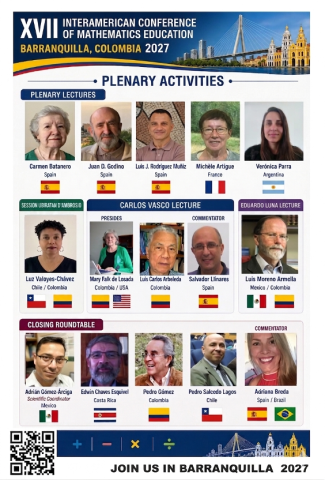
XVII CIAEM Plenary Speakers. Designed by A. Ruiz with the support of Gemini AI.
XVII CIAEM will be held from June 27 to July 3, 2027 in Barranquilla, Colombia.
The period for submitting proposals is September 1 to November 30, 2026. Papers will be accepted in Spanish, Portuguese, and English.
ERME
News from the European Society for Research in Mathematics Education (ERME)
By Frode Rønning, President of ERME
The 15th Congress of the European Society for Research in Mathematics Education, CERME15, will be organized by Comenius University in Bratislava, Slovakia, February 8-12, 2027 with YERME Day (for Young Researchers) to be held on February 7-8. The first announcement can be found on the main website of the congress, https://www.cerme15.org/, as well as on the ERME site, http://erme.site/wp-content/uploads/2026/03/First_announcement.pdf
The deadline for submitting contributions is September 15, 2026.
In preparation for CERME15, YERME (Young European Researchers in Mathematics Education) have very recently (June 11) organized an online event to inform newcomers about ERME and CERME. YERME will also organize a summer school (YESS) in August 2026 (https://www.uu.nl/en/research/yess14-august-2026) at Utrecht University, The Netherlands.
ISDDE
News from International Society for Design and Development in Education (ISDDE)
By Christian Schunn, Journal Committee chair for ISDDE
ISDDE 2026
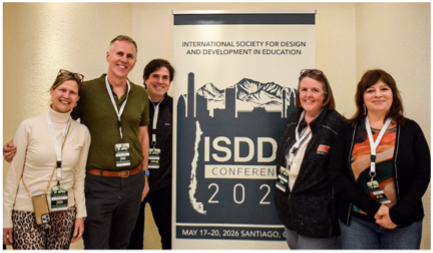
The International Society for Design and Development in Education held its annual conference in Santiago, Chile, in May 2026, hosted by the Center for Mathematical Modeling at the University of Chile and organized by the conference chair, Salomé Martinez. The conference theme was designing for and with educators and stakeholders. Keynote plenaries consisted of interdisciplinary and international panels on the conference theme, the role of design in teaching and learning, and the design and use of chatbots in education. The location of the 2027 conference in Warsaw, Poland was announced, with dates of May 17–20 and the theme Design for Awe.
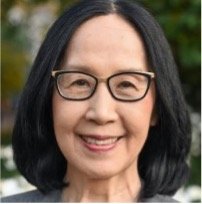
At the annual conference, the prize winner for the society’s Eddy Award is typically announced. At the 2026 conference, the lifetime contribution prize was announced as Dr. Ohkee Lee, Professor of Education at New York University. Dr. Lee received the 2026 Eddie in recognition for more than three decades of work at the intersection of research, policy, and design in which she has championed science and language learning for all students, particularly multilingual learners. Dr. Lee’s impact stretches from the classroom to the highest levels of policy. As a leader of the Next Generation Science Standards (NGSS) Diversity and Equity Team, she ensured that ‘all standards’ truly meant ‘all students.’ The work of her Science and Integrated Language (SAIL) project has included designing instructional materials that received the prestigious NGSS Design Badge and demonstrated how rigorous, three-dimensional science learning can be made accessible to multilingual learners.
Educational Designer, the ISDDE’s affiliated journal, will shortly release a multi-part special issue on Design for Joy, edited by Sarah Porcenaluk, TJ Mckenna, and Christian Schunn, building upon foundational work on this theme developed by a large working group at the 2025 conference. At this time of political, environmental, and financial hardships worldwide, designers, educators, and youth are finding power in focusing on disciplinary joy in their mathematics and science learning.
HPM
News from the International Study Group on the Relations between the History and Pedagogy of Mathematics (HPM)
By Antonio M. Oller-Mercén, chair of HPM
Between July and September 2026, there are several activities related to the HPM group. Their scope is varied (Ibero-American, European, or International) but all of them share a focus on the relations between history of mathematics and mathematics education and, more importantly, a concern about international collaborations at different scales.
We provide some information, in chronological order, in case it might be of interest to the wider ICMI community.
II Summer School on the History of Mathematics Education
This Summer School aims to deepen the exchange of ideas, experiences, proposals, and results of various studies that have been underway since 2011 between researchers from Latin America, Portugal, and Spain. The success of the Ibero-American Congresses on the History of Mathematics Education (CIHEM), which has made it possible to learn about the current state of research in these countries, has prompted the International Commission responsible for organizing them to hold Summer Schools every other year starting in 2024. The second edition will take place in Murcia (Spain) from July 6–10, 2026. More information can be found at https://www.um.es/cihem/EscuelaVerano2026/
ESU-10
The European Summer University on the History and Epistemology in Mathematics Education (ESU) is organized every four years. It was originally the initiative of the French Mathematics Education community of the IREMs in the early 1980s. From those meetings emerged the organization of a Summer University on a European scale in close cooperation with the HPM group. This tenth edition takes place in Aveiro (Portugal) from July 20–24, 2026. More information can be found at https://esu10.sciencesconf.org/
ICHME-9
The International Conference on the History of Mathematics Education (ICHME) is the only conference series entirely devoted to the history of mathematics education. The conference aims to help transcend national borders, creating a broad international panorama of what has happened in the history of mathematics education. It aims to bring together representatives of various scientific disciplines who study and use the history of mathematics education in various contexts, including historians of mathematics, historians of education, mathematicians, and mathematics teachers. The conference is organized every two years, and the first edition took place in Iceland in 2009. This ninth edition will be held in Zaragoza (Spain) from September 21–25, 2026. More information can be found at http://eventos.unizar.es/go/ICHME9
MCG
News from the International Group for Mathematical Creativity and Giftedness (MCG)
By Elisabet Mellroth, President of MCG
Announcement from MCG
We proudly announce that our IC member Mirela Vinerean Bernhoff has been appointed as a member of the Swedish National Committee for Mathematics, a part of the Royal Swedish Academy of Science, which is a position in which she can really influence the role of mathematics in many places in society.
The 15th International Group for Mathematical Creativity and Giftedness conference in Calgary, Canada, September 2027
Save the date!
We are pleased to share that the 15th MCG Conference is planned to take place in Calgary from September 14 to 17, 2027.
You can already find key dates, location details, and early conference information, with more updates coming soon. Please mark the dates in your calendars and share the website with colleagues who may be interested.
The conference team is working hard to give us all a wonderful meeting arena to share knowledge in research and practice. The program is under construction but some dates are important to put in your calendar:
Submission
· Submission of Proposals: October 7 to December 30, 2026
· Notification of Proposal Decision: March 1, 2027
· Submission of Final Versions: May 31, 2027
Registration (subject to change)
· Early Registration: November 4, 2026 – April 28, 2027
· Speaker Registration Deadline: May 17, 2027
· Regular Registration: April 29 – August 18, 2027
· Late Registration: August 19 – September 15, 2027
Do you want to help out with the conference?
The conference team welcomes 3-4 persons who want to help out with the conference programme and/or being part of the international program committee. If you are one of those persons, please contact the Local Organizing Committee, which you can find on the conference website.
Conference website: Click here for the conference website
Or use the direct link: https://eur.cvent.me/ZQzDG0
Interested in hosting the 16th MCG conference in 2029?
We encourage institutions or groups who would like to host an MCG conference to start thinking about the 16th MCG Conference in 2029. Organizing an MCG conference is a meaningful way to contribute to our global community and to highlight local initiatives in mathematical creativity and gifted education. Guidelines for preparing a conference proposal are currently being developed and will be published on our website in Autumn 2026. We encourage anyone considering a proposal to begin reflecting on potential themes, venues, and partnerships.
WFNMC
News from the World Federation of National Mathematics Competitions (WFNMC)
By Robert Geretschläger, President of WFNMC
The World Federation of National Mathematics Competitions is holding its tenth Congress from July 22-28, 2026
in Kuala Lumpur, Malaysia
More information and registration is available at: https://wfnmc2026.com/
We are looking forward to seeing you there!
News from ICMI Country Representatives
Chile
News from Chile
By Leslie Jiménez, Mariela Carvacho, ICMI Representatives for Chile, and Paola Comparin, Mauricio Godoy, Board Members of the Chilean Mathematical Society (SOMACHI)
Connecting society with mathematics through the hope and diversity of people
Each year, in Chile, students and their teachers, researchers, and institutions meet in a growing number of activities that celebrate mathematics: The commemorative dates are converted into opportunities for learning and enjoying math. National Mathematics Week and the International Day of Women in Mathematics in May have become a benchmark within the Chilean mathematical community: What began with isolated activities has now grown into a national calendar of initiatives gathering universities and schools. The number of activities organized throughout the country highlights three important achievements. First, they reflect the construction of a mathematical community, bringing together universities, schools and scientific societies in a common effort. Second, they highlight the cultural dimension of mathematics, showing it is not only a tool for solving problems but also a source of ideas, creativity, and human achievement. Finally, the broad geographic distribution of the activities is a reflection of a commitment to territorial inclusion, extending opportunities for mathematical engagement well beyond the country’s central regions.
Third Year of the National Mathematics Week in Chile
National Mathematics Week was established in Chile in 2024 by the Ministry of Education, Chilean Mathematical Society SOMACHI, and Chilean Society for Education in Mathematics SOCHIEM. The initiative is dedicated to Guacolda Antoine Lazzerini (1908-2015), a pioneering Chilean math teacher and the first female dean at the Universidad Técnica del Estado. By securing a permanent spot in the school calendar, the week provides teachers with a dedicated timeframe to engage students through outreach, sparking curiosity and developing mathematical talent across the country. This year, between April 6 and 10, the country celebrated the Third National Mathematics Week with the theme “Mathematics and Hope” featuring a rich mix of classroom activities, academic forums, and community involvement. This week has firmly established itself as a collaborative space which gathers students, teachers, and institutions in celebrating mathematics as an essential framework for interpreting and improving reality.[1]
The week was officially inaugurated at Universidad de Los Lagos in Osorno with a ceremony featuring SOMACHI and SOCHIEM presidents, with different talks and math stands for school students of the region in charge of Círculo Kimche.[2] During the week, students across all levels in the country engaged with drawing, photography, and problem-solving competitions. The closing ceremony was in Santiago at the math and physics sciences Faculty at Universidad de Chile, streamed by the YouTube channel of SOCHIEM.
Among the activities in the south of Chile, in the Araucanía Region, the Universidad de La Frontera organized two days of outreach around the theme “Mathematics in My City,” with a major talk for secondary students, a workshop, and a mathematics fair while in Valdivia, professors and students from the Universidad Austral de Chile moved to schools with workshops, stands, and math-themed movies. Across the Santiago activities, the math department of the Universidad de Chile hosted two events about the contributions and life of Sophie Germain: a talk for the university community and future teachers and a co-creation session of collage posters with girls in secondary education together with academic members, students of the COMPAS UChile group,[3] and Exploradoras Matemáticas academics of Universidad Técnica Federico Santa Maria. Universidad Metropolitana de Ciencias de la Educación academics led interdisciplinary workshops linking math, art, and heritage with school students in the district of Pirque, south of Santiago, while Pontificia Universidad Católica in Santiago hosted school students for a grand finale of hands-on activities designed to foster early mathematical engagement.
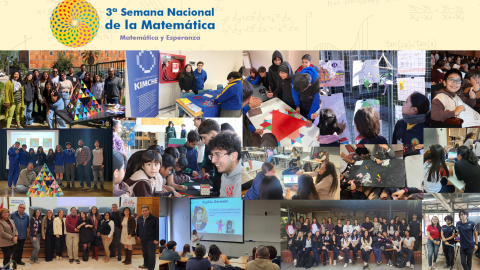
Figure 1. Activities to celebrate the third National Mathematics Week (April 2026, Santiago)
May 12. Celebrating Women in Mathematics - 250th year of Sophie Germain
Inspired by the goal proposed by the Committee for Women in Mathematics to inspire women everywhere to celebrate mathematics, women academics across Chile in May again organized a wide range of activities to foster an open, welcoming, and inclusive environment for everybody. The 2026 edition was enriched by the 250th anniversary of the birth of Sophie Germain (1776–1831), the French mathematician who overcame the barriers of her era to make landmark contributions to number theory and elasticity theory. Activities took place across Chile, from the far north to the south. The registered activities on the official May 12 website[4] represent at minimum the number of events that actually occurred. The Red de Divulgación Matemática Chile (DIMAT)[5] played a key coordinating role, publicizing activities through its platform.
As in previous years, the activities were centered on two main goals: making visible the contributions of women in mathematics, past and present, with particular attention to Sophie Germain and other historical pioneers, and reflecting on the varied paths of women in mathematics and on how a greater diversity of participants transforms the very form and practice of mathematics in academia.
Across the country, a diverse range of events took place: At Universidad de Chile, a dedicated afternoon featured talks on Germain’s scientific legacy for high school women students of Liceos Bicentenarios of the region alongside interactive stands by the COMPAS group, posters of “250 Years of Sophie Germain in Collage” by women students from a Ñuñoa’ high school, and an engaging panel discussion with students. The Universidad de La Frontera celebrated with a talk for students about Sophie Germain and her results while, further south, the Universidad Austral de Chile offered a broad agenda that included the panel discussion “PRISMA: Mujeres Matemáticas” as well as Math Club meetings and outreach broadcasts on radio. Audiovisual and research tributes were also prominent, with the short film I Am Sophie Germain shown at Universidad de Talca and Universidad de Concepción. Full-day programs featuring talks with women from academia and education were organized by the Universidad Técnica Federico Santa María and the Universidad de Los Lagos. The Universidad de Atacama and the Pontificia Universidad Católica de Valparaíso hosted dedicated commemorative sessions and the Universidad de Valparaíso invited the public to its “Collage Matemático,” an art-and-science tribute.
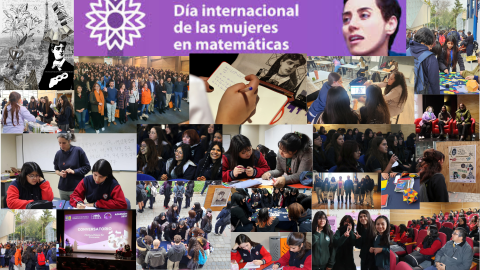
Figure 2. Activities to celebrate May 12th, Mathematics Women’s Day (May 2026, Santiago)
These celebrations reflect a shared conviction within the Chilean mathematical community: Mathematics is a powerful tool for understanding the world, a source of creativity, and an opportunity to build a more inclusive, critical, and forward-looking society, better prepared to face the challenges of the future.
[1] https://senamat.cl/, https://www.instagram.com/semananacionaldelamatematica
[2] https://circulomatematico.ulagos.cl/
[3] https://www.instagram.com/compas.uchile/
[4] may12.womeninmaths.org
[5] https://dimatchile.cl/
Iran
News from Iran
By Abolfazl Rafiepour, ICMI Representative for Iran and Pouya Karimi, teacher of mathematics, Shahid Bahonar University of Kerman, Kerman, Iran
Women in Mathematics Day 2026 in Iran
In May 2026, the Iranian mathematics community organized several scientific and educational activities to celebrate “Women in Mathematics Day,” commemorated annually on May 12, the birthday of the late Maryam Mirzakhani, the distinguished Iranian mathematician and the first woman to receive the Fields Medal. The day, which was internationally recognized following a proposal supported by the Iranian Mathematical Society, continues to inspire students, teachers, and researchers around the world.
The Women’s Committee of the Iranian Mathematical Society organized the Eighth Celebration of “Women in Mathematics Day” on May 19, 2026 as an online event bringing together university professors, researchers, mathematics teachers, and students from different regions of Iran. The event emphasized the importance of supporting women’s participation in mathematics education and research while encouraging younger generations to pursue mathematical sciences.
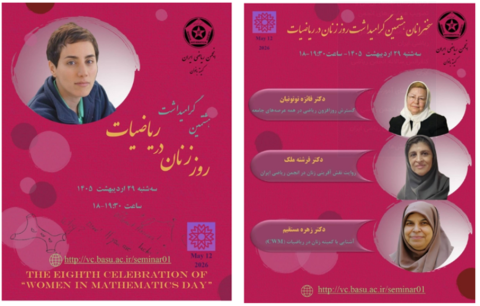
Poster of the Eighth Celebration of “Women in Mathematics Day” organized by the Women’s Committee of the Iranian Mathematical Society, May 2026
The official statement released by the Iranian Mathematical Society highlighted Maryam Mirzakhani not only as an internationally celebrated mathematician but also as a symbol of creativity, perseverance, and scientific excellence for young people. The statement further emphasized the growing role of mathematics in contemporary society, particularly in areas such as technology, artificial intelligence, education, and scientific development. It also stressed the importance of creating supportive educational environments for talented students, especially young women interested in mathematics.
As part of the celebrations, the Union of Iranian Mathematics Teachers’ Scientific and Educational Associations, in collaboration with the Isfahan Mathematics House, organized an online webinar entitled “Daughter of Iran and Star of World Mathematics” on May 13, 2026. The webinar featured Dr. Zahra Gooya, one of the prominent figures in mathematics education in Iran, who discussed both the scientific achievements and the human qualities of Maryam Mirzakhani. Her lecture focused on Mirzakhani’s influence on mathematics education and her continuing role as an inspiration for students, teachers, and researchers.
The webinar attracted mathematics teachers, university students, and members of the broader mathematics education community and created an opportunity for discussion about the role of women in science and the future of mathematics education. Participants also reflected on the importance of promoting inclusive and equitable educational opportunities in mathematics.
These activities were also connected with Iran’s annual “Spring Mathematics Week,” a national initiative aimed at promoting mathematical thinking and increasing students’ interest in mathematics through creative educational programs, workshops, and public events across the country. Over recent years, Spring Mathematics Week has become an important opportunity for strengthening communication between schools, universities, mathematics houses, and educational associations throughout Iran.
The 2026 celebrations reflected the continued efforts of the Iranian mathematics community to promote inclusive mathematics education, support women in mathematics, and inspire future generations of mathematicians through the legacy of Maryam Mirzakhani.
Pakistan
News from Pakistan
By Dr. Waqas Ali Azhar, Department of Mathematics, Lahore University of Management Sciences (LUMS), Pakistan
LUMS Math Circles: Building a Movement for Mathematical Thinking
Introduction
Mathematics education in Pakistan faces a well-known and very serious crisis. The method of instruction across the vast majority of public schools is procedural, driven by memorization, rote learning, and exam-oriented drilling, leaving no room for independent thinking and curiosity. One of the biggest consequences of this is “math anxiety,” not only among the students but the teachers too. This contributes widely to school dropouts, with mathematics being one of the primary causes. Curriculum reforms and textbook revisions have not been very effective because much of the problem is not about the content but instead how it is being taught and how teachers relate to the content.
The LUMS Math Circles initiative was taken to address the challenge at its roots. Often universities ignore the issue by declaring it a problem beyond its mandate, but LUMS Math Circles supports a different vision to not only address this issue but find ways to contribute to a solution. It centers on the classic Math Circles tradition of collaborative, inquiry-driven mathematical exploration with students and teachers, adapting to the realities of Pakistan’s educational system. Our aim is to build a sustained movement that transforms how mathematics is taught and perceived by students, teachers, and communities across schools in Pakistan.
The Two-Pillar Model
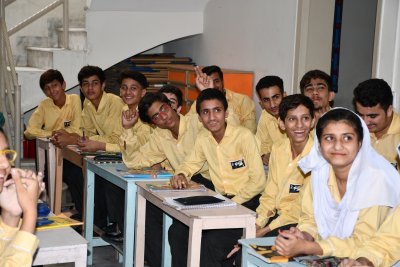
Our Math Circles activities have two integrated pillars, student Math Circles and Teacher Circles (we call them Teacher Training Workshops). All of these activities are designed as low-floor, high-ceiling tasks, where everyone is fully involved and understanding deepens through discussions, collaborative reasoning, and argumentation.
Student Math Circles: We do two types of Math Circles.One is the in-house Math Circles hosted at LUMS. Every fortnight, 40-50 students (from Grade 5 to Grade 10) enrolled in schools ranging from top tier to public and trust schools gather to work on interesting mathematical topics usually taught in a university curriculum. These are not lectures by any means; instead, the activities are designed to make these topics intuitive, fun, and easy to manage for the kids. One of the key aspects of our Math Circles is their focus on the true spirit of STEM learning. The in-house Math Circles are co-facilitated by a faculty member from the mathematics department and a faculty member from Computer Sciences/Electrical Engineering, Physics, Chemistry, and even Life Sciences. To name a few collaborative Math Circles, we did circles on topics like “How Robots Move,” “Cancer Growth,” “the Fibonacci sequence and Pythagorean Triplets,” “Carbon Dating and Logarithms,” “Dobble and Projective Spaces,” “Cryptography,” and many more.
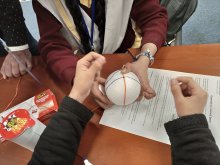
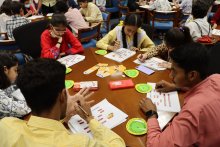
The aim of these circles is to foster curiosity and love for mathematics and to present a bigger picture of mathematics that is usually missing from the classrooms. We have consistently observed that students who were previously disengaged found a new spark and love for mathematics, often stating things like “This is not the mathematics we know and we love it.” This is a fair indicator that math anxiety is visibly decreasing and voluntary engagement is increasing. One of the key constraints to the in-house Circles is that, despite being free, it is difficult for students from distant areas and other cities to be a part of it. To overcome this issue, we introduced Outreach Math Circles, an initiative where our team visits public and trust schools and replicates the in-house Circles there. This ensures that our mission spreads nationwide without discrimination. So far, our mission has reached more than 18,000 students nationwide, and the number is growing day by day.
Teacher Training Workshops: We started the program only for students but soon realized that transforming how students learn requires transforming how teachers think and teach. Our aim is not to distribute lesson plans or prescribe methods; rather, it is to ensure that teachers also live through the spirit of Math Circles, working through the same puzzles their students encounter, discovering mathematics as something creative, collaborative, and alive. We introduce pedagogical frameworks like Kahneman’s System 1 and System 2 analogy to help teachers understand how students process mathematical problems and where procedural habits override conceptual reasoning. This mission started with the training of 1,200 Education Fellows in Gilgit-Baltistan, where LUMS participated as part of a consortium alongside the Aga Khan Development Network (AKDN). Our team of trainers delivered a mathematics-focused training to these Fellows. These Education Fellows, posted in high-altitude schools with access via unpaved roads only, brought intensity and commitment that was deeply moving. Since then, our mission has reached around 700 more teachers across Punjab, Sindh, and Khyber Pakhtunkhwa.
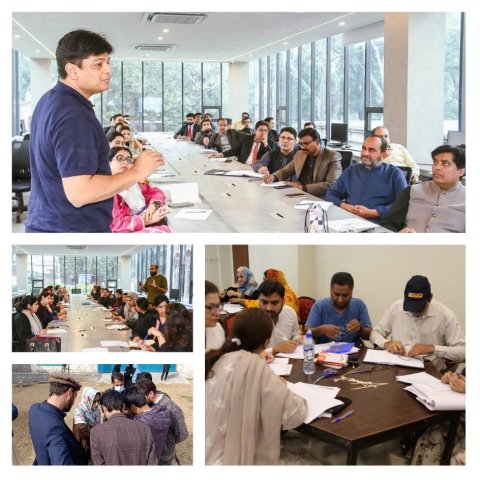
Another exciting dimension of our outreach is the interaction of LUMS Mathematics faculty with students at other universities through public talks. These talks are accessible to a broad class of students, not only mathematics majors, with the motivation of sparking a love for mathematics within the wider academic community.
Challenges, Ground Realities, and Scaling
The enthusiasm of teachers from all over the country has been extraordinary, but our outreach faces real structural constraints. Connecting with provincial governments to gather teachers for these workshops remains a challenge. Moreover, school directorates lack funds to arrange travel and basic refreshments for these activities. Despite these constraints, we see remarkable dedication from teachers, especially the young ones, which is a testament to their belief in the transformative power of quality mathematics education.
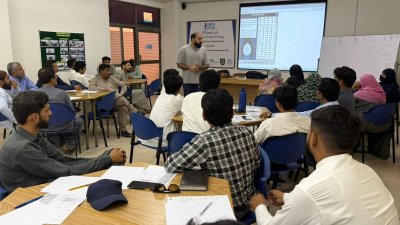
Our program has been designed to scale. We identify master trainers from each workshop, and they are supported by 20 hours of dedicated certified training from LUMS. These trainers are expected to carry out Math Circles in their schools and train fellow teachers alongside them. All these teachers are brought together through a WhatsApp group where reusable activities and other resource material is shared with them continuously. The groups encourage discussions on the enhancement of mathematics education throughout the country.
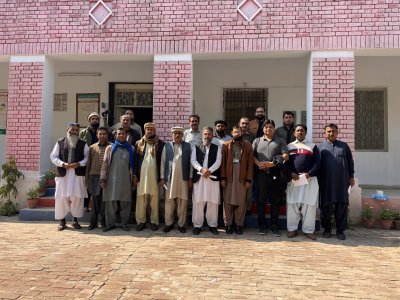
Pakistan’s mathematics classrooms will not be transformed by a new syllabus or a better textbook alone. Real change requires students who see mathematics as a way of thinking that connects to the world around them and teachers who have experienced mathematical joy themselves and carry that into their classrooms every morning. That is the work we are committed to, one circle at a time, and we welcome collaborators from across the global mathematics education community who share this vision.
Philippines
News from the Philippines
By Carlene Pc Pilar-Arceo, The Philippines ICMI Country Representative
In celebration of the International Day of Mathematics (IDM) 2026, the University of the Philippines Diliman (UPD) Institute of Mathematics organized a mini-symposium on this year’s theme, Mathematics and Hope, on March 16, 2026. The Institute invited experts to share their insights on the theme from different perspectives. Attendees of the event included undergraduate and graduate students, faculty members of the Institute and other colleges, high school teachers, and curious, interested minds from outside the UP.
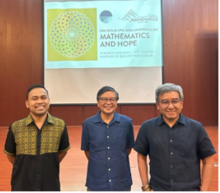
(L to R: Mendoza, Balmaceda, and Nemenzo)
Dr. Jose Maria P. Balmaceda (UPD Professor Emeritus) spoke about the role of art, patterns, and symmetry in shaping the notion of hope. Dr. Renier G. Mendoza (UPD Professor) then discussed the role of machine learning and artificial intelligence in current trends in mathematics, highlighting how these developments inspire hope in the pursuit of new knowledge. Finally, Dr. Fidel R. Nemenzo (UPD Professor) explored musical patterns in mathematics and how they shape our perception of hope, suggesting that engaging with mathematics can evoke a sense of deep devotion.
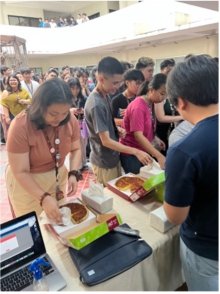
The Institute also set up a Freedom Wall, which enabled students to share their insights on how mathematics has given them hope. The responses ranged from humorous reflections to real-life experiences. To culminate IDM 2026 on Pi Day (+3, since it was held on March 17, 2026), the Institute held a pie distribution event at 3:14 PM—the most anticipated celebration. Following a countdown, almost three hundred slices of pie were distributed to students.
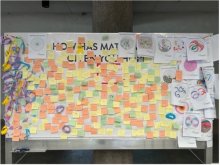
Overall, the IDM activities at the Institute were a success. The Institute looks forward to the announcement of next year’s theme and organizing corresponding IDM activities. The community has also learned to anticipate the annual IDM celebrations and makes time to participate in the excitement and interaction that highlight the breadth of fun experiences and profound accomplishments made possible by and through mathematics.
South Africa
News from South Africa
By Dr VG Govender to ICMI - South Africa Country Representative
AMESA Regional/National Activities
The Association for Mathematics Education of South Africa (AMESA) Regional conferences have already taken place in Limpopo, Gauteng, Free State, and KwaZulu Natal. The AMESA National Congress is due to take place at the University of Mpumalanga (Mbombela campus) on July 13-17, 2026. The theme is “Breaking barriers through innovation: Towards vision 2030 and beyond.”
There are six plenary speakers. This includes an international speaker from Indonesia (Duano Sapta Nusantara from the University of Jambi).
South African Mathematics Competitions
There are two main mathematics competitions for pupils in South Africa, one for primary schools and one for high schools. There was a significant increase in participation in both competitions compared to 2025.
South African Mathematics Olympiad (SAMO) (for high schools)
The first round of the South African Mathematics Olympiad (SAMO) took place on March 12, 2026.
123,070 pupils from 1,897 schools participated in Round 1. Of these, 14,661 pupils from 1,113 schools qualified for Round 2 which took place on May 14, 2026.
For more details, please go to https://www.samf.ac.za/en/sa-mathematics-olympiad
South African Mathematics Challenge (SAMC) (for primary schools)
The first round of the South African Mathematics Challenge was from March 16-20, 2026.
109,530 pupils from 1,282 schools wrote for Round 1. Of these, 14,214 (from 682 schools) qualified for Round 2 which was on May 20, 2026.
For more details, please go to https://www.samf.ac.za/en/sa-mathematics-challenge
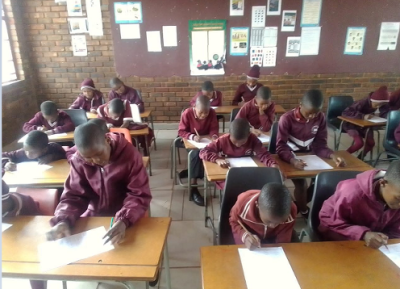
Pupils writing Round 2 of SAMC on May 20, 2026 (picture supplied by the school to the South African Mathematics Foundation)
International Day of Mathematics Activities (in South Africa)
The International Day of Mathematics on March 14, 2026 was celebrated by schools/institutions/organizations in the week leading up this date and just after. Two of these activities are reported here:
A group of universities, together with a few STEM organizations, hosted an online IDM event for school pupils on March 21, 2026. The event featured four speakers and an interactive quiz. There were approximately 80 participants. The winners of the online quiz earned prizes. Two of the presentations were on (1) The power of mathematical thinking and (2) Fractals.
The Nelson Mandela Bay branch of AMESA arranged a one-day conference on March 14, 2026. This was attended by more than 100 teachers, academics, and others. The conference consisted of two plenary sessions and four parallel sessions, catering to the different levels of mathematics offered in South Africa (Foundation: Grades R – 3; Intermediate: Grades 4 -6; Senior: Grades 7 – 9; Further Education and Training: Grades 10 – 12; Mathematical Literacy: Grades 10 – 12).
A book of the conference presentations was also produced.
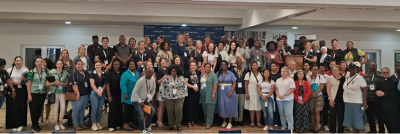
Teachers at the Mathematics Conference (March 14, 2026) in Nelson Mandela Bay, South Africa (picture owned by AMESA NMB)
USA
News from the USA
By Ilana Seidel Horn – USA ICMI Country representative
According to the Future of Jobs Report 2025 published by the World Economic Forum (Leopold et al., 2025), the fastest growing jobs in 2030 will be big data specialists, fintech experts, engineers, and artificial intelligence (AI) and machine learning analysts. Mathematics education is essential in a data-driven world and young people need it to succeed in life. While its foundational principles are timeless, mathematics education is continually changing because of new technologies, educational research, and societal expectations. Advances in data science, computational thinking, and AI have accelerated the need to reimagine which mathematics concepts students need to learn nowadays and how they should learn them.
Preparing global citizens for industries and economies of the mid to late 21st century involves much deeper and broader applications of mathematics. Understanding these global patterns across curriculum design, teacher development, policy sequence, and implementation structures provide valuable insights for educators, school superintendents, and policymakers as they navigate decisions in a rapidly evolving educational landscape. As a result, the integration of data science, computational thinking, and AI into K-12 mathematics education has become a global imperative. Learning from global innovations, implementation challenges, and research enables educators to move beyond siloed standards and design experiences that not only teach students to apply these technologies within mathematical contexts but also foster critical thinking. Ultimately, curriculum, regardless of geography, must prepare all students with the mathematical and computational competencies needed to thrive as informed citizens and problem solvers in the 21st century.
On February 23 and 24, 2026, the National Academies of Sciences, Engineering, and Medicine in the United States convened an international workshop to learn how leading countries in mathematics education are modernizing their curricula to incorporate data science, computational thinking, and AI. Representing 17 countries in addition to the United States, more than 50 math educators and leaders in the field with classroom, curriculum planning, teacher training, policy, and other experience gathered in person (by invitation only), while several hundred other individuals attended online (open to anyone virtually).
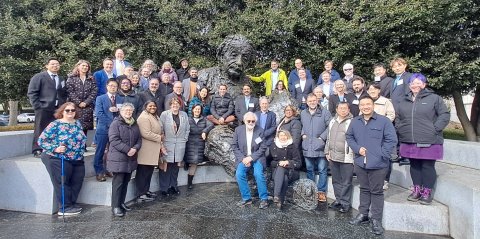
In-person participants of the workshop
In-person participants engaged in questions, reflections, and conversations with the speakers while virtual attendees were observers. The 2-day workshop started each day with a keynote speaker: On the first day, Conrad Wolfram (co-founder of Mathematica) shared his perspective on Fixing Human Education for the AI Age while Junaid Mubeen (author of Mathematical Intelligence) presented his perspective the following day on Mathematics Education in the Age of AI. The workshop included thematic panels where global experts had the chance to share their country model and best practices under the following themes: 1) curriculum development and policy implementation; 2) assessment techniques and student learning; 3) technology tools and frameworks; and 4) instructional approaches and professional practice. Most of the agenda focused on secondary mathematics education, although K-8 mathematics education was also explored. All the speakers’ slides and recordings are freely available; please visit https://www.nationalacademies.org/projects/PGA-NETWORKS-25-02/event/46363.
Since no comprehensive global analysis of the current state of mathematics education related to data science, computational thinking, and AI exist, this project has launched an international survey. We greatly appreciate your input (approximately 15-20 minutes to complete) and your willingness to share it with your colleagues and among your networks. Please visit https://survey.alchemer.com/s3/8393839/Survey-to-Assess-International-Practices-in-K-12-Mathematics-Education-and-the-Role-of-Computational-Thinking-Data-Science-and-AI.
Also as part of this project, a new international webinar series titled International Practices in K–12 Mathematics Education: The Role of Computational Thinking, Data Science, and AI was launched on May 14, 2026. Every two weeks, a free webinar is offered featuring an international expert. The next webinar scheduled on June 25 will feature Singapore on generative AI in mathematics education. All the webinars are livestreamed and recorded, so we encourage you to visit the project’s website (https://www.nationalacademies.org/projects/PGA-NETWORKS-25-02/past-events) and also subscribe to our distribution list to receive our announcements. The webinar series will pause for the summer and resume in the fall. Also, in July 2026, we’ll be releasing a report (workshop proceedings) summarizing the workshop presentations and discussions. This initiative is sponsored by Data Science 4 Everyone (DS4E), the Gates Foundation, and the University of Chicago.
Padhu Seshaiyer (George Mason University), workshop planning committee chair, invites mathematics education stakeholders to reimagine math education in the context of data science, computational thinking, and AI. “At this stage, we are not asking whether we should teach students to use AI, but how they can become critical thinkers and creative problem solvers with AI.” He recently shared his perspective in a U.S. News article titled Give Math Education the Attention It Deserves: https://www.usnews.com/opinion/articles/2026-05-22/ai-math-education-usa-250-stem.
Finally, the U.S. National Commission on Mathematics Instruction (USNC/MI) would like to remind everyone that the 2026 International Congress of Mathematicians (ICM) will be taking place in Philadelphia from July 23-30, 2026, where the Fields Medals will be awarded. If interested, please visit https://www.icm2026.org/event/ac193975-5d24-4628-8c30-ddb23de19a8b/Home. As a result of the ICM taking place in Philadelphia, 2026 is the Year of Mathematics in the United States and numerous activities are taking place around the country to promote the field. Padhu Seshaiyer is also a co-chair of the program committee for the Year of Mathematics. If interested, please visit https://theyearofmath.org.
The authors of this article, Ana Ferreras Fiel (U.S. National Academies), Padhu Seshaiyer (George Mason University and former Chair of the USNC/MI), and the USNC/MI wish you all a fabulous summer.
Conferences to come
CIEAEM77
Dates: July 20-24, 2026
Location: Barcelona, Spain
More information on the website.
XXXIX Latin American Meeting on Mathematics Education (RELME 39)
Dates: July 20 to 24, 2026
Location:
More information on the website
World Federation of National Mathematics Competitions - WFNMC-10
Dates: July 22-28, 2026
Location: Putrajaya, Malaysia
More information on the website.
8th INTERNATIONAL CONFERENCE ON ETHNOMATHEMATICS
Dates: August 2–7, 2026
Location: National University of San Antonio Abad del Cusco, Peru
More information on the website
International Conference on the History of Mathematics Education (ICHME-9)
Dates: September 21–25, 2026
Location: Zaragoza, Spain
More on the website
African Association for Mathematics Didactic (ADiMA) 5th ADiMA Conference (ADiMA-5)
Dates: December 14–18, 2026
Location: Niamey, Niger
website to be established
International Francophone Conference on Statistics Education
Dates: November 25 to 27, 2026
Location: Namur, Belgium
The main theme will focus on the teaching of statistics facing technical and technological innovations and transformations: a historical and contemporary approach. The conference is organized in collaboration with the “Socio-history of Statistics and Probability” group. Communication submissions are accepted until June 15, 2026. Registration is open.
Find out more on the website
CERME15
Dates: February 8-12, 2027
Location: Bratislava, Slovakia
More information on the website
ISDDE-2027
Dates: May 17–20, 2027
Location: Warsaw, Poland
More information on the website
15th International Conference on Mathematical Creativity and Giftedness (MCG-15)
Dates: September 14–17, 2027
Location: University of Calgary, Calgary, Alberta, Canada
More Information on the website.
ICME-16
Dates: July 9-16, 2028
Location: Prague, CZ
More information on the website.