ICMI Newsletter - March 2026
Editors:
Jean-Luc Dorier (ICMI Secretary-General)
Jinfa Cai (ICMI Vice President)
Lena Koch (ICMI Administrative Manager)
Technical support:
Vanessa Chung, IMU Secretariat
Publishing dates:
March 15, June 15, September 15, December 15
1. Editorial
– From the desk of Ramaswamy Ramanujam, ICMI EC Member (2025-2028), The Institute of Mathematical Sciences, Chennai, Tamil Nadu, India
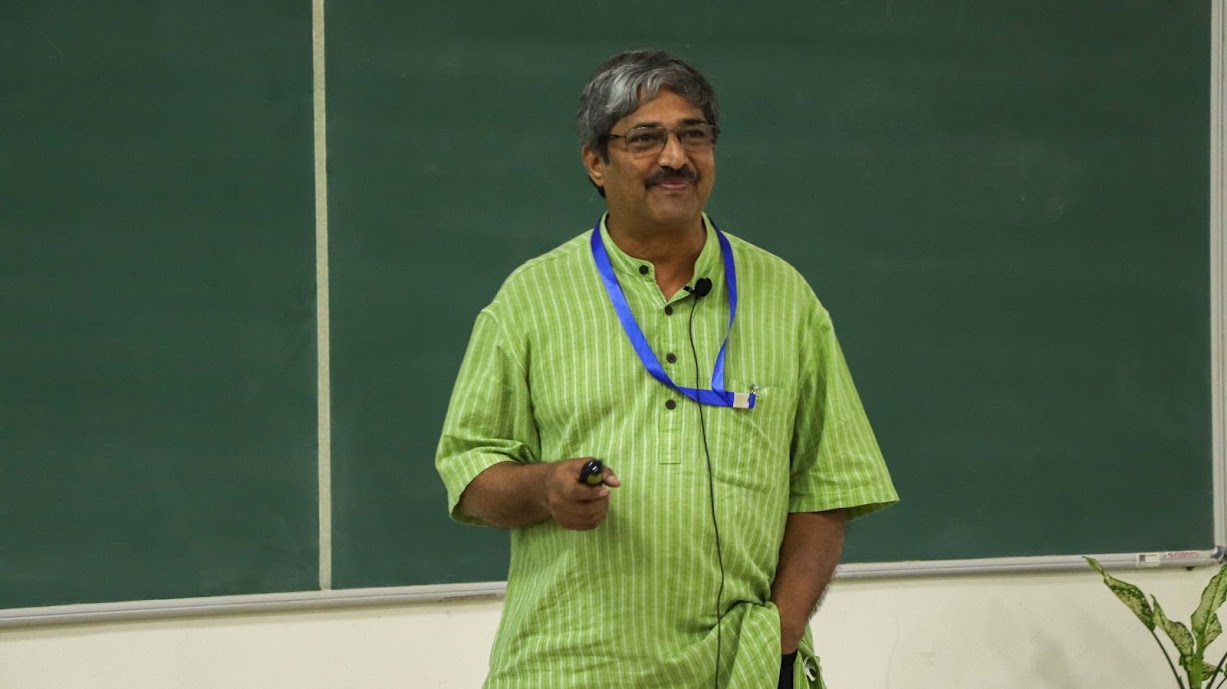
As another Executive Committee of ICMI takes charge and enters its second year, this newsletter provides updates on the next ICME (in Prague, 2028) and other events of interest to the global mathematics education community, announcements of new developments, and discussions of new initiatives. For a newcomer like me, being a part of this endeavor makes me ever more appreciative of the wide-angle lens that institutions like the IMU and ICMI provide through which to view mathematics education across the world.
Mathematics education has a long global history, and when we learn about mathematics in the Babylonian tablets, we can imagine Babylonian children being stressed by mathematical learning. A century (and more) of ICMI continues to shed light on the relationship between mathematical knowledge and the knowledge of teaching and learning mathematics. While Education for All has become a global concern, there continues to be tremendous disparity in access to mathematical resources and research across the world.
The central work of ICMI lies in addressing the challenges faced by teachers of the discipline on a daily basis as well as those of researchers in mathematics education in setting agendas, in capacity development, and in institutionalization.
Providing support to them is the central concern in the reports of activities by the various constituent groups found in these pages. Efforts such as the Klein Project attempt to offer a platform for a pedagogic conversation between mathematicians and educators. Other projects reach out to the public at large, promoting mathematics competitions and public celebrations of mathematics.
From my perspective, all these initiatives come across as especially meaningful. I am Indian, from a land of rich diversity not only in its strengths but also in its challenges. Historically, the subcontinent has made fundamental contributions to mathematics, from the distant past to the present day. While there is a massive population of mathematics teachers and a relatively small number of research mathematicians, there is very little by way of mathematics education research with an international presence. There are 71 Boards of Education in the country, including 5 at the national level, with most at the state level (offering education in specific regional languages) and several for specialized constituencies (such as Oriental boards promoting traditional learning and those for madarasah schools). As in all aspects of Indian life, mathematics education is also an arena of social exclusion in many colors. Viewing this seemingly cacophonous milieu only brings home to us not only the need for extensive research in mathematics education but also for conversations between mathematicians and teachers across the stages of education and the need for forms of public engagement. Can social, ethnic, linguistic, and religious diversity be seen not as a problem but as an opportunity, as a resource for mathematics education?
I write science and mathematics in Tamil for children (in a monthly magazine where I am on the Editorial team as well) and for schoolteachers (in a bimonthly magazine). In this role, I am acutely aware of how little there is of original writing in Tamil of mathematical research or education research. Elementary school teachers (by and large) read material only in their own mother tongue (or the language of the region where they reside) and hence have no access to the insights offered by mathematical research or education research. I am a researcher in mathematical logic and theory of computation, and I discuss topics from these areas with children and teachers with enthusiasm but with little of the competence that comes with being part of a critical culture. I am an active member of the Mathematics Teachers Association (India), and our experiences only underline the need for more platforms for conversation between different communities: that of mathematicians, teachers at school and at the university, education researchers, and government functionaries.
As a researcher over several decades who has supervised many doctoral students, I am also acutely aware of the nurturing needed for early career researchers in any field. There is not only a clear need for global efforts towards capacity building and nurturing of young researchers in mathematics education across the world, but such efforts would also be immensely beneficial to the discipline itself. The efforts of ICMI in this direction are worth underlining, and I hope we will see more in the time to come.
As we enter the second quarter of the twenty-first century, it is clear that among the range of issues faced by all educators, two dominate in our minds, and mathematics education is no exception in this regard: One is a growing emphasis on the Socio-Ecological, and the other is the advent of Artificial Intelligence tools.
Mathematics has played a significant role in understanding climate change and the ecological impact of human activities. Can mathematics and education also have an impact on the way we act in response? While digital technology has already caused significant shifts in mathematics education, Artificial intelligence (AI) looks capable of mathematical discovery and may change classroom processes in entirety. Responses to AI are imperative, and, yet, the spirit of research cautions us against haste: We need to reflect, experiment, and learn from fumbling attempts.
I extend a warm greeting to all members of the mathematics education community and invite everyone who offers to help extend and expand the range of ICMI activity to contact us.
2. Call for the 2028 ICMI Awards
Call for the 2028 ICMI Awards:
- Felix Klein Award for lifelong achievement in mathematics education research
- Hans Freudenthal Award for a major program of research on mathematics education
- Emma Castelnuovo Award for outstanding achievements in the practice of mathematics education
Deadline for nominations for the three awards is: November 30, 2026.
3. Call to bid to organize and host ICME-17 in 2032
Call for intention to bid to organize and host ICME-17 in 2032
ICME is the largest international conference on mathematics education. It is held every leap year and it is the meeting point for mathematics educators, curriculum developers, mathematicians, researchers in mathematics education, teachers, teacher educators, and resource producers.
The three ICMI Awards to recognize outstanding achievement in mathematics education are presented at the ICME Opening Ceremony. The Felix Klein Award and Hans Freudenthal Award were established in 2000 and first presented in 2003. While the Felix Klein Award honors lifetime achievement in mathematics education research, the Hans Freudenthal Award instead recognizes a major cumulative program of research. The Emma Castelnuovo Award, first presented in 2016, acknowledges outstanding achievements in the practice of mathematics education.
On the day before the ICME Opening Ceremony, the ICMI hosts a one-day meeting of its General Assembly (GA). Recent ICMEs have also featured a separate Early Researcher Day, usually held before the Congress begins.
ICMI is hereby inviting the ICMI community (ICMI country representatives, national/regional mathematics education and mathematics organizations, and academic institutions) to consider the possibility of organizing and hosting the International Congress on Mathematical Education in July/August 2032.
Please note: Applications by convention centers, tourist agencies, or any other commercial organization will not be considered.
4. Updates about the first and second ICMI AMOR Webinars
In order to make the project ICMI AMOR better known and more used, the ICMI AMOR Advisory Board has decided to launch a series of webinars.
Report about the first AMOR Webinar
The first webinar took place on Tuesday, February 24, 2026. In order to reach as many people worldwide as possible, it was repeated in two sessions in different time zones: 8 a.m. and 6 p.m. UTC. The purpose of this first webinar was to present the whole project and to discuss some of its uses. Here is the plan of the webinar with the name of the presenters:
- Origin and genesis of the project (5 min) (Jean-Luc Dorier)
Presentation of 3 units:
- Michèle Artigue (5 min)
- Marianna Bosch for Yves Chevallard’s (5 min)
- Anna Sfard (5 min)
Some uses of AMOR
- Nadav Ehrenfeld (5 min)
- Sébastien Jolivet (5 min)
- Huang Xingfeng (5min)
Open discussion (25 min)
There were about 130 and 100 participants respectively at the first and second sessions and, in both cases, active discussions indicated wide interest in and different uses for the project.
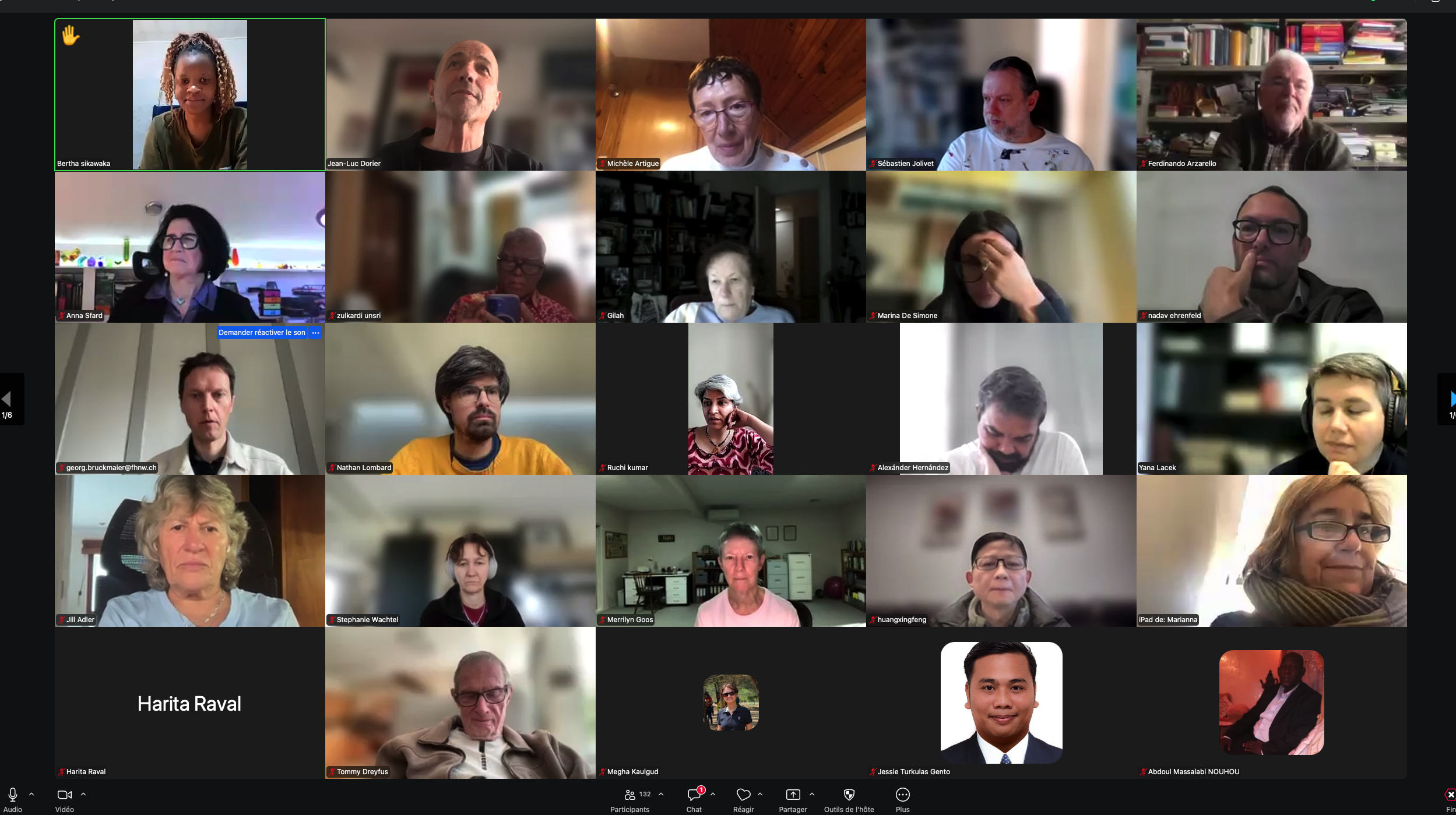
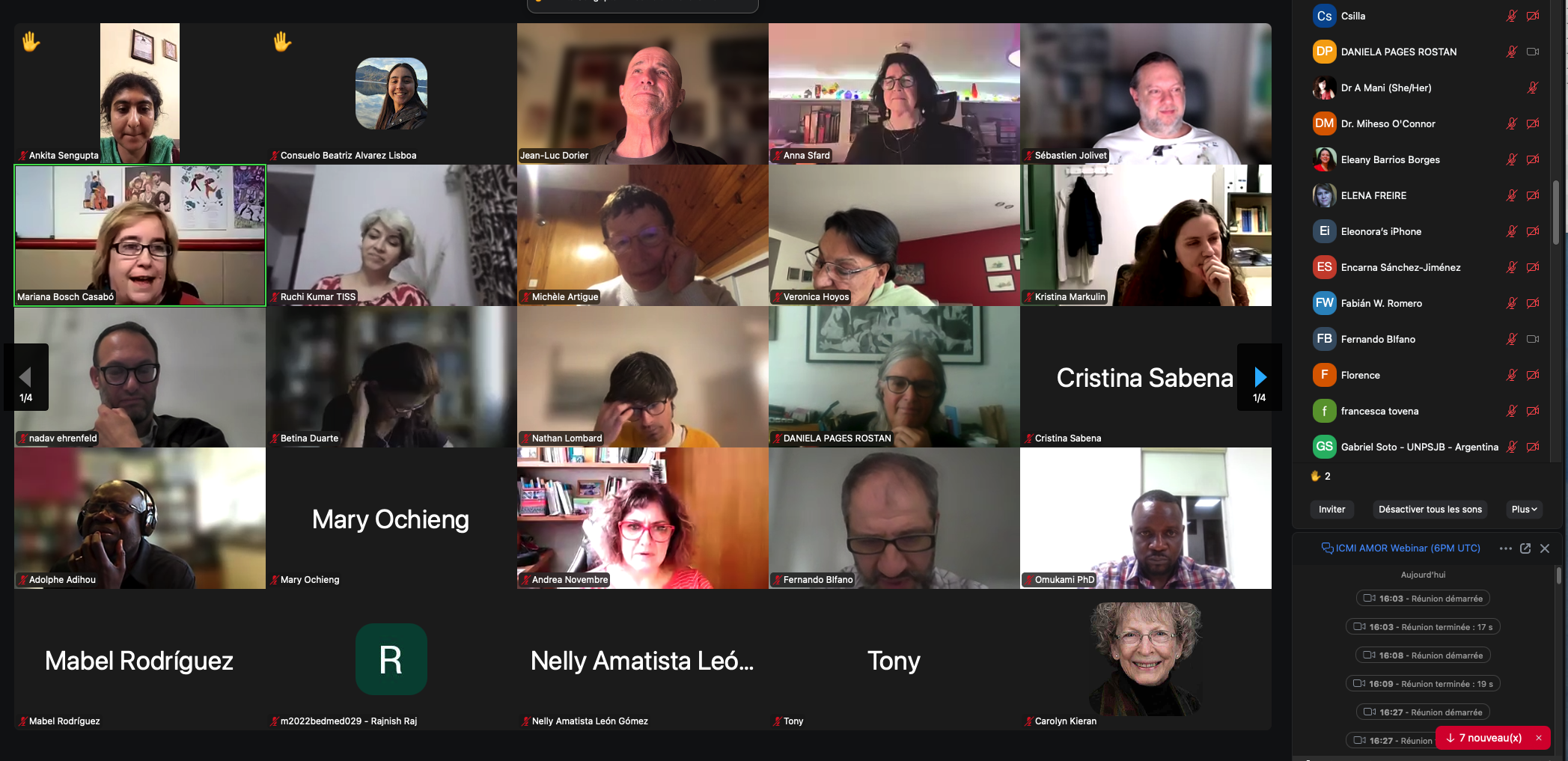
The video of the presentation with the discussions from the two sessions is now accessible on the ICMI AMOR Website and on the ICMI AMOR YouTube channel.
Announcement: Second Webinar in the ICMI AMOR Series
Dear colleagues,
We are happy to announce that the second webinar in the series devoted to the ICMI Awardees Multimedia Online Resources project (ICMI AMOR) will take place on Monday April 27th, 2026.
There will be a first session at 10AM UTC in English and second session at 4PM UTC in Portuguese. Check the time in your respective countries. (UTC : Coordinated Universal Time)
This webinar will be devoted to:
- Ubiratan D’Ambrosio unit (Felix Klein Award 2005) made by Milton Rosa and Daniel Clark Orey and
- Terezinha Nunes unit (Hans Freudenthal Award 2017) made by herself
with presentations of the authors of the units and also some testimonies of people who used these units in different contexts.
In order to be informed and receive the zoom link for each webinar session, you must subscribe to ICMI Newsletter.
Please note that when connecting to a webinar session you agree that the session is recorded and that the recording is posted on the ICMI Website and the ICMI AMOR YouTube Chanel. You can keep your video and microphone closed during the whole session.
Participants are encouraged to visit the ICMI AMOR website or/and our YouTube channel prior to the webinar.
On behalf of the ICMI AMOR Advisory Board,
Jean-Luc Dorier, ICMI Secretary General.
For any questions or technical issues, please contact: icmi.secretary.general@mathunion.org
5. News about past ICMI Studies Volumes
We are pleased to announce that all ICMI Study Volumes are now freely accessible online through our website. Beginning with ICMI Study 23, ICMI established an agreement with Springer to ensure that all newly published volumes are available as open access. In addition, through the valuable support of Geoffrey Howson and his contact at Cambridge University Press, we succeeded in making ICMI Studies 1 to 5 openly accessible.
We subsequently secured open-access availability for ICMI Studies 19, 21, and 22.
We are now delighted to share that a new agreement with Springer allows ICMI to make the remaining Study Volumes (ICMI Studies 6 to 18 and 20) available as PDF files on the ICMI website. These files are hosted with Springer’s permission, with copyright retained by Springer.
6. Updates on Short Descriptions of the Mathematics Education Context in Different Countries
As announced in the last newsletter, when reshaping its website, ICMI EC decided to replace the database project with a wider presentation of the context of mathematics education in every ICMI country according to the following 5 sections:
- Associations for Mathematics Education
- Research Institutions for Mathematics Education Research
- Journals for Mathematics Education Research
- Mathematics Teacher Education
- National Syllabi and Standards
We have now managed to add descriptions online for about one half of the ICMI countries, and we hope to increase this number soon.
7. Updates on ICME-16 to be held in Prague in July 2028
Preparations for ICMI-16 are moving forward very well, and the scientific programme is beginning to take clear shape. We invite people to consult the Congress website which is being updated all the time.
Almost all the 58 Topic Study Groups (TSGs) approved by the congress IPC are now in place and have started working on their description papers, which will help frame and guide the discussions within each group. The TSG teams are listed on the Congress website, where participants can already see the breadth of expertise involved.
We are also pleased that nearly all invited lecturers have accepted their invitations. Their names are available on the website, too. Information about survey teams and panel members will be added soon as well as the names of the invited plenary lecturers — their identity remains a surprise for the time being!
The Local Organizing Committee is in regular contact with the Guarant agency to ensure that all organizational aspects of the Congress run smoothly. At the same time, the IPC is actively preparing the framework and guidelines for TSG work to support productive and high-quality academic exchange.
Overall, preparations are progressing steadily, and we look forward to sharing further updates as ICMI-16 approaches.
Prof. Naďa Vondrová
Convenor ICME-16
8. ICMI Study 27 “Mathematics Education and the Socio-Ecological”: Update on Study Volume Preparation
Alf Coles and Kate le Roux, ICMI Study 27 co-chairs
Following a successful Study Conference (January 22-25, 2025, in Manila, Philippines), Study participants are well underway writing for the Study Volume. Our design of the Volume has retained the four themes used for the Conference organization on account of their richness individually and together. The four themes are: Aims of Mathematics Education; Scales of Mathematics Education; Resources of/for Mathematics Education; and Mathematics Education Futures. In the Volume, each theme:
- has an introduction that grounds the theme in previous thinking and establishes the specific, coherent contribution of the theme to knowledge on the topic of “Mathematics Education and the Socio-Ecological.” These are co-authored by the International Program Committee theme leads.
- comprises three or four chapters, co-authored by three to eight authors, that build substantially on the knowledge produced for the Conference Study Proceedings.
In addition, each of the four plenary papers develops one or more of the Study themes.
The first drafts of the 15 theme chapters have now received three reviews. Each chapter was reviewed by a Volume author within the same theme, a Volume author writing in a different theme, and a critical reader from outside the Study. Thus, taken together, the review voices offer insights on each chapter’s angle and contribution to a specific theme; threads to ideas in other themes; strengths in terms of the topic as a whole; and any ‘blind spots’ to be considered. We hope to have the second drafts of most chapters by March 2026 and are aiming to have a full draft of the book later in 2026.
As Study Co-Chairs we are excited by the Volume chapters we have read so far. These advance the knowledge produced in the Study Proceedings, offering novel insights. These chapters challenge our thinking about mathematical knowledge, curriculum, mathematics teacher education, and technologies, amongst other topics. They prompt questions about what is valued, who decides, who participates, and in what relations – and where there are absences. The Volume writing process itself has much to say about the topic: Our knowledge-making is collaborative, harnessing voices from a range of socio-ecological contexts, and necessitates nuanced intellectual work between theorizing and place-based cases of socio-ecological practice.
We are also delighted to see scholarship on mathematics education and the socio-ecological expanding in other arenas of mathematics education, often in collaborations within and beyond ICMI Study 27 participants. This includes recognition of the topic within formal conference and journal structures. These arenas include, but are certainly not restricted to international communities such as the International Congress on Mathematical Education (ICME), the International Group for the Psychology of Mathematics Education (PME), and Mathematics Education and Society (MES) as well as regional communities such as the Southern African Association for Research in Mathematics, Science and Technology Education (SAARMSTE), and the Congress of the European Society for Research in Mathematics Education (CERME). We encourage readers to seek out the socio-ecologically related work taking place in these spaces and consider getting involved!
9. Proceedings of the IV CEMACYC published in record time
Angel Ruiz, President of the Mathematics Education Network of Central America and the Caribbean – ruizz.angel@gmail.com
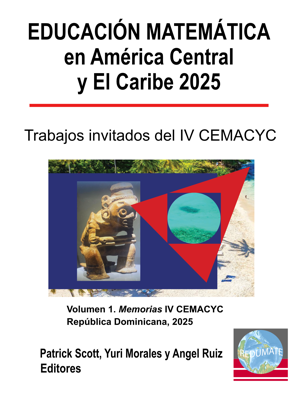
The Proceedings of the IV Congress of Mathematics Education of Central America and the Caribbean (IV CEMACYC), held from November 2-7, 2025, in Santo Domingo, Dominican Republic, have been published online.
This is the collection entitled Mathematical Education in Central America and the Caribbean 2025, which includes 11 volumes:
- Vol. 1. Invited Papers from the IV CEMACYC (303 pages)
- Vol. 2. Initial Teacher Preparation (292 pages)
- Vol. 3. Continuing Education and Professional Development (211 pages)
- Vol. 4. Cultural, Political, Economic, and Environmental Dimensions of Mathematics and Mathematics Education (141 pages)
- Vol. 5. Curriculum and Assessment (84 pages)
- Vol. 6. History and Philosophy of Mathematics and Mathematics Education (41 pages)
- Vol. 7. Problem Solving and Modeling in Mathematics Education (106 pages)
- Vol. 8. Use of Digital Technologies in Mathematics Education (284 pages)
- Vol. 9. Research in Mathematics Education (238 pages)
- Vol. 10. Strategies to Improve the Teaching and Learning of Mathematics in Preschool and Primary Education (223 pages)
- Vol. 11. Strategies to Improve the Teaching and Learning of Mathematics in Secondary and Higher Education (346 pages)
These 2,269 pages comprise approximately 300 papers (carefully reviewed by scientific peers) presented in person at the Conference (600 participants). The volumes were edited by Patrick Scott (United States) and Yuri Morales and Angel Ruiz (Costa Rica). The institutional support of the Pontifical Catholic University Madre y Maestra and the collaboration of Sarah González in the Dominican Republic were crucial for the formal international registration (ISBN: 978-9945-30-168-7) and publication of this important work in record time.
These volumes are freely accessible on the website of the Mathematics Education Network of Central America and the Caribbean (REDUMATE). The texts are written in Spanish, Portuguese, and English (official languages of the CEMACYC).
The rapid publication of the event proceedings allows for their early and effective use in educational communities throughout the region and beyond.
Clearly, this demonstrates the commitment, success, efficiency, and quality of the activities of this Network, which was founded in 2012 within the Capacity and Networking Project of the International Commission on Mathematical Instruction.
10. News from Affiliate Organizations
10.1 News from MCG
Elisabet Mellroth, President of the International Group for Mathematical Creativity and Giftedness (MCG)
It is with deep respect and profound sadness that we mark the passing of the founding father of the International Group for Mathematical Creativity and Giftedness, Prof. Dr. Hartwig Meissner. Hartwig was born on November 15, 1938 in Berlin, Federal Republic of Germany, and passed away on February 11, 2026. His vision, dedication, and lifelong commitment to nurturing mathematical creativity have left an enduring legacy within the MCG community and far beyond.
Professor Meissner gathered experts on an international conference on Creativity and Mathematics Education in 1999, which was the starting point for MCG. Conferences have always played a vital role in the work of the International Group for Mathematical Creativity and Giftedness. They give us the opportunity to meet, exchange knowledge, and deepen our shared understanding of how to nurture mathematical talent and creativity around the world. These gatherings are where new ideas emerge, collaborations begin, and our community grows stronger.
Interested in hosting the 16th MCG conference in 2029?
We encourage institutions or groups who would like to host an MCG conference to start think about the 16th MCG Conference in 2029. Organizing an MCG conference is a meaningful way to contribute to our global community and to highlight local initiatives in mathematical creativity and gifted education. Guidelines for preparing a conference proposal are currently being developed and will be published on our website in autumn 2026. We encourage anyone considering a proposal to begin reflecting on potential themes, venues, and partnerships.
The 15th MCG Conference in Calgary, September 2027
We are pleased to share that the 15th MCG Conference is planned to take place in Calgary from September 14 -17, 2027. You can already find key dates, location details, and early conference information, with more updates coming soon. Please mark the dates in your calendars and share the website with colleagues who may be interested.
Building a Platform for Shared Practice
A long-term goal for MCG is to become a vibrant platform where educators, researchers, and practitioners can exchange ideas, experiences, and concrete actions that stimulate and challenge mathematically gifted students. If you are engaged in such work, or would like to be, your voice and experience are deeply valued. If you are interested in contributing to this developing platform, please contact us. We warmly welcome your involvement. Find our contact information at the official website.
10.2 News from WFNMC -Tenth Congress to be held in Kuala Lumpur
As has been the case in all even numbered years between ICMEs for the last forty years, the WFNMC (World Federation of National Mathematics Competitions) is planning its next congress for this summer. The WFNMC-X congress will be held from July 22-28, 2026, in Kuala Lumpur, Malaysia. Details are available at the official website.
We aim to welcome all persons interested in the organization of Math Competitions, the development of competition problems, or the didactics of competition mathematics in any way to sunny Malaysia!
11. News from ICMI Country representatives
11.1 News from Morocco
Bridging Excellence: Competing Globally, Growing Locally
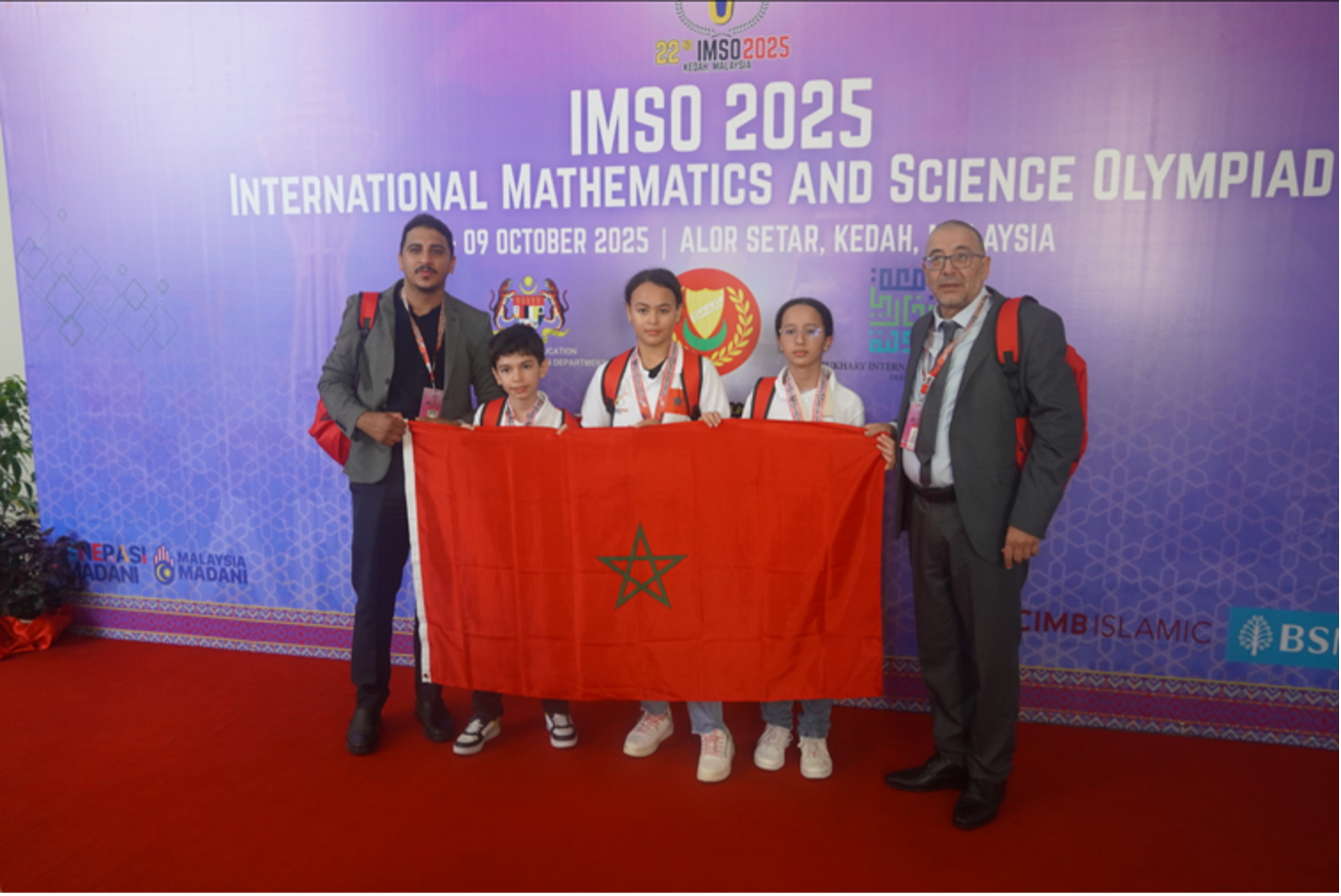
The Moroccan Association of Mathematical Sciences actively engages talented students in leading international competitions across all academic levels. Young primary school students showcase their abilities at the International Mathematics and Science Olympiad (IMSO), while high school students rise to the challenge of the European Mathematics Cup (EMC), one of Europe's most demanding individual mathematics contests. The Association also promotes teamwork through NÁBOJ, a team-based competition where students collaborate to solve problems under pressure. Through these three competitions, the Association is committed to detecting talent, building excellence, and proudly placing Moroccan students on the international mathematical map.
Morocco’s participation in IMSO Malaysia 2025, held in October 2025, marked a proud milestone, as the national team of three primary school students claimed the STEM Champion title along with three bronze medals (Mathematics), a three-stage challenge covering Short Answer, Essay, and Exploration problems.
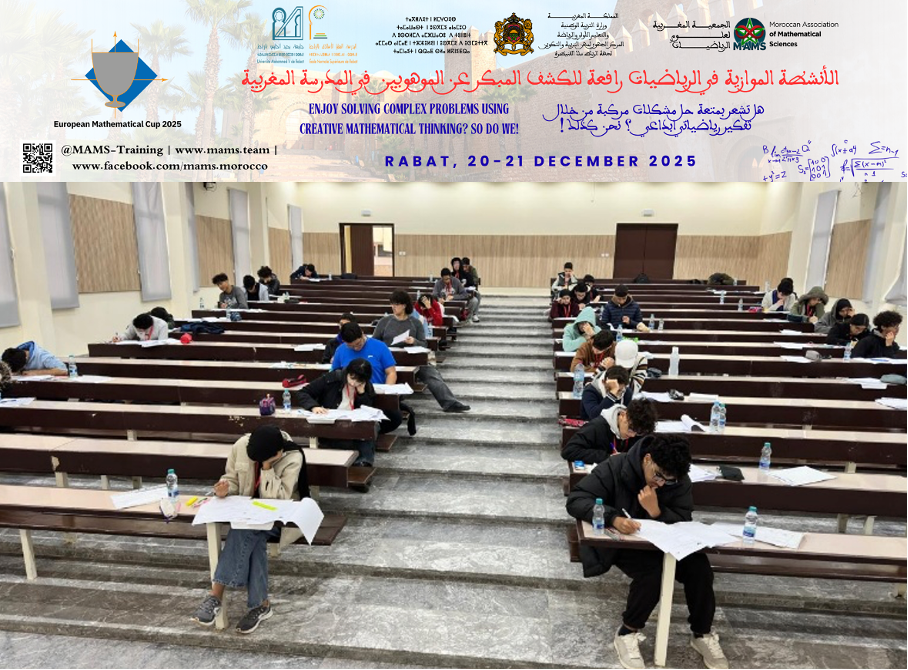
In December 2025, the Moroccan Association of Mathematical Sciences (MAMS) proudly organized, for the first time in Morocco, the European Mathematical Cup (EMC). As part of the 14th edition - gathering students from 58 countries - the competition was held on December 21 at the CRMEF and ENS in Rabat. It offered 11th- and 12th-grade students of the “Sciences Mathématiques” track a valuable international benchmark, sharpening their problem-solving skills and deepening their passion for mathematics.
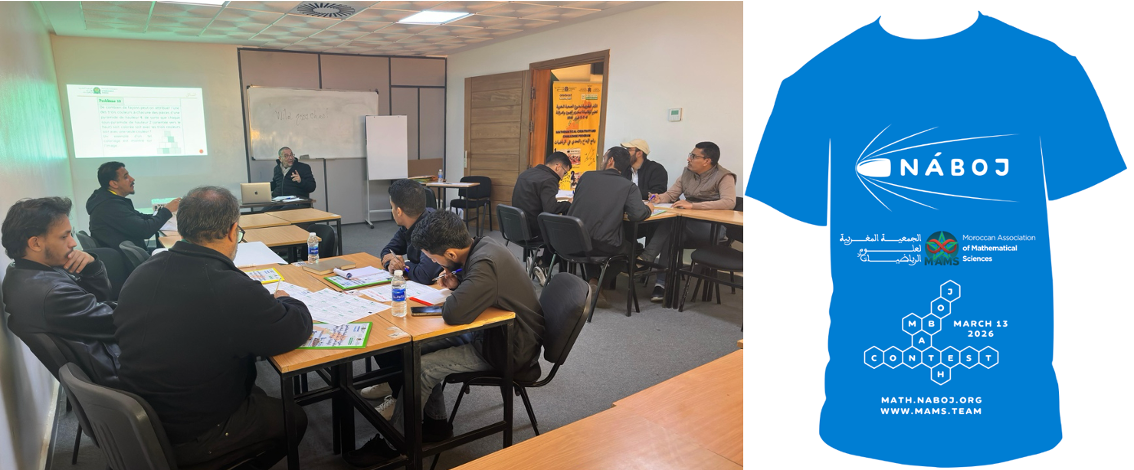
On March 13, 2026, NÁBOJ will bring together teams of five students worldwide in a simultaneous 120-minute competition, free and open to all. Each team works through a set of problems - solving one unlocks the next, slightly harder challenge - rewarding teamwork, quick thinking, and clear communication. This year, Moroccan cities including Laayoune, Tarfaya, Boujdour, Essemara, Témara, Salé, Tantan, Sidi Bennour, and others will compete side by side with teams from Vienna, Prague, and beyond. In this way, MAMS has built a balanced competition pathway that embraces both the strength of the individual and the power of the team.
Together, IMSO, EMC, and NÁBOJ reflect MAMS’s simple aim: to open doors for both individual talent and collective intelligence so students experience the discipline of solitary problem solving and the excitement of competing - and succeeding - as a team.
11.2 News from South Africa
South Africa Country Representative: Dr. VG Govender to ICMI

1. Report on IDM Activities in South Africa
The International Day of Mathematics (IDM) is widely celebrated in South Africa. Subject associations, Education District offices, Universities, and schools usually have a range of activities to commemorate IDM. These include in-class and school activities devoted to the significance of mathematics across the school phases, regional activities in the form of Mathematics relays, Mathematics Fairs and Career Exhibitions, National Mathematics Olympiads, and other interesting and engaging activities. These occur in the lead up to IDM, on the day itself, or just after it. Some of the specific activities are:
Activities arranged by SAMF (South African Mathematics Foundation):
- South African Mathematics Olympiad (Round 1) for Grades 8-12: first round on March 12, 2026. In March 2025, 87,699 pupils participated in Round 1. It is expected that a similar number or slightly more will participate in March 2026 as a result of advocacy and outreach efforts by SAMF.
- South African Mathematics Challenge (Round 1) for Grades 4-7: first round from March 16-20, 2026. In March 2025, 77,357 pupils participated in this competition. More pupils are expected to participate in March 2026.
Activities arranged by AMESA (Association for Mathematics Education in South Africa)
- AMESA regions are likely to be involved with Education Districts in the promotion of Mathematics activities amongst teachers and learners in those districts in the lead up to IDM.
- Some AMESA regions/ branches are expected to have their annual regional conferences on March 14, 2026, or soon thereafter.
Activities arranged by universities
A number of universities in association with university based-organizations and SAMF, and sponsored by the Actuarial Sciences Society of South Africa (ASSA), have been hosting online IDM events since 2021. This is also planned for March 14, 2026. The event is aimed at high school pupils and undergraduate mathematics students and will include the following:
- Guest talks
- Demonstrations
- Meet a Mathematician
- Mathematics quizzes (hosted via Kahoot)
Please note that the university-based organizations mentioned above and others fully support this project:
STEM MentHER (Building a community in STEM) aims to support female students pursuing careers in Science, Technology, Engineering, and Mathematics (STEM) fields
CoE-MaSS (Centre of Excellence: Mathematical & Statistical Sciences) focuses on advancing cross-disciplinary research topics and developing national capacity in the scarce fields of mathematical and statistical sciences.
NITheCS (National Institute for Theoretical and Computational) is a multidisciplinary and multi-themed research institute focused on building human and research capacity in the theoretical and computational sciences
2. Grade 12 Exit level examinations for Mathematics: November/December 2025
On January 14, 2026, the Minister of Basic Education in South Africa announced the results of the Grade 12 examination results (an exit-level examination). For Mathematics in the public-school examinations organized by the Department of Basic Education, 162,947 out of 254,415 passed, giving a 64% pass rate in the subject. On the same day, the results of the Independent Examination Board results were released: 17,413 candidates wrote these examinations, with a 95.9% pass rate for Mathematics. It is expected that all pupils with 60% and above in Mathematics will study university programmes where Mathematics is one of the main pre-requisites.
3. Southern African Association for Research in Mathematics, Science and Technology Education (SAARMSTE)
SAARMSTE held its 34th annual conference at the University of Johannesburg from January 18-21, 2026. The theme was Reimagining STEM Education: Inspiring Innovation for Social Impact and Sustainability. The Mathematics part of the conference consisted of 21 long papers, 20 short papers, 8 guided poster papers, and 3 symposia. These conference activities covered a wide range of mathematics sections such as continuous education, initial teacher education, primary education, secondary education, and tertiary education. The majority of delegates were from South Africa. However, there were also delegates from Malawi (2), Zimbabwe (1), Lesotho (3), Rwanda (1), and Namibia (1). The delegates from outside Africa include the United Arab Emirates (1), Finland (1), and Ireland (2).
4. AMESA Regional Activities
On February 7, 2026, the AMESA Limpopo Region had a one-day Mathematics seminar with more than 300 delegates attending. This seminar covered mathematics content such as Transformation Geometry, Exponents, Game-based learning, and basic trigonometry. It also covered assessment tasks across the school phases. A Mathematical Literacy Interest Group was also formed.
5. South African Mathematics Competitions
There are two main Mathematics competitions for pupils in South Africa. The first round of these competitions is scheduled to take place close to March 14, 2026 (International Day of Mathematics).
South African Mathematics Olympiad (SAMO)
The South African Mathematics Olympiad (SAMO) consists of three rounds. The first round of the South African Mathematics Olympiad takes place on March 12, 2026. There are two categories, junior for Grade 8 and 9 students and senior for Grades 10-12 students. It is expected that at least 60,000 students from South Africa and other African countries will take part in the first round of SAMO. The second round is scheduled for May 14, 2026, and the third round is on July 30, 2026. (In 2025, 87,904 participated in Round 1, 12,750 in Round 2, and 218 in Round 3.) For more details, please visit the official website.
South African Mathematics Challenge (SAMC)
The South African Mathematics Challenge (SAMC) is a competition for primary school students in South Africa. There are separate papers for Grade 4, Grade 5, Grade 6, and Grade 7. The first round is written from March 16-20, 2026. The second round is on May 20, 2026, and the third round is on September 10, 2026. It is expected that more than 70,000 students from South Africa and other African countries will take part in the first round of SAMC 2026 (In 2025, 77,357 participated in Round 1, 10,771 in Round 2, and 504 in Round 3.) For more details, please go to the official website.
Conferences to Come
ISDDE Conference 2026
Dates: May 18 - 20, 2026
Location: University of Chile, in Santiago, Chile
more information on the website.
INDRUM2026: Sixth conference of the International Network for Didactic Research in University Mathematics
Dates: June 15-19, 2026
Location: Dubrovnik, Croatia
INDRUM2026 website
CIEAEM77
Dates: July 20-24, 2026
Location: Barcelona, Spain
More information on the website.
World Federation of National Mathematics Competitions - WFNMC-10
Dates: July 22-28, 2026
Location: Putrajaya, Malaysia
More information on the website.
Pre-registration
8th INTERNATIONAL CONFERENCE ON ETHNOMATHEMATICS
Dates: August 2–7, 2026
Location: National University of San Antonio Abad del Cusco, Peru
African Association for Mathematics Didactic (ADiMA) 5th ADiMA Conference (ADiMA-5)
Dates: December 14–18, 2026
Location: Niamey, Niger
website to be established
CERME15
Dates: February 8-12, 2027
Location: Bratislava, Slovakia
More information on the website
15th International Conference on Mathematical Creativity and Giftedness (MCG-15)
Dates: September 14–17, 2027
Location: University of Calgary, Calgary, Alberta, Canada
More Information on the website.
ICME-16
Dates: July 9-16, 2028
Location: Prague, CZ
More information on the website.