ICMI Newsletter - September 2026
Editors:
Jean-Luc Dorier (ICMI Secretary-General)
Jinfa Cai (ICMI Vice President)
Lena Koch (ICMI Administrative Manager)
Publishing dates:
March 15, June 15, September 15, December 15
Editorial
Editorial–From the desk of Christoph Sorger, IMU Secretary-General (2023-2030), University Nantes (France)
The IMU General Assembly (GA) met in New York City on July 20 and 21, and the International Congress of Mathematicians (ICM 2026) followed in Philadelphia from July 23 to 30. For the IMU, these events mark the culmination of a four-year cycle: the General Assembly reviews the work of the preceding term, elects the Union's new leadership, and sets priorities for the next four years, while the ICM brings the international mathematical community together around research, exchange, recognition, and public engagement.
Readers of this Newsletter will immediately recognize the parallel with ICMI. Every four years, the ICMI General Assembly brings together the ICMI Country Representatives, receives reports, discusses the Commission's work, and elects the ICMI Executive Committee. It meets immediately before the International Congress on Mathematical Education (ICME), ICMI's principal international congress. The two four-year cycles are offset by two years: following the IMU General Assembly and ICM in 2026, the ICMI General Assembly and ICME will take place in Prague in 2028, before the IMU cycle begins again in 2030.
The governance of IMU and ICMI is linked: the IMU President and Secretary General serve ex officio on the ICMI Executive Committee, and another member of the IMU Executive Committee serves as liaison to ICMI. ICMI reports on its work to the IMU General Assembly, while ICMI's own General Assembly gives its Country Representatives the central role in shaping the Commission's next term.
The 2026 IMU General Assembly was attended by 157 delegates representing 66 countries, including 25 who participated remotely. With the IMU Executive Committee, representatives of commissions and committees, Affiliate Members, candidates for election, and Secretariat staff, around 200 people took part. Among the reports received by the delegates was ICMI's report for 2022–2025. It described a remarkably broad program: ICME-15 and preparations for ICME-16; ICMI Studies; the Capacity and Networking Project; the ICMI AMOR project; the ICMI Awards; and the work of ICMI's Country Representatives and Regional and Thematic Affiliate Organizations.
The General Assembly elected the IMU Executive Committee for 2027–2030. Ulrike Tillmann was elected President and I was re-elected Secretary General. From January 1, 2027, Ulrike will therefore join the ICMI Executive Committee ex officio, and I will continue in my role. The incoming IMU Executive Committee will also appoint a new liaison to ICMI, succeeding Paolo Piccione, whose feedback on his eight years in that role appeared in the June 2026 ICMI Newsletter.
Finally, the Assembly selected the locations for the 2030 IMU General Assembly and ICM: the 21st General Assembly will be held in Dublin on July 8 and 9, followed by ICM 2030 in Glasgow from July 11 to 19. We are grateful to all three bidding teams – Dublin/Glasgow, Hong Kong, and Tokyo – for the enormous work involved in preparing their proposals.
ICM 2026 was the first fully in-person ICM since Rio de Janeiro in 2018. After the exceptional circumstances that made ICM 2022 a virtual congress, gathering again face to face carried particular meaning. In total, 3,170 participants attended. At the opening ceremony,[1] the 2026 Fields Medals were awarded to Yu Deng, John Pardon, Jacob Tsimerman, and Hong Wang. Shayan Oveis Gharan received the IMU Abacus Medal, Graeme Segal the Chern Medal Award, Yurii Nesterov the Carl Friedrich Gauss Prize, and Hannah Fry the Leelavati Prize; Karen Vogtmann was selected as the Emmy Noether Lecturer. For readers of the ICMI Newsletter, the Leelavati Prize may have a particular resonance: it recognizes outstanding contributions to increasing public awareness of mathematics, and Hannah Fry was honored for communicating mathematical ideas through books, video, television, and other media.
The scientific program comprised 214 plenary, section, public, and prize lectures, together with 424 short communications and 132 posters. Generous travel support from the Simons Foundation, administered by the American Mathematical Society, enabled 443 participants from developing countries to attend with full funding. The wider public program included films, lectures, exhibitions, and outreach activities, reaching 968 people, among them 242 children. These activities complemented the research program by presenting mathematics as something to be explored, discussed, communicated, and shared—not only within the profession but with learners and the wider public.
For ICMI readers, Section 19 – Mathematical Education and Popularization of Mathematics – was a particularly visible meeting point between our communities. Anita Rampal spoke on whether mathematics education is responsive to ecological justice, bringing embodied, entangled, and popular forms of knowledge into the discussion. Tadashi Tokieda explored calculation that involves neither numbers nor formulas. Three roundtables addressed communicating mathematics in physical and virtual public spaces, teaching mathematics in multilingual spaces, and mathematics education in the age of artificial intelligence.
Artificial intelligence was one of the strongest themes across the Congress as a whole. It appeared in lectures and panels on mathematical research, proof, publishing, and attribution, but the discussion in Section 19 made clear that education cannot be separated from these questions. New tools may change what students can do, how teachers design learning, and how mathematical understanding is assessed. At the same time, their use raises questions about equitable access, the reliability of AI-generated output, the changing roles and responsibilities of students and teachers, and the autonomy of the discipline.
The ICM displayed mathematics in all its depth and variety. It also showed why the ties between mathematical research and mathematics education matter. Today's students are tomorrow's researchers, teachers, citizens, and decision-makers; today's research reshapes tomorrow's curricula, technologies, and public understanding.
As the IMU now begins its transition to a new Executive Committee, ICMI is moving steadily toward Prague in 2028. The alternating rhythm of our two General Assemblies and Congresses gives us regular occasions to meet our respective communities. I look forward to continuing our close and constructive relationship over the next two years, as ICMI prepares for its 2028 General Assembly and ICME-16.
Christoph Sorger
Secretary General of the IMU
[1] The whole Opening Ceremony is visible on YouTube at https://www.youtube.com/live/aFv0KvpcvKo
ICM 2026
International Congress of Mathematicians (ICM) 2026 in Philadelphia, USA| July 23–30, 2026
20th IMU General Assembly in New York City, USA | July 20–21, 2026
Personal report from ICMI President Merrilyn Goos
There are many privileges that come with serving as President of ICMI. One of the most interesting involves participating in key activities of ICMI’s parent body, the International Mathematical Union (IMU). As IMU Secretary General Christoph Sorger has explained in his Editorial for this newsletter, both organizations hold their General Assemblies and international Congresses at four-year intervals, but with ICMI and IMU events scheduled two years apart. It was a pleasure, as ICMI President, to be invited to attend the IMU’s General Assembly (held in New York City from July 20-21) and the International Congress of Mathematicians (held in Philadelphia from July 23-30).
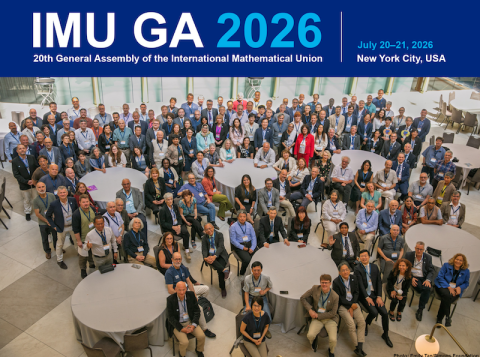
At the General Assembly, I presented a short oral summary of ICMI’s quadrennial report to the IMU and participated as an observer over the two-day meeting along with representatives of the IMU’s other commissions and committees. In addition to receiving reports and considering resolutions concerning the running of the IMU, the General Assembly voted on the venue for the next International Congress of Mathematicians (ICM) – which resulted in Glasgow being selected for the ICM in 2030 and Dublin for the General Assembly to be held immediately beforehand. No doubt future participants in both meetings will be looking forward to the warm hospitality for which both these cities are well known. New York City was also abuzz with thousands of FIFA World Cup fans, as the final between Spain and Argentina took place in nearby New Jersey the afternoon before the GA started.
Philadelphia was in a celebratory mood for a different reason, as the birthplace of American independence marking the USA’s 250th anniversary. As the venue for the ICM, Philadelphia also celebrated a festival of mathematics, offering many public events such as films, art, exhibitions and music in addition to the scientific program. The Congress opening ceremony was a highlight as it introduced the winners of the IMU’s prestigious awards, as Christoph has described in his Editorial. Not surprisingly, the impact of AI on the work of professional mathematicians was prominent throughout the ICM program – including the program for Section 19 on Mathematical education and popularization of mathematics. I attended the three roundtables in this section that brought together mathematicians and mathematics educators interested in the topics of Communicating mathematics in physical and virtual public spaces, Teaching mathematics in multilingual spaces, and Mathematics education in the advent of the AI era. All these roundtables attracted strong audiences and prompted lively question and answer sessions. I was particularly struck by the ideas that were presented about communicating the value of mathematics to those outside our communities, including policy makers and politicians.
Both the IMU General Assembly and the ICM provided wonderful opportunities to meet people who lead or support other IMU commissions and committees, members of the IMU Executive Committee, and mathematicians from around the world. Everyone I met expressed curiosity, interest, and support for the work ICMI does in promoting research and development in mathematics education. An experience like this can only reinforce the value of ICMI being part of a global community whose members care about both the discipline of mathematics and mathematics education.
Online Seminar Series for Capacity Building
ICMI Online Seminar Series for Capacity Building: Strengthening mathematics teacher education
Susanne Prediger, Ram Ramanujam, Mercy Kazima, Cristina Sabena (ICMI EC Members 2025-2028)
To promote capacity building and international exchange about mathematics teacher education practices, the ICMI executive committee has decided to establish an online seminar series, starting October 12, 2026. Please spread the program to all potentially interested teacher educators.
Goal: With the new ICMI Online Seminar Series Strengthening Mathematics Teacher Education, we want to
- establish international dialogue on good content-specific practices to strengthen mathematics teacher educators for mathematics and mathematics education courses
- hear experienced and inspiring mathematics teacher educators report on their work and offer core activities for individual adaptation in other contexts
Challenge to be addressed: Mathematics teacher educators for pre-service and in-service mathematics teachers continuously work on improving their teacher education practices on mathematics and mathematics education, but often in isolation. While excellent mathematics teacher education approaches have been developed all over the world, they are rarely shared and discussed across countries. So far, international discourses often focus on research findings or content-independent practices. And, the discourses are still dominated by ideas from affluent countries which work on different conditions compared to under-resourced contexts.
Yet, the highly valuable practical work with specific mathematical content (in mathematics-for-teaching courses as well as in mathematics education courses) deserves to be shared, discussed, and distributed across countries.
Target group: We cordially invite mathematics teacher educators in pre-service (and in-service) teacher education. The online format allows for wide participation even among those who are alone in their institutions or cannot travel to international conferences. We dedicate the online series mainly (but not exclusively) to teacher education in under-resourced contexts.
Structure: Each seminar in the series is structured as a two-hour online meeting, with
- 45-min input from an experienced and inspiring mathematics teacher educator,
- 45-min try out of core activities and discussion about potential adaptations in small group work in breakout rooms with similar contexts,
- then 30-min plenary discussion
Material to take home: To ensure practical utility, the speakers plan to provide some material to take home: Materials for core activities will be offered from each seminar that can be adapted and used in different contexts, e.g., with slides or worksheets. The material will be collected on an internal website and with links to further internet sources.
Dates and Speakers: The seminars on teacher education on mathematics and on mathematics education can be attended separately. The first four seminars featured by high-profile international experts from different continents will take place as follows:
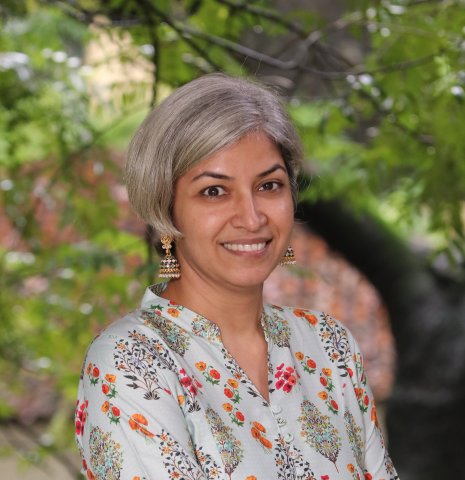
Monday, October 12, 2026 4:00PM–6:00PM Pakistan time | Anjum Halai | Language-supportive teaching in mathematics: |
Friday, November 27, 2026 1:30PM - 3:30PM. Mumbai time (UTC + 5.30 | Ruchi Kumar (India) | Creating mathematical possibilities: What under-resourced contexts teach us about teacher development |
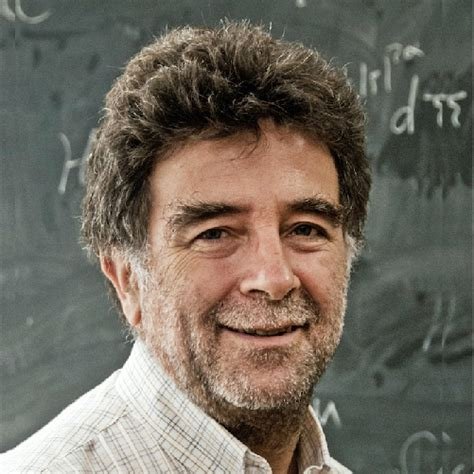
Tuesday, January 12, 2027 9:00AM–11:00AM. Chile time | Patricio Felmer (Chile) | Promoting preservice teachers’ mathematical problem-solving experiences |
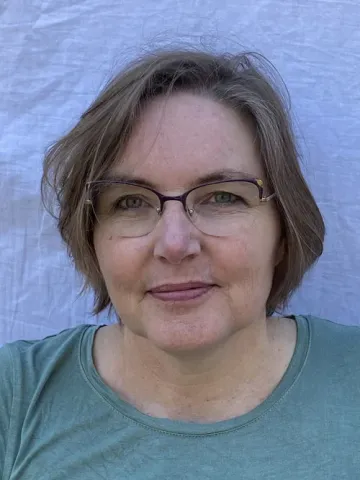
Monday, February 15, 2027 (UTC + 2) | Nicky Roberts (South Africa) | Two pathways into number: A starting point for primary teachers with insecure maths foundations |
… to be continued |
|
|
Organizers of the Series and First Four Speakers
| Organizer of the Series | First four Speakers | |||
| 
| 
| 
| 
|
| Susanne Prediger (Germany) | Anjum Halai (Pakistan) | Ruchi Kumar (India) | Patricio Felmer (Chile) | Nicky Roberts (South Africa) |
Here you can find the website and the registration links.
Dissemination of information and registration:
Please, disseminate the information about this series to all colleagues in near and far teacher education colleges and universities.
AMOR 2nd Webinar
We are happy to announce that the second webinar in the series devoted to the ICMI Awardees Multimedia Online Resources project (ICMI AMOR) will take place on Wednesday October 28, 2026.
There will be a first session at 10AM UTC in English and second session at 4PM UTC in Portuguese. Check the time in your respective countries and be aware of possible energy saving changing time .around this period (UTC: Coordinated Universal Time https://time.now/timezones/utc/)
This webinar will be devoted to:
- Ubiratan D’Ambrosio unit (Felix Klein Award 2005) made by Milton Rosa and Daniel Clark Orey https://www.mathunion.org/icmi/awards/amor/ubiratan-dambrosio-unit
and - Terezinha Nunes unit (Hans Freudenthal Award 2017) made by herself https://www.mathunion.org/icmi/terezinha-nunes-unit
with presentations of the authors of the units and also some testimonies of people who used these units in different contexts.
In order to be informed and receive a few days before the event the zoom link for each webinar session, you must be subscribed to ICMI Newsletter If you are not subscribed, please subscribe here: https://www.mathunion.org/icmi/organization/icmi-newsletter.
Please note that when connecting to a webinar session you agree that the session is recorded and that the recording is posted on the ICMI Website and the ICMI AMOR YouTube Channel. You can keep your video and microphone closed during the whole session.
We remind you that a video of the first webinar including the presentations and the two sessions of open discussion is available on the ICMI AMOR Website https://www.mathunion.org/icmi/projects/icmi-amor or directly on the YouTube channel: https://www.youtube.com/watch?v=aNmF5QlralE&t=1644s
Participants are encouraged to visit the ICMI AMOR website or/and our YouTube channel prior to the webinar.
On behalf of the ICMI AMOR Advisory Board,
Jean-Luc Dorier, ICMI Secretary General.
For any questions or technical issues, please
ICMI Studies Updates
ICMI is launching its 28th ICMI Study: “Where is the mathematics in mathematics education?”
During it last ICMI EC meeting, after a debate on all the various propositions sent to ICMI after a call for topics, the ICMI decided to launch a new ICMI study with the following theme: “Where is the mathematics in mathematics education?”
The International Program Committee of this new ICMI Study has just been appointed:
Co-chairs:
- Marianna Bosch (University of Barcelona, Spain)
- Dave Wagner (University of New Brunswick, Canada)
IPC members
- Lisa Darragh (University of Auckland, New Zealand)
- Patricio Herbst (University of Michigan, USA)
- Aisling Leavy (Mary Immaculate College, Limerick, Ireland)
- Oi-Lam Ng (The Chinese University of Hong Kong)
- Mary Ochieng (Strathmore University, Kenya)
- Michal Tabac (Tel-Aviv University, Israel)
- Aldo Parra (University of Cauca, Popayán, Colombia)
- Carl Winslow (University of Copenhagen, Denmark)
Ex-Officio Members:
- Merrilyn Goos (ICMI President)
- Jean-Luc Dorier (ICMI Secretary-General)
Hopefully the first IPC meeting will take place before the end of 2026 and the Discussion Document (with the call for contributions) will be published in early 2027 in this newsletter for a conference at the end of 2027 or early in 2028.
News from ICMI Studies 26 and 27
The ICMI Study 26 volume has just been sent to Springer for production and should be published in January 2027.
ICMI Study 27 is progressing very well and we hope that the volume will appear in the second half of 2027.
Call 2028 ICMI Awards
Call for the 2028 ICMI Awards:
- Felix Klein Award for lifelong achievement in mathematics education research
- Hans Freudenthal Award for a major program of research on mathematics education
- Emma Castelnuovo Award for outstanding achievements in the practice of mathematics education
Deadline for nominations for the three awards is: November 30, 2026.
Call to host ICME-17 (2032)
Call for intention to bid to organize and host ICME-17 in 2032
ICME is the largest international conference on mathematics education. It is held every leap year and it is the meeting point for mathematics educators, curriculum developers, mathematicians, researchers in mathematics education, teachers, teacher educators, and resource producers.
ICMI is hereby inviting the ICMI community (ICMI country representatives, national/regional mathematics education and mathematics organizations, and academic institutions) to consider the possibility of organizing and hosting the International Congress on Mathematical Education in July/August 2032.
Please note: Applications by convention centers, tourist agencies, or any other commercial organization will not be considered.
ICME-16, July 2028, Prague
 Prof. Naďa Vondrová, Convenor ICME-16
Preparations for ICME-16 are moving forward, with several important academic and organizational tasks now progressing in parallel.
The preparation of the TSG discussion papers is currently underway, and the abstracts submitted for the Invited Lectures are also being reviewed. These processes will shape an important part of the scientific program and help define the content of the Congress.
On the organizational side, we are continuing to develop and prepare the conference management system, which will support submissions, reviewing, registration, and other aspects of the Congress. We are working to ensure that the system will be ready to provide a smooth experience for participants once registration and submissions open.
At the same time, preparations for the second meeting of the International Program Committee (IPC) are beginning. The meeting will provide an opportunity to review the progress of the scientific program, discuss the next stages of preparation, and address a number of important issues related to the Congress program. The meeting will be held online in January 2027.
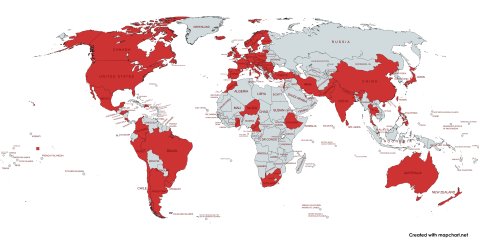
The Klein Project
The Klein Project: A New Phase of Development
Merrilyn Goos, ICMI President
Following a review of ICMI activities, the ICMI Executive Committee has decided that the time is right for the Klein Project to take the next steps in its development and evolve into a stand-alone initiative independent of ICMI.
The Executive Committee believes that an independent structure will provide the Project with greater flexibility while creating new opportunities for its continued development, partnerships, and long-term impact.
The Klein Project began as an IMU/ICMI project in 2008, with the aim of producing mathematics resources for secondary school teachers on contemporary mathematics. It was inspired by Felix Klein’s book Elementary Mathematics from a Higher Standpoint, first published 100 years earlier. A Design Team comprising mathematics educators and mathematicians was established to create Klein vignettes: short pieces of mathematical writings for secondary school teachers of senior mathematics classes. The vignettes are intended to give schoolteachers a sense of connectedness between the mathematics of the teachers’ world and contemporary research and applications in the mathematical sciences. Vignettes have been disseminated in various ways, for example, via the Klein blog, Klein conferences and workshops in several countries, ICME, and CERME.
The Klein Project was initially coordinated by Bill Barton and a Klein Project team during his term of office on the ICMI Executive Committee, serving as Vice-President, President, and Past President until 2016. Since 2017, the Klein Project has been coordinated by Hans-Georg Weigand and supported by William McCallum, who maintained and hosted the Klein Blog.
We thank Hans-Georg and his colleagues for their work in maintaining the Klein project and wish them every success in taking the Klein Project forward into this new phase of development. We look forward to seeing Design Team members participating in future ICMEs and other ICMI activities and conferences to seek new members, initiate new activities, and disseminate new Klein vignettes.
RELME 39
XXXIX Latin American Meeting on Mathematics Education (RELME 39)
Prof. Valentina Badía Albanés - University of Havana - ICMI Cuba Representative – President of RELME 39 Organizing Committee
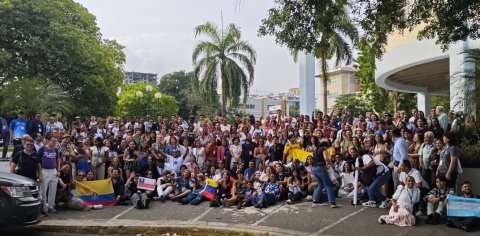
Note: The picture was taken on Wednesday, July 22, 2026.
As announced in the previous newsletter, the 39th Latin American Meeting on Mathematics Education (RELME 39) took place at the Autonomous University of Santo Domingo, Dominican Republic, from July 20 to 24, 2026.
The first day featured the Ninth RELME Meeting of Young Researchers. Under the theme “Rethinking Knowledge for a Complex World: Creative Connections between Mathematics, Culture, and Technology,” the program fostered spaces for academic and professional exchange as well as activities designed to strengthen ties among young researchers, students, teachers, and members of the Latin American mathematics community. The Postgraduate Fair was held, designed to introduce young participants to different postgraduate academic training options, and the Publications Fair was dedicated to the presentation and dissemination of books, journals, academic papers, and other publications of interest to the participating community. The Mathematics Festival also took place.
On the morning of July 21, RELME 39 was officially inaugurated, and academic activities began with the opening lecture by Dr. Miriam Nicado, Rector of the University of Havana, entitled “Main Challenges of Mathematics Education in the Age of Artificial Intelligence.”
A total of 621 colleagues from 16 Latin American countries, Spain, and the United States participated in RELME 39. The program included 3 plenary lectures, 38 special lectures, 15 short courses, and 38 workshops.
103 research reports, 182 short communications, 40 posters, and 8 presentations of books and teaching materials were presented. Two discussion groups were held.
The emerging themes in this edition were technology applied to mathematics, teacher training, and mathematical modeling. There was outstanding attendance at all activities, as well as a very conducive environment for exchange and collaboration.
During the closing ceremony, the venue for the next Latin American Meeting on Mathematics Education (RELME 40) was announced, which will take place in July 2027 at the University of Lima, Peru.
News from Affiliate Organizations
Call for Submissions XVII CIAEM 2027
News from the Comité Interamericano de Educación Matemática (CIAEM) / Interamerican Committee of Mathematics Education (IACME in English)
Angel Ruiz, President of CIAEM/IACME
AI PARTICIPATION IN THE XVII CIAEM: send your submission until November 30, 2026 and participate in XVII CIAEM
The XVII Inter-American Conference of Mathematics Education (XVII CIAEM) is hosted by the Inter-American Committee of Mathematics Education and Antonio Nariño University in Barranquilla, Colombia, from June 27 to July 3, 2027.
Artificial Intelligence plays a role in this event through the following key dimensions:
- Scientific Program: The academic program features Artificial Intelligence across multiple thematic areas and invited keynotes. (See Topics, Guest Speakers)
- Submission Content Guidelines: Paper proposals must explicitly declare any use of AI in their figures, tables, or text in a concise and clever appropriate manner. (See CIAEM Style)
- Information AI Chatbot: The official website includes an AI-powered assistant ("angelbot") designed to deliver rapid, automated support for all attendee and participant inquiries. (See Official Website) This chatbot is also deployed across related websites of the Inter-American Committee on Mathematics Education.
- AI Format Compliance Support: Authors, submission managers, and reviewers have access to an AI Support Assistant to verify document formatting (CIAEM Style). The tool focuses strictly on structural compliance rather than paper content. Every proposal must pass through this assistant prior to final submission, generating a mandatory verification code required by the submission platform. Developed by the organizing team, the assistant is accessible directly at: https://iaponencias.ciaem-redumate.org/.
The Submissions Platform utilizes a custom-tailored version of Open Journal Systems, a standard platform for academic journal workflows.
The conference accepts submissions in Spanish, Portuguese, and English from September 1 to November 30, 2026.
XVII CIAEM aims to lead academic discourse by thoughtfully and critically integrating Artificial Intelligence into modern educational events.
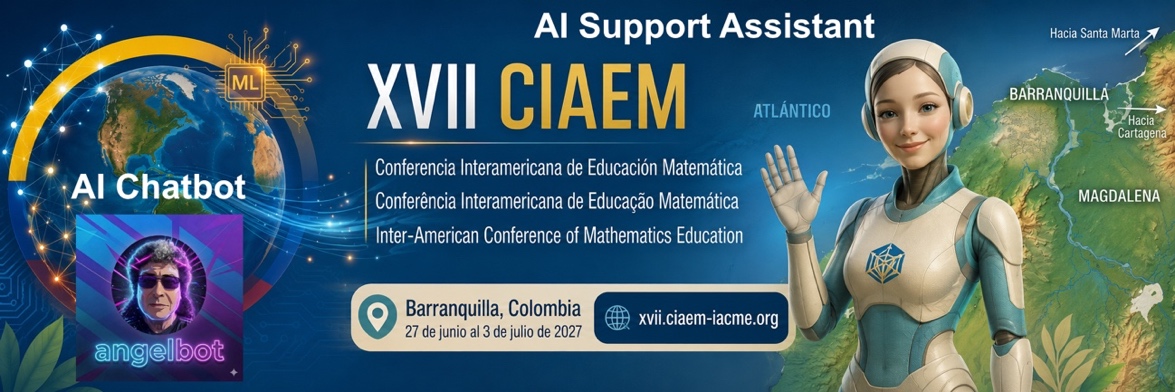
Illustrative image designed by A. Ruiz using AI
HPM
News from the International Study Group on the Relations between the History and Pedagogy of Mathematics (HPM)
Antonio M. Oller-Marcén, Chair of HPM
The ESU10 (10th European Summer University on History and Epistemology in Mathematics Education) took place in Aveiro (Portugal) from July 21 - 24, 2026. This conference brought together around 200 researchers, teacher educators, and practitioners from all around the world.
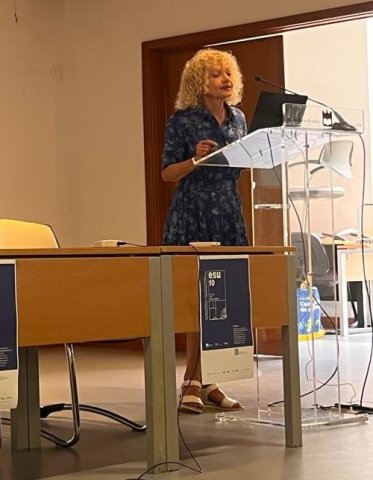
Figure 1.Évelyne Barbin during her opening lecture.
As Évelyne Barbin (Figure 1) noted in her very interesting opening lecture, ESU meetings are marked in three distinct ways: they are open to secondary teachers, they welcome interdisciplinarity, and they have three official languages: English, French, and the language of the ESU host country. These characteristics highlight the openness of the meeting and point out a clear orientation towards the transfer of knowledge. In fact, among the main themes of the conference we find “Integrating history and historical epistemology of mathematics in mathematics education” and “History of mathematics in (pre-service and in-service) teacher education.”
Throughout the five days of the conference, in addition to plenary lectures, panels, and round tables, around 70 works were presented in the form of oral presentations. Furthermore, and in line with the aforementioned transfer spirit, more than 30 workshops were held. In them, teachers shared the design and results of activities implemented in different classroom contexts (Figure 2).
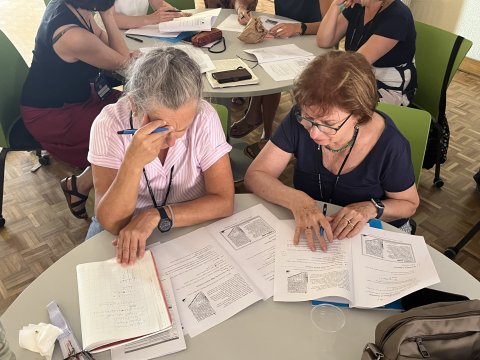
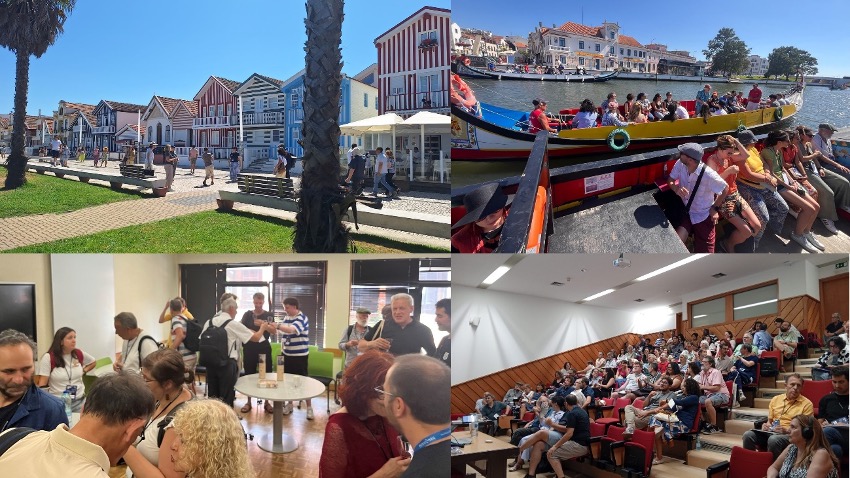
The conference also provided the opportunity to better know the beautiful city of Aveiro, to meet old friends, and to make new ones (Figure 3), all in the friendly atmosphere that characterizes this series of meetings. We invite you to experience it firsthand by joining us in the next edition, ESU11, that will take place at the University of St. Andrews (Scotland) in 2030.
Figure 3, not only work:
ICTMA
News from the International Study Group for the Teaching of Mathematical Modelling and Applications (ICTMA)
Vincent Geiger, President of ICTMA
Vale Henry Pollak
ICTMA, the International Study Group for the Teaching of Mathematical Modelling and Applications, morns the passing of Professor Henry Pollak on July 8, 2026. Henry was a mathematician and mathematics educator of the highest repute, working as leading member of Bell Laboratories. His life’s work was foundational to the goals of ICTMA, as he was one of the first to advocate for the inclusion of authentic real-world problems as a central component of mathematics education, though mathematical applications and mathematical modelling. This goal was heralded at the ICMI colloquium How to teach mathematics so as to be useful (Utrecht, The Netherlands, 1967) led by Hans Freudenthal. The proceedings of this colloquium, which were published in the inaugural issue of Educational Studies in Mathematics (1968), included Henry’s landmark lecture On some of the problems of teaching applications of mathematics. Henry presented a continuation of this work at the 1st International Congress on Mathematical Education (ICME-1, Lyon, 1969) in his address How Can we Teach Applications of Mathematics? in which he outlined his views, as an applied mathematician, on the teaching and learning of mathematical applications. In this and in his later work, Henry spoke about modelling as more than the ability to solve real-world problems within the workplace but also as central to intelligent citizenship and personal decision-making. This included the ICME-3 (Karlsruhe, 1976), in which Henry was responsible for the section The Interaction between Mathematics and Other School Subjects as well as delivering the influential survey lecture The Interaction between Mathematics and Other School Subjects. In addition, Henry differentiated different meanings of applied mathematics, as content and as process, laying the ground for the further development of the discourse on mathematical modelling education.
During his ongoing contributions to the biannual International Conference on the Teaching of Mathematical Modelling and Applications (ICTMA) (ICTMA1, Exeter, 1983; ICTMA3, Kassel, 1987; ICTMA16, Blumenau, 2013), he defined the difference between word problems and the mathematical modelling of authentic situations, introduced the concept of the mathematical modelling cycle, and argued for the implementation of open-ended modelling experiences in mathematics classes – ideas central to the ongoing work of ICTMA and research and practice in modelling more broadly.
ICTMA is producing a special newsletter to celebrate the many contributions of Henry Pollak to this community and as well as mathematics education itself. In this newsletter we hope to capture the significant and innovative contributions of Henry as a giant in our field.
ICTMA-23
The next biennial conference of ICTMA will take place August 22–27, 2027 at Skukuza in South Africa’s Kruger National Park - ICTMA-23. ICTMA23 will bring together researchers, teacher educators, teachers, and students from around the world to exchange ideas, share research, and advance the teaching and learning of mathematical modelling and applications.
Dr. Rina Durandt (rina.durandt@wits.ac.za) will convene the conference, leading planning for a world-class scientific program. More details about the conference can be found at https://ictma23.carlamani.com/?page=j1_18.
Some important dates:
- Abstract submission is now open and will close on February 1, 2027
- Notification of acceptance is February 15, 2027.
- Bungalows (if desired) should be booked by February 22, 2027 and other accommodations in the park should be booked by May 15, 2027.
The ICTMA-23 website is available at: https://ictma23.carlamani.com/
Find the First Announcement here: https://ictma23.carlamani.com/?page=j1_10
Visit the ICTMA website at: https://www.ictma.net/
MCG
News from the International Group for Mathematical Creativity and Giftedness (MCG)
Elisabet Mellroth, President of MCG
Our conferences are the core of our community; it is where we meet and share experiences and knowledge. Next year, in September 2027, the 15th MCG conference will take place in Calgary, Canada. We are now looking for the next places for our conferences in 2029, 2031, 2033, and beyond. As a former conference organizer, I can truly recommend hosting an MCG conference. Yes, it means a lot of work, but it gives so much back in being part of a team that is responsible for this important and highly engaging event. If you are you interested, contact me, Elisabet Mellroth. You find my contact information on our website: www.igmcg.org
CANADA BOUND! THE 15TH CONFERENCE OF THE INTERNATIONAL GROUP FOR MATHEMATICAL CREATIVITY AND GIFTEDNESS (MCG 15)
The 15th Conference of the International Group for Mathematical Creativity and Giftedness (MCG 15) will be held in Calgary, Alberta, Canada, from September 14–17, 2027. Preparations are well underway to welcome researchers, educators, graduate students, and practitioners from around the world for four days of scholarly exchange and collaboration.
The theme of the MCG 15th Conference is accessibility, understood in a broad sense. While the term accessibility is often associated with people who have physical or cognitive conditions, making something accessible can also mean making it reachable, easy to speak with or deal with, easy to use or see, understandable or appreciable, and open to influence. We invite authors to frame their contributions in the diverse forms of accessibility in the context of mathematical creativity and giftedness. Proposals that represent these or any other aspect of mathematics, creativity, and giftedness are welcome (www.igmcg.org).
IMPORTANT: Submission Dates
- Submission of Proposals: October 7 to December 30, 2026
- Notification of Proposal Decision: March 1, 2027
- Submission of Final Versions: May 31, 2027
The conference will be jointly hosted by the University of Calgary and Acadia University, with the local organizing committee led by Dr. Ayman Aljarrah (Acadia University), Dr. Paulino Preciado (University of Calgary), and Dr. Matthew Makel (University of Calgary).
Ayman Aljarrah, Acadia University, Canada
MCG RESEARCH NEWS
We would like to highlight a recently published article which you may be interested in reading: The relationship between mathematical creativity and giftedness.
Given the focus of IGMCG (mathematical creativity and giftedness), Chamberlin, Bicer, and Payne decided to write an article in which the two mathematical psychological constructs are discussed. Though you may not agree with all the tenets proposed in the manuscript, this article does serve as a point of discussion among colleagues. In this article, similarities and differences in mathematical creativity and giftedness are discussed in an attempt to elucidate fuzziness. Much of the discussion comes from literature and certainly the direction of the article comes from many colleagues at MCG.
Reference:
Chamberlin, S. A., Bicer, A., Payne, A. M. (2026). The relationship between mathematical creativity and mathematical giftedness. Gifted Child Today, 49 (2), 148-159. https://doi.org/10.1177/10762175251409250
Scott Chamberlin, University of Wyoming, USA
MERGA
News from the Mathematics Education Group of Australasia (MERGA)
Kym Fry, MERGA Vice President Communication
MERGA48 – Beyond Boundaries: Strengthening Futures in Mathematics Education
MERGA48, held July 6–10, 2026 in Parramatta, Sydney, provided a wonderful opportunity to engage with ideas that challenged, affirmed, and inspired our work as mathematics educators and researchers. The team at Western Sydney University created a welcoming and well-organized conference that supported both scholarly exchange and collegial connection.
Highlights included keynote presentations from Professor Jinfa Cai and Professor Tamsin Meaney, and the Clements-Foyster Lecture from Professor Kim Beswick. Attendees also engaged with our Pre-Conference Workshop presented by the GrantEd Group, and the Newcomers’ Session welcomed first-timers.
During the conference at the MERGA Annual General Meeting, held on July 8, 2026, members participated in the election of key Executive positions for the upcoming term, including incoming MERGA President, Professor Jodie Hunter. We congratulate Jodie on her appointment commencing January 1, 2027 as she takes the reins from Professor Katie Makar, who has served as MERGA President since 2023.
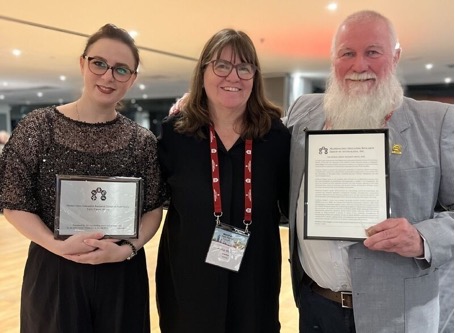
Professor Vincent Geiger received the prestigious MERGA Career Research Medal 2026 for his outstanding scholarship, leadership, and enduring impact on the mathematics education community. This award recognizes more than three decades of distinguished contributions to mathematics education research, particularly in the areas of numeracy, digital technologies, mathematical modelling, and emerging challenges such as artificial intelligence and big data. His work has significantly influenced both research and practice, shaping curriculum, professional learning, and cross-disciplinary approaches to numeracy in Australia and internationally, while also demonstrating sustained leadership and service to the mathematics education research community. The MERGA Early Career Research Award winner for 2026 was Rebecca Burtenshaw, for excellence in writing and presenting her paper, Research Participation as a Space for Teachers’ Reflection and Re-evaluation of Student Success.
The 2026 Conference Proceedings are now available on the MERGA website thanks to Conference Editors Nathan Berger, Matt Thompson, John Ley, and Cristi Wilsmore.
We are also thrilled to announce the celebration of 50 years of MERGA next year at the MERGA49 Annual Conference which will be held at the University of Melbourne from Sunday, June 27 to Thursday, July 1, 2027. The conference theme will be Inspiring the Next 50 Years: Mathematics Education for a Changing World, chaired by Prof Wee Teong Seah and Dr Carmel Mesiti. We look forward to sharing further details over the coming months as we prepare for this momentous occasion.
WFNMC
News from World Federation of National Mathematics Competitions (WFNMC) – A brief report on the tenth congress of WFNMC
Robert Geretschläger (Austria), President WFNMC
The tenth quadrennial congress of the WFNMC was held at the Imperial Lexis Hotel in Kuala Lumpur, Malaysia from July 22 to 28, 2026. The congress was a great success, especially due to the efforts of the local organiser Suhaimi Ramly and his wonderful team, as well as the Chair of the Program Committee, Krzysztof Ciesielski.
As has become standard for many such meetings, the congress was organized in hybrid mode in order to make participation possible for interested parties not able to make the trip to KL. Approximately half of the 51 registered participants were able to join the local team and the four keynote speakers on site, while the others were able to follow the presentations and discussions online. Unfortunately, the online participants had to miss out on the Malaysian hospitality, the excellent local food, and the inspiring discussions during the coffee breaks, but at least they were able to actively participate in the academic parts of the congress.
Wonderful keynote talks were given by Richard Elwes (UK), Po-Shen Loh (USA), Alexander Soifer (USA), and Lê Anh Vinh (Vietnam). As usual for such meetings, there were many great presentations in four Topic Groups, as well as workshops and a fascinating excursion. In addition, early arrivals had the opportunity to visit some more KL attractions, like the Batu caves, during an organized early-bird excursion.
We are all looking forward to our next meetings, namely our usual mini-conference just before the upcoming ICME in Prague in 2028, as well as the next full congress, which is planned for 2030.
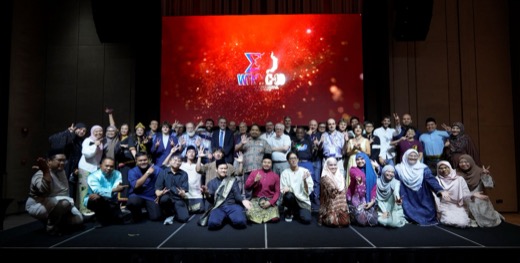
Photo © Ardent Educational Consultants SB, 2026
News from ICMI Country Representatives
Brazil
News from Brazil
Yuriko Yamamoto Baldin, ICMI Country Representative for Brazil, Professora Emérita da Universidade Federal de São Carlos
This year, 2026, I am honored to be appointed Brazil country representative to ICMI-IMU for the second time, after serving ICMI in this position during the 2008-2012 term. It is my pleasure to report on changes in the landscape of Mathematics Education in Brazil in recent years, including initiatives and projects aimed at meeting 21st-century demands and addressing unfavorable educational data that still threaten the quality of mathematics education for all, especially in Basic Education in Brazil.
Since I served my first term as ICMI country representative, I have worked to connect the efforts of several academic groups and associations representing the academic and educational community. The educational community includes mathematicians, mathematics education researchers, mathematics and teacher educators, and teachers/practitioners in multi-level education systems. One stream to connect such diverse agents of mathematics education is effectively diffusing accumulated disciplinary knowledge of mathematics and the teaching/learning of mathematics through collaborative networks among mathematicians, education researchers, and practitioners. A broadened community including several associations, such as Brazilian Mathematics Society-SBM, Brazilian Mathematics Education Society-SBEM, Brazilian Society of Applied and Computational Mathematics-SBMAC, and the Brazilian Society of History of Mathematics-SBHMat, not to mention many other important associations together with governmental institutions and major scientific funding agencies, has been recently active in explicitly supporting academic projects with a line of research on Education and Diffusion to make visible the results of research to the deep layers of the education system, connecting to practice as well.
Such a collaboration network must be put into action and not remain only as recommendations in documents or reports from large-scale global comparative rankings of educational data, e.g., PISA. The Ministry of Education (MEC) major project, started this year, “National Commitment All Mathematics,” is dedicated to addressing the challenges of improving mathematics education in basic education countrywide.
Conferences, Research Projects, Round-Table discussions with specialists, and more are increasingly incorporating a space for Education, Diffusion, and innovation into their organizations and programs. The recently constituted Brazilian Center of Geometry (CBG) is an exemplary institution that aligns with this trend.
I would like to conclude this short report with a comment that I consider important. Technology that speeds up communication and international collaboration opens opportunities for more interaction, consolidating knowledge and new research. In particular, CIAEM-IACME (ICMI) strengthens international collaboration between Brazil and Latin American countries and helps strengthen the network. I hope to bring new reports on the progress of these collaborations.
Latvia
News from Latvia
Marta Mikīte, ICMI Country Representative for Latvia
On a very active group of young mathematicians in Latvia
What can a group consisting of the most talented young mathematicians from a Baltic country achieve in the span of a single year? The short answer – unite over 300 pupils from 10 Latvian cities and create a powerful network of future thinkers by means of a creative Calculus tournament with 100+ participants, qualitative preparatory courses of Calculus, innovative discussion clubs with well-known professors, practical modelling hackathons with sponsored money prizes, and three physically printed editions of a student-led scientific journal with 8000+ copies for a wide community of 150+ mathematics teachers and pupils.
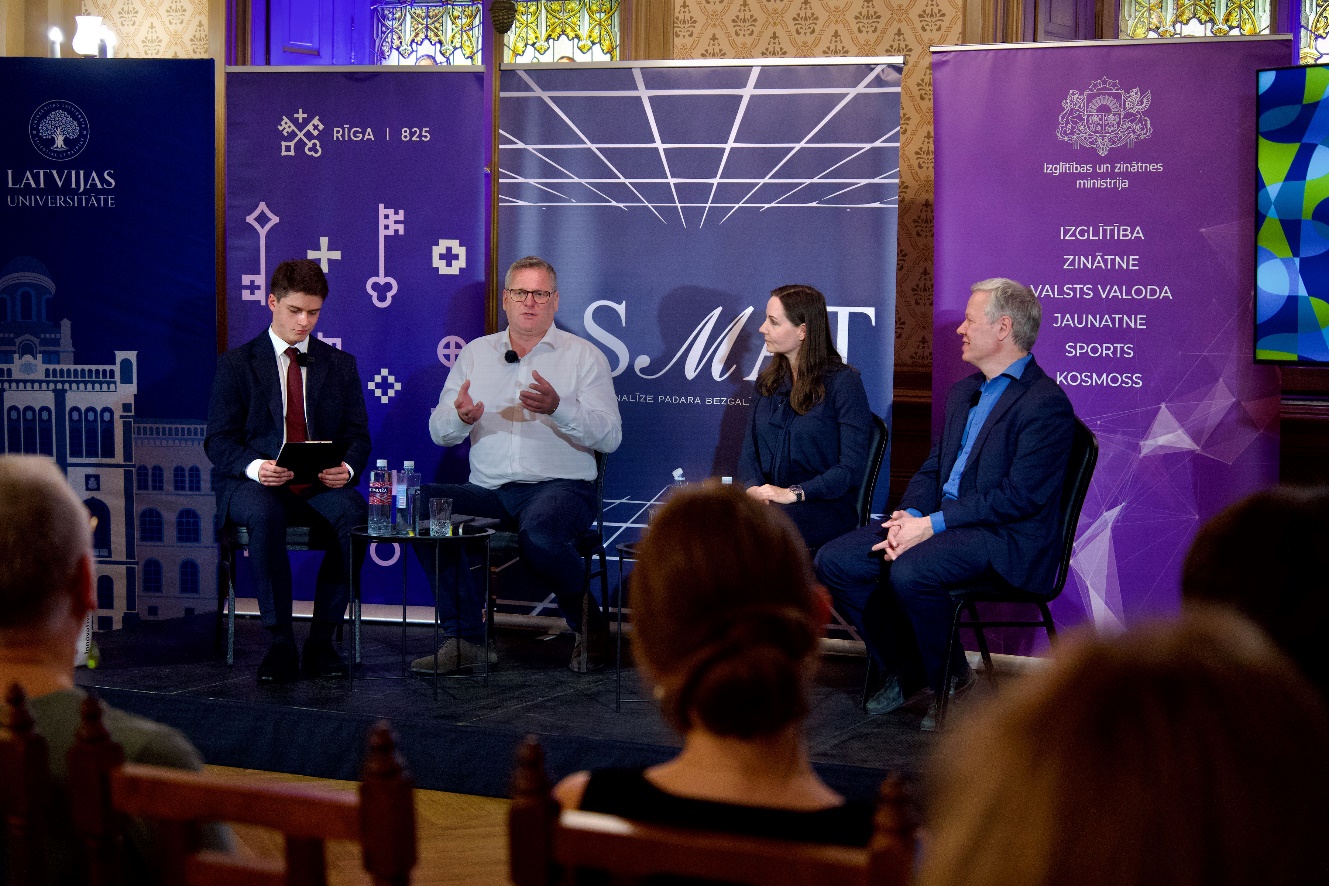
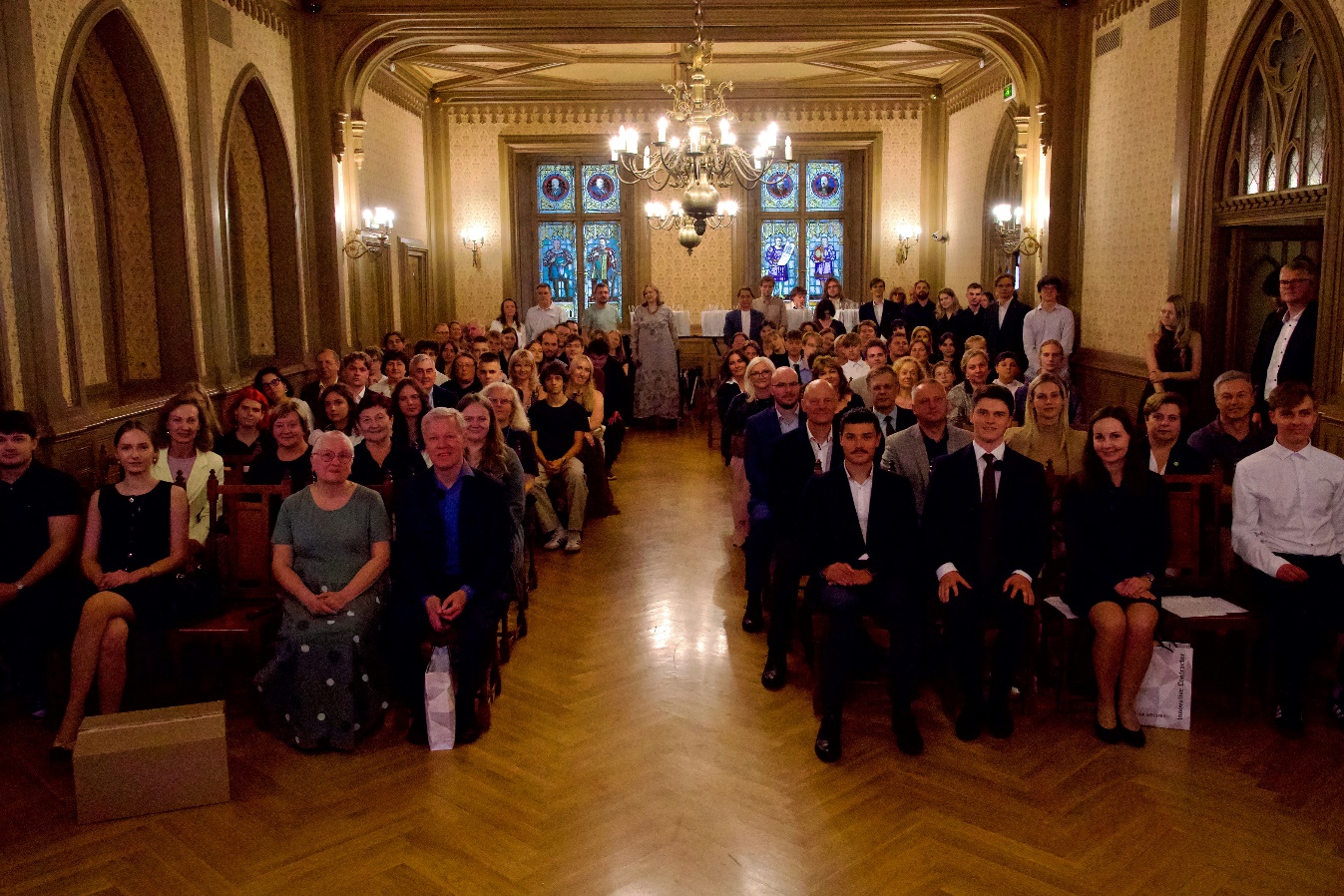
My name is Nils Zuravlovs, I am 20 years old, and I am the leading chair of the newly founded organization “Latvian Student Network of Mathematical Analysis” (https://lsmat.lv/). It is my honor to share with the ICMI community how we just celebrated the very first birthday of our society (8/28/26) together with our distinguished supporters from many universities, institutes, and government bodies of Latvia. Within the framework of our anniversary, I led an esteemed panel discussion with the Mayor of Riga Viesturs Kleinbergs, the Parliamentary Secretary of the Ministry of Education and Science Ieva Siliņa, and the world-leading scientist, global pioneer in quantum information theory Andris Ambainis from the University of Latvia. Our discussions about potential ways to involve the most proficient youth in industrial research projects, practical ideas for the preservation and continuation of the scientific heritage of Latvia, and other organizations’ future initiatives in informal education led to many government representatives standing up and saying out loud how impressive our work is and, furthermore, how they have now gained new motivation to accomplish even more!
With a strong vision of a stable future for future scientists, we wish to call to action the youth of other countries in order to find common ways of global partnership for local academic development. Moreover, we perceive a clear need to invite professors and other representatives of science from all around the world to have a seat or a video call with such students who seek new understandings. In the third edition of our “Latvian Student Journal of Mathematical Analysis” in 7000+ copies (https://lsmat.lv/projects/LSMAZ_izdevums_3.pdf) sponsored by the University of Latvia, we have come up with a new format for communicating original ideas. Until now the Journal has been realized with articles authored only by talented high-schoolers and intended for those with extensive pre-knowledge, but now the content is made accessible to absolutely every pupil in our country by introducing informal texts. It is a significant achievement that leading professors from the University of Latvia, Riga Technical University, and Transport and Telecommunication Institute together with well-known representatives from the Latvian Mathematical Teachers Association have published their thoughts in an entertaining way about Quantum Physics, Ancient Greece, and the Königsberg problem adjusted to Riga bridges as well as qualitative proposals and reflections about the development of the system of education in Latvia. It is anticipated that the Journal will spread worldwide in collaboration with renowned scientific institutions of global recognition.
In the years ahead we predict that our group could cooperate not only with Baltic states but also with other European and international countries for the purpose of enlarging the potential of our network with top-tier research expertise. If you are interested in our movement, feel free to e-mail us via info@analizesturnirs.lv. Let us work together! I am grateful for your attention!
Lithuania
News from Lithuania - Mathematics Education in Lithuania: Policy Reversals and Community Growth
Gintautas Jakštas, ICMI Country Representative forLithuania, Vilnius University
A Shift in National Assessment Policy
In July 2026, the Lithuanian Parliament made a highly debated decision to reverse an upcoming educational reform regarding high school graduation requirements. A previously approved regulation, which was set to take effect this school year, would have required all students to pass three national state matura examinations - including mathematics - to receive their secondary education certificate. With the recent parliamentary reversal, the requirement returns to passing only two examinations, meaning mathematics will not act as a mandatory gateway for high school graduation.
This late-stage policy reversal reflects broader systemic anxieties regarding student performance and the structural readiness of the education sector. From an educational measurement perspective, enforcing a mandatory, high-stakes mathematics threshold requires a highly stable assessment instrument and equitable teaching resources. Recent longitudinal analyses of the Lithuanian examination tasks, utilizing Webb’s Depth of Knowledge (DOK) frameworks, have highlighted significant fluctuations in cognitive complexity and success probabilities across domains. Furthermore, national forecasts indicate a looming structural deficit of qualified mathematics educators. While the removal of the mandatory examination relieves immediate graduation anxieties, it leaves an open question for the Lithuanian mathematics education community: how to sustainably raise mathematical literacy without relying on the pressure of high-stakes testing.
The 2nd Annual Conference of the Mathematics Education Research Group
Amidst these national policy discussions, the Lithuanian mathematical community continues to strengthen its collaborative networks. On August 24–26, 2026, Vilnius Gediminas Technical University (VILNIUS TECH) hosted the 2nd Annual Conference of the Mathematics Education Research Group of the Lithuanian Mathematical Society (LMD).
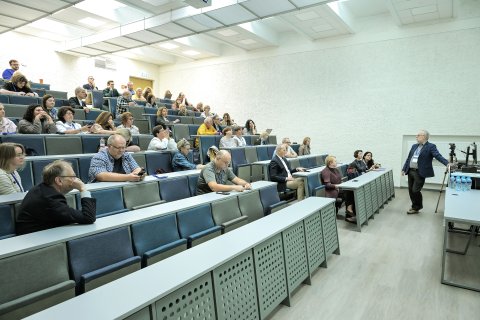
The event successfully bridged the gap between academic research and classroom practice, bringing together schoolteachers, university researchers, education policymakers, and students. The comprehensive program addressed critical themes highly relevant to the current national context, including the content of school and university mathematics, the integration of logical reasoning and proof, curriculum design, textbook analysis, and the cognitive complexity of mathematical tasks. By fostering dialogue between diverse stakeholders, the conference served as a vital platform for addressing systemic educational challenges and advancing the quality of mathematics teaching in Lithuania.
Morocco
News from Morocco
Mohamed EL Ibbaoui, ICMI Country Representative for Morocco
The Math Stars Program in Morocco: From Early Talent to International Competition
How early should we start looking for mathematical talent? And, perhaps more importantly, how can we keep young students interested in mathematics once we discover that they have a particular curiosity or ability for it?
These are some of the questions that led the Moroccan Association of Mathematical Sciences (MAMS) to develop Math Stars, a program aimed at giving young students opportunities to discover mathematics beyond the usual classroom curriculum.
The idea is quite simple: some children are naturally attracted to challenging mathematical questions. They enjoy looking for patterns, trying different approaches, asking “what if not?” and continuing with a problem even when the solution is not obvious. We believe that these early signs of mathematical curiosity deserve to be recognized and encouraged.
For us, competitions can be an effective way of doing this. Not because competition itself is the main objective, but because a good mathematical competition puts students in front of problems that make them think differently. It gives them the opportunity to experience the pleasure of finding an unexpected idea, learning from a mistake, or finally solving a problem that initially seemed impossible.
The international dimension adds another important element. Students discover that there are many other young people around the world who enjoy mathematics in the same way they do. Through the Math Stars program, Moroccan students participated in IMSO 2025 and IMC 2026, and we are currently preparing a new group to participate in IMSO 2026.
These experiences have been particularly valuable for the students. An international competition is not only about the problems they solve or the results they obtain. It is also about meeting other students, discovering different mathematical cultures and realizing that mathematics can create connections between young people from very different backgrounds.
Our experience with Math Stars has also convinced us that the development of mathematical talent should be seen as a long-term process. International competitions at a young age should not simply be viewed as an early version of the Mathematical Olympiad. They can instead be a first step in a much longer journey: discovering the joy of challenging problems, developing perseverance and mathematical thinking, and gradually becoming part of a wider mathematical community.
This is perhaps the most important lesson we are learning from the program. Talent does not only need to be identified; it needs also to be given opportunities to grow. For some students, the first challenging problem they encounter may be the moment when they realize that mathematics can be much more than what they meet in the classroom.
Through Math Stars, we hope to create more of these moments for young Moroccan students and, through our participation in international competitions, to give them the opportunity to discover that their mathematical journey can also have an international dimension.
Pakistan
News from Pakistan
Dr. Waqas Ali Azhar
A Season for Circles: News from Lahore, Pakistan
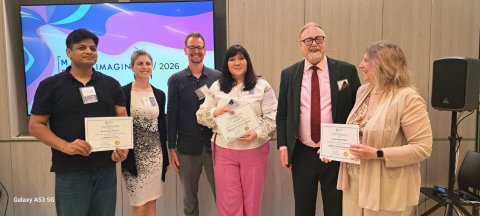
We are pleased to share that LUMS Math Circles has received an Honorable Mention for the 2026 EMS Simon Norton Mathematics Outreach Prize. The mention was shared with four other programs doing remarkable work around the world: ICMAT Mathematical Culture Unit (Spain), MaddMaths! (Italy), Mathematics without Words (Fribourg & Luxembourg), and MoMath Outreach Programmes (New York, USA). It was a humbling honor and a motivating reminder that the work of opening mathematics to more people is happening everywhere, sometimes quietly and persistently, often far from the spotlight.
Since 2021, we have grown LUMS Math Circles into one of Pakistan's most active university-led math outreach efforts, reaching students across the country through our in-house and outreach circles and teacher trainings. Every alternate Friday, Grade 6–12 and A-Level students from Lahore and beyond come to SBASSE, requiring no prior competition experience, just curiosity.
What makes a Math Circle at LUMS unique is the design process. A mathematician rarely plans a circle alone. A math faculty member is paired with a colleague from Computer Science, Life Sciences, Physics, Electrical Engineering, or Chemical Engineering or Economics, and together they build one activity from two intertwined disciplines. A circle on symmetry might carry a biologist's eye for pattern in leaves and shells. A circle on optimization might arrive by way of an engineer's intuition for circuits. The mathematics stays mathematics, but it walks in wearing different robes each time, and students meet it as something alive and connected, not a subject sealed off from the rest of the world.
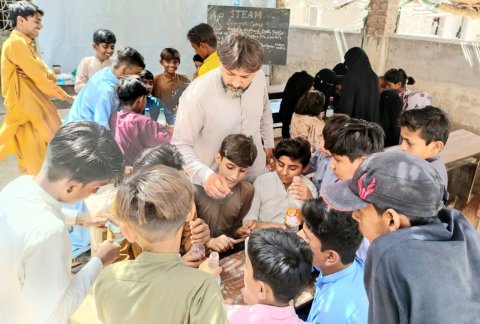
Circles in Sindh: That same spirit travelled to Sindh this summer, where government schoolteachers ran their own Math Circles camp. Their own words tell the story best. "I now focus on building foundational intuition and connecting abstract mathematical principles to practical, real-world problem-solving," one teacher wrote. Another put it more simply: "Math teaching became very easy by simple math circle technique." A third, teaching across sixty schools, said the change let hard ideas become "much easier for students to understand, keep up with, and actually enjoy."
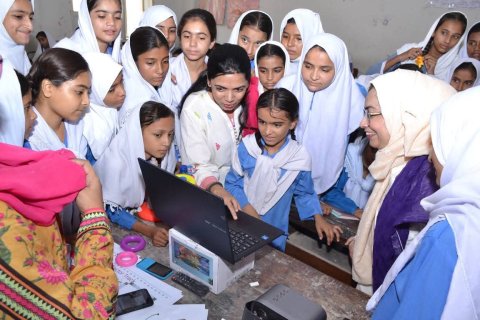
The reach surprised even us. Teachers have carried Math Circles methods into daily instruction for close to two thousand students and have helped guide more than two hundred schools across the district toward the same inquiry-based approach. Others described smaller but no less meaningful circles of influence: one who brought fifteen colleagues into the movement, another who introduced it to fifty. A teacher in Hyderabad put it best: Math Circles turn mathematics "from a rigid subject into a collaborative, playground-like space for creative problem-solving." A camp meant for teachers ended up, through them, reaching thousands of students who will likely never know the name of the program that changed how their teacher walks into the room.
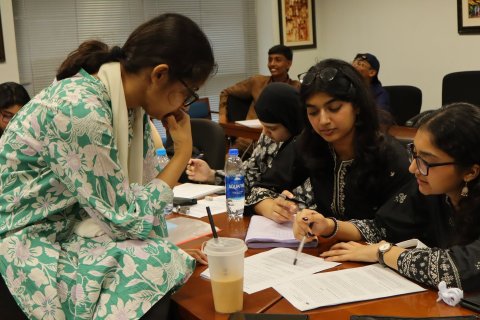
The Agility Camp: Back at LUMS, a smaller and more intense circle formed: the Math Circles Agility Camp. For 14 days, participants went, in their own words, off the grid in a world designed by themselves. No distractions, just deep thinking, collaboration, and the particular joy of a hard problem that will not give way easily. The camp closed with a mini Olympiad-style exam, a milder version built to test endurance and insight rather than speed alone. Participants left with recognitions of Gold, Silver, Bronze, and Honorable Mention, and, we expect, a slightly different relationship with mathematics than the one they arrived with. Fourteen days may not be long, but circles have a way of making time behave strangely. Ask anyone who has spent an afternoon chasing a proof that will not quite close, only to have it open, all at once, at hour six.
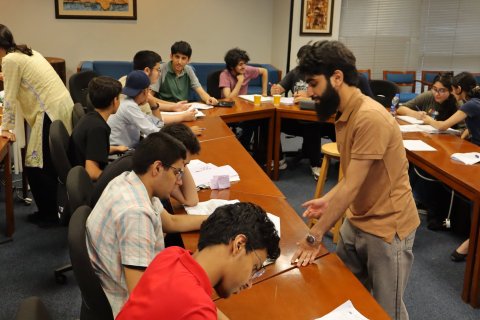
Three very different achievements, one summer: a jury in Europe naming us alongside programs we admire, a district in Sindh where teachers became the multiplier we never planned for, and fourteen days at LUMS where a small group learned what it feels like when a proof finally opens. None of it was the plan when this started in 2021. All of it is the reason we will keep going.
Poland
News from Poland
Edyta Juskowiak, ICMI Country Representative for Poland
Contemporary Mathematics Education (CME) Conference
The Contemporary Mathematics Education Conference (CME), formerly known as the Children’s Mathematical Education Conference, is a biennial international conference held in different locations in Poland. It brings together researchers, teacher educators, and practitioners from neighboring countries as well as from the wider international mathematics education community. The conference is designed as a working meeting for those interested in the teaching and learning of mathematics at all educational levels.
CME’26
CME’26 took place in Łódź, Poland, on July 6–9, 2026. It was the tenth edition of the CME conference and was organized under the theme Mathematics Education in a Changing World – Looking Back and Looking Forward. The conference was organized under the scientific guidance of the International Programme Committee, chaired by Bożena Maj-Tatsis, and featured plenary lectures by Professor Naďa Vondrová, Professor Zsolt Lavicza, and Professor Ewa Swoboda.
The program included working seminars, research paper presentations, workshops, and poster presentations. The contributions reflected both the historical development and the current transformation of mathematics education, addressing topics such as curriculum change, artificial intelligence and emerging technologies, mathematical modelling, inclusive approaches, critical thinking, teacher education, and contemporary perspectives on mathematics teaching and learning. In this
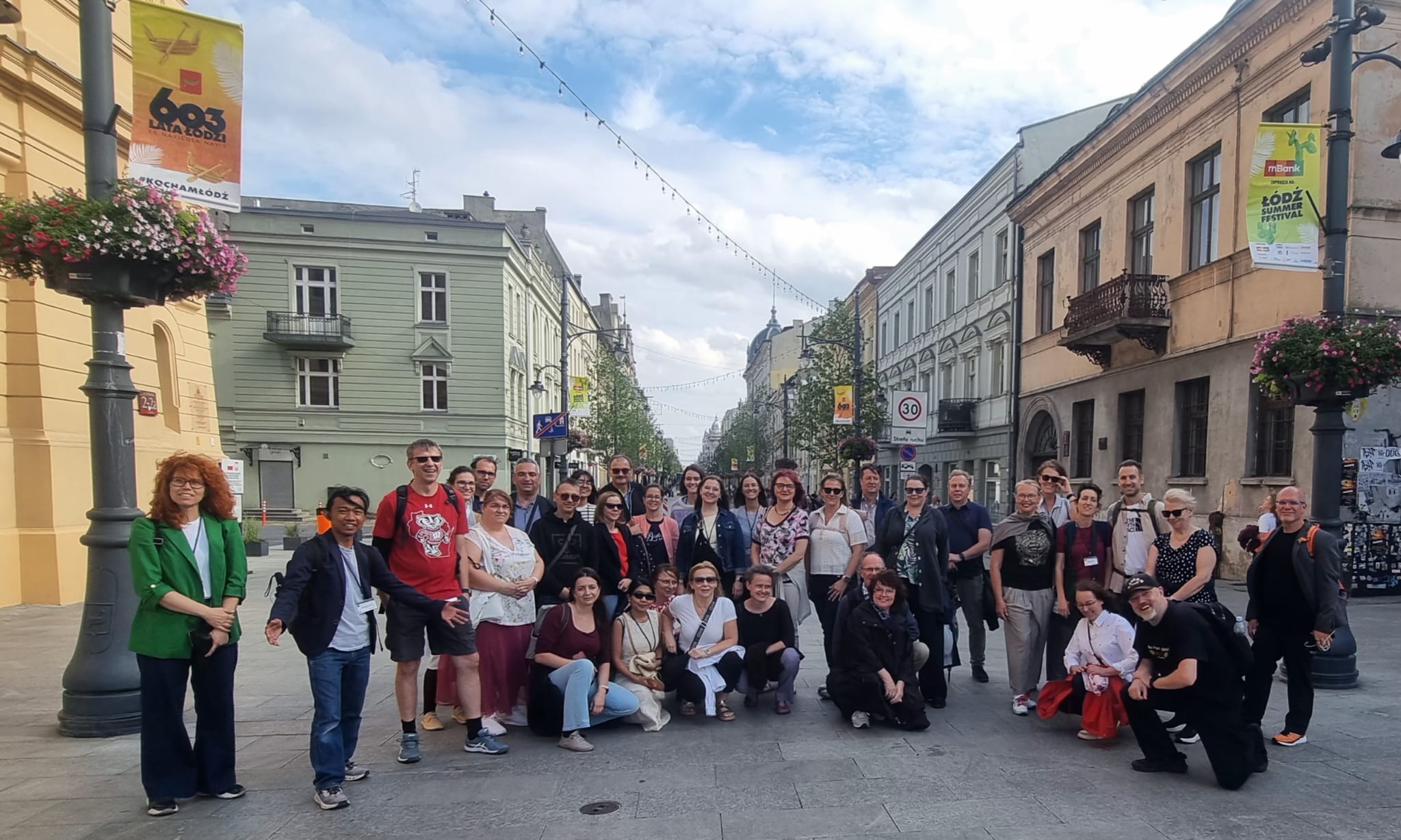
way, CME’26 continued the conference tradition of creating space for international dialogue while responding to new challenges faced by mathematics education in a changing world. Further information about CME’26, including the program and conference details, can be found on the official conference website: https://cme.ur.edu.pl/
The State of Mathematics Education in Poland
(Stan Edukacji Matematycznej w Polsce)
The conference “The State of Mathematics Education in Poland” will take place in Kraków, Poland, on September 21–25, 2026. The meeting aims to provide a broad forum for discussion of the current situation and future directions of mathematics education in Poland.
Particular attention will be given to recent changes in the mathematics curriculum, the role and impact of national examinations at the end of primary and secondary education, assessment, and the preparation and professional development of mathematics teachers. An important objective of the conference is to formulate recommendations for future educational and examination policies.
The five-day program will combine plenary lectures, panel discussions, workshops, and working-group sessions. It is designed to bring together the different communities involved in mathematics education: researchers, university educators, schoolteachers, future teachers, students, and representatives of educational institutions and policy-making bodies. Special sessions will also give a voice to school students and to beginning and prospective mathematics teachers.
The conference is organized jointly by the University of the National Education Commission, Kraków, Adam Mickiewicz University in Poznań, and the School of Education of the Polish-American Freedom Foundation and the University of Warsaw.
Further information is available at https://semp.uken.krakow.pl/
Conferences to come
International Conference on the History of Mathematics Education (ICHME-9)
Dates: September 21–25, 2026
Location: Zaragoza, Spain
More on the website
African Association for Mathematics Didactic (ADiMA) 5th ADiMA Conference (ADiMA-5)
Originally scheduled to take place in Niamey (Niger) in December 2026, the ADiMA 5 conference will officially be held:
Dates: November 15–19, 2027
Location: Libreville, Gabon
Website to be established
International Francophone Conference on Statistics Education
Dates: November 25 to 27, 2026
Location: Namur, Belgium
The main theme will focus on the teaching of statistics facing technical and technological innovations and transformations: a historical and contemporary approach. The conference is organized in collaboration with the “Socio-history of Statistics and Probability” group. Communication submissions are accepted until June 15, 2026. Registration is open.
Find out more on the website
CERME15
Dates: February 8-12, 2027
Location: Bratislava, Slovakia
More information on the website
ISDDE-2027
Dates: May 17–20, 2027
Location: Warsaw, Poland
More information on the website
17th CIAEM
Dates: June 27 to July 3, 2027
Location: Barranquilla, Colombia
More information on the website
15th International Conference on Mathematical Creativity and Giftedness (MCG-15)
Dates: September 14–17, 2027
Location: University of Calgary, Calgary, Alberta, Canada
More Information on the website.
ICME-16
Dates: July 9-16, 2028
Location: Prague, CZ
More information on the website.