IMU News 135: January 2026
A Bimonthly Email Newsletter from the International Mathematical Union (pdf)
Editor: Yoshiharu Kohayakawa, Universidade de São Paulo, Brazil
Editorial
It’s 2026 and, as every four years, it is ICM year. From July 23 to 30, 2026, the International Congress of Mathematicians will take place in Philadelphia, USA. It brings the international mathematical community together to celebrate mathematics, research and interactions. A very special part of the ICM is the ceremony in which the Field Medals, the IMU Abacus Medal, and several other prizes of the IMU will be bestowed. I hope that many of you will have the chance to be at the ICM in Philadelphia in person, and that you also encourage your undergraduate students, graduate students, and postdocs to follow this key event for mathematics and the mathematical community.
 But this editorial is not about the ICM: it is about another event the IMU is involved in — the Heidelberg Laureate Forum (HLF). Every year in September, the Heidelberg Laureate Forum brings together laureates of some of the most distinguished prizes in mathematics and computer science and young researchers from all over the world for a splendid scientific networking experience: 200 young researchers, often from more than 50 nationalities, mix and mingle with recipients of the Fields Medal and the Abel Prize in mathematics, the ACM A.M. Turing Award and the ACM Prize for Computing in computer science, and the IMU Abacus Medal (formerly Nevanlinna Prize) at the intersection between the fields. And the good news is that students and postdocs can still apply until February 11, 2026, to be part of this year’s HLF, which takes place from September 13 to 18, 2026. If you are selected, all local expenses (hotel and meals) are covered and if needed one can apply for travel funding.
What awaits you at an HLF, and why should you encourage every young researcher you know to apply?
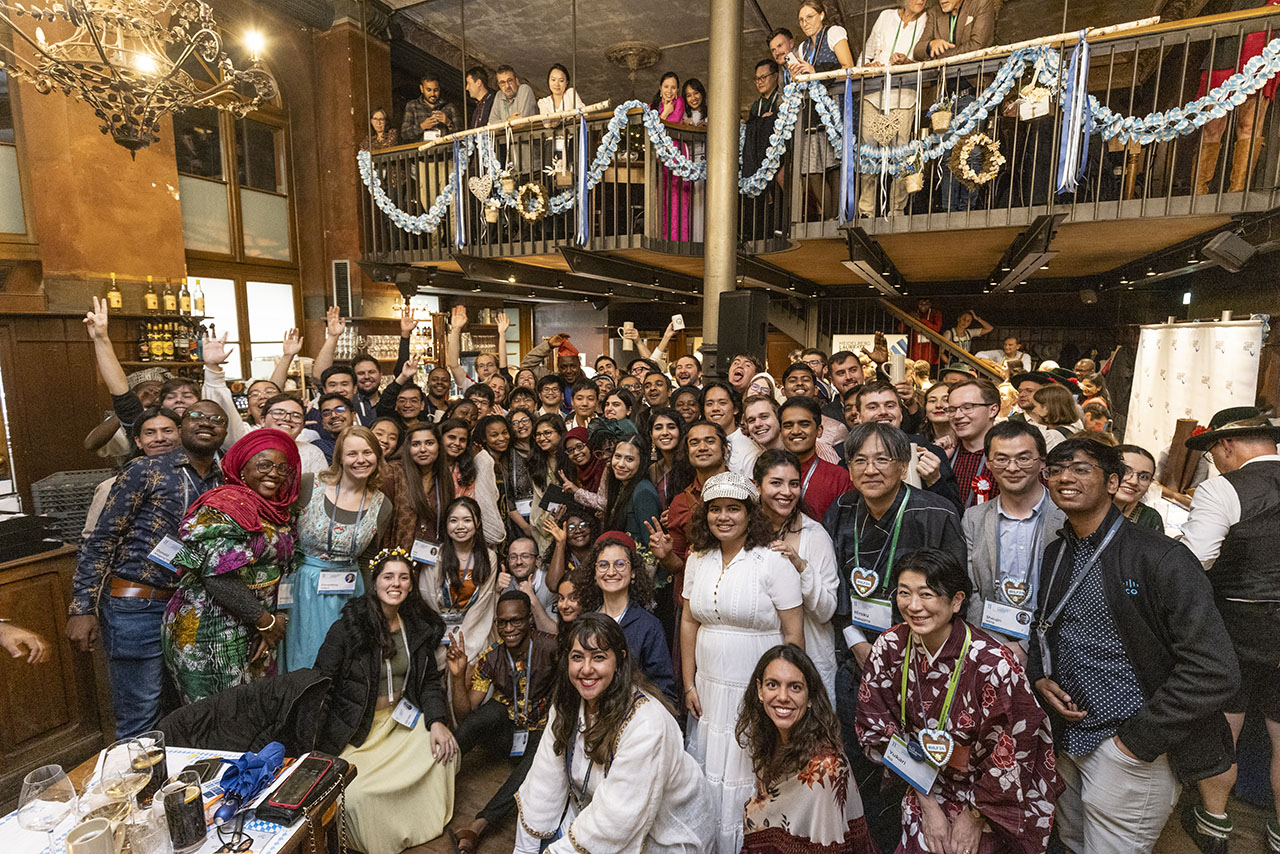
To get an idea of what the HLF is like, you can check out the highlights from last year or the entire video collection from previous years, visiting HLF’s YouTube channel.
Indeed, the farewell dinner is one of my most favourite parts of the HLF — on that last evening you can see the close connections formed among the young researchers and the laureates. Of course everyone is a bit sad that the event is over, but young researchers can stay connected with the HLF through the alumni network, and laureates are invited every year so they can came back again.
The feedback from participants which we have received in the past years has been very positive. You can check some of it out in the social media channels of the HLF (visit the HLF webpage to access your favourite platform).
You might wonder how the HLF came about, and what the role of the IMU in it is. The Heidelberg Laureate Forum was initiated by Klaus Tschira and Andreas Reuter in 2013, and to this day is funded by the German foundation Klaus Tschira Stiftung, which promotes research and outreach in the natural sciences, mathematics, and computer science. The HLF was inspired by the Lindau Nobel Laureate Meetings, which has been supporting exchange between Nobel Laureates and young scientists for more than 70 years.
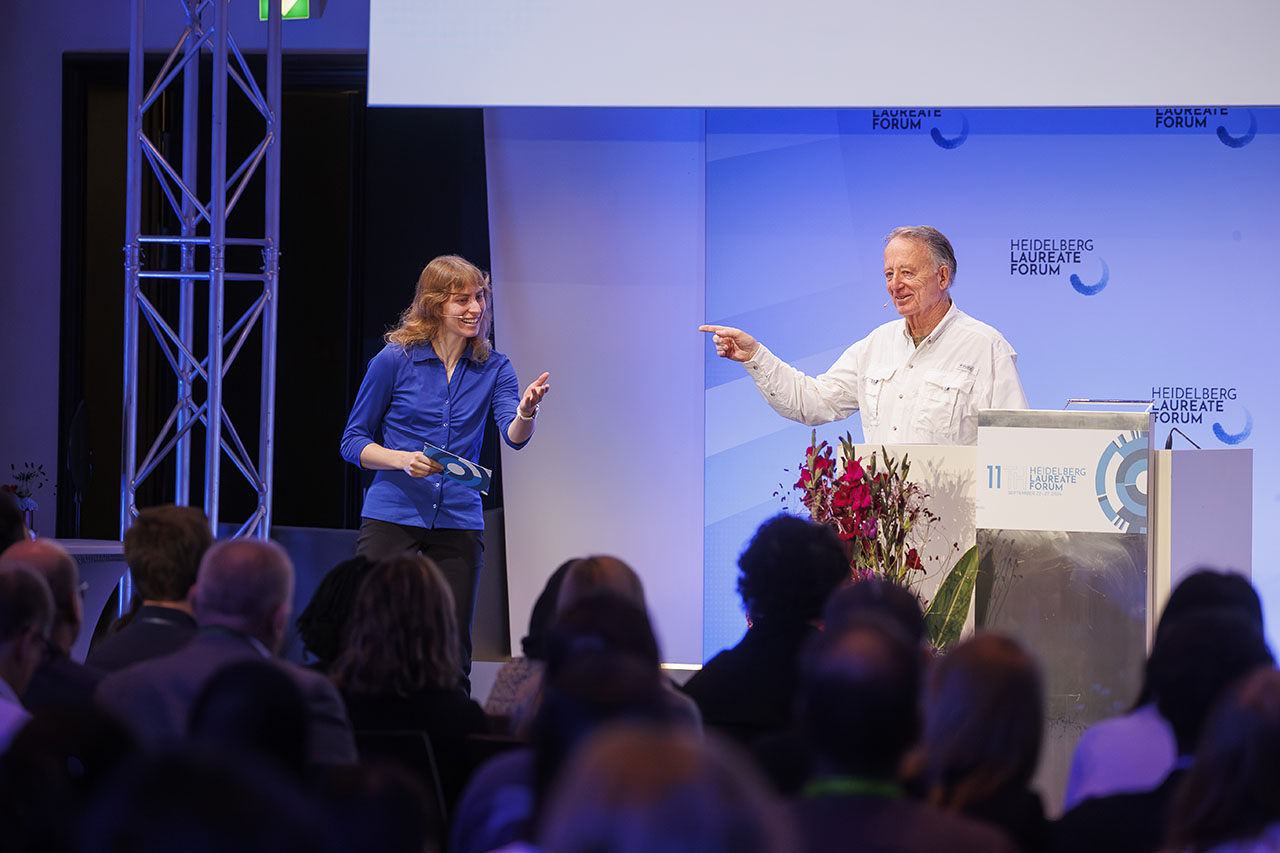
I do not yet know what this year’s HLF will have in store for you, but I am sure it will be an exciting and memorable week as always.
If you are a laureate, in particular a new Fields or IMU Abacus Medalist, try to join this year’s HLF. If you are a young researcher, don’t miss the opportunity. If you are neither, it will be harder for you to get a chance to participate, but make sure to encourage your undergraduate students, graduate students, and postdocs to apply.
Anna Wienhard
Max Planck Institute for Mathematics in the Sciences
Member of the IMU Structure Committee
Former Scientific Chair of the Heidelberg Laureate Forum Foundation
ICM 2026
The International Congress of Mathematicians will be held 23–30 July 2026 in Philadelphia, USA. The congress coincides with the 250th anniversary of the signing of the Declaration of Independence and the 40th anniversary of when the last ICM was held in the US.
If you have not visited the website of the congress more recently, you are invited do so: besides the list of speakers, you will find the schedule of the congress and other valuable information to plan your participation in the congress.
If you have not yet registered, note that the deadline for advanced registration is 1 May 2026. Finally, on the website of the congress, you can find two attractive articles related to the organization of ICM 2026: An Inspirational Mix and Celebrating Mathematics: ICM2026 in Philadelphia, both by Allyn Jackson.
Standing Committee for Gender Equality in Science (SCGES)
 SCGES Fifth Annual Report. The Standing Committee for Gender Equality in Science (SCGES) is an independent committee formed in 2020 by several international scientific organizations, including the IMU and the International Council for Industrial and Applied Mathematics (ICIAM). The SCGES was formed as a follow-up to the Gender Gap in Science Project, which had as its main aim to produce sound data about gender gap in science to support the choices of interventions that scientific unions could feasibly undertake. In 2020, the Gender Gap in Science Book was published, presenting the methodology, results, activities and recommendations of the project. The aim of the SCGES is to ensure liaison amongst international scientific unions to foster gender equality and the implementation of recommendations of the Gender Gap in Science Project.
The SCGES fifth Annual Report has just been published and can be found on the SCGES website here.
International Day of Women and Girls in Science. To mark the International Day of Women and Girls in Science on 11 February 2026, the International Science Council (ISC), the InterAcademy Partnership (IAP), and the Standing Committee for Gender Equality in Science (SCGES) will host a webinar highlighting the role of women in scientific organizations, focusing on leadership, representation, and strategies to advance gender equality across the global science system.
Further details about this webinar are given in the article by the Committee for Women in Mathematics (CWM) below.
2025 Abel Prize Interview
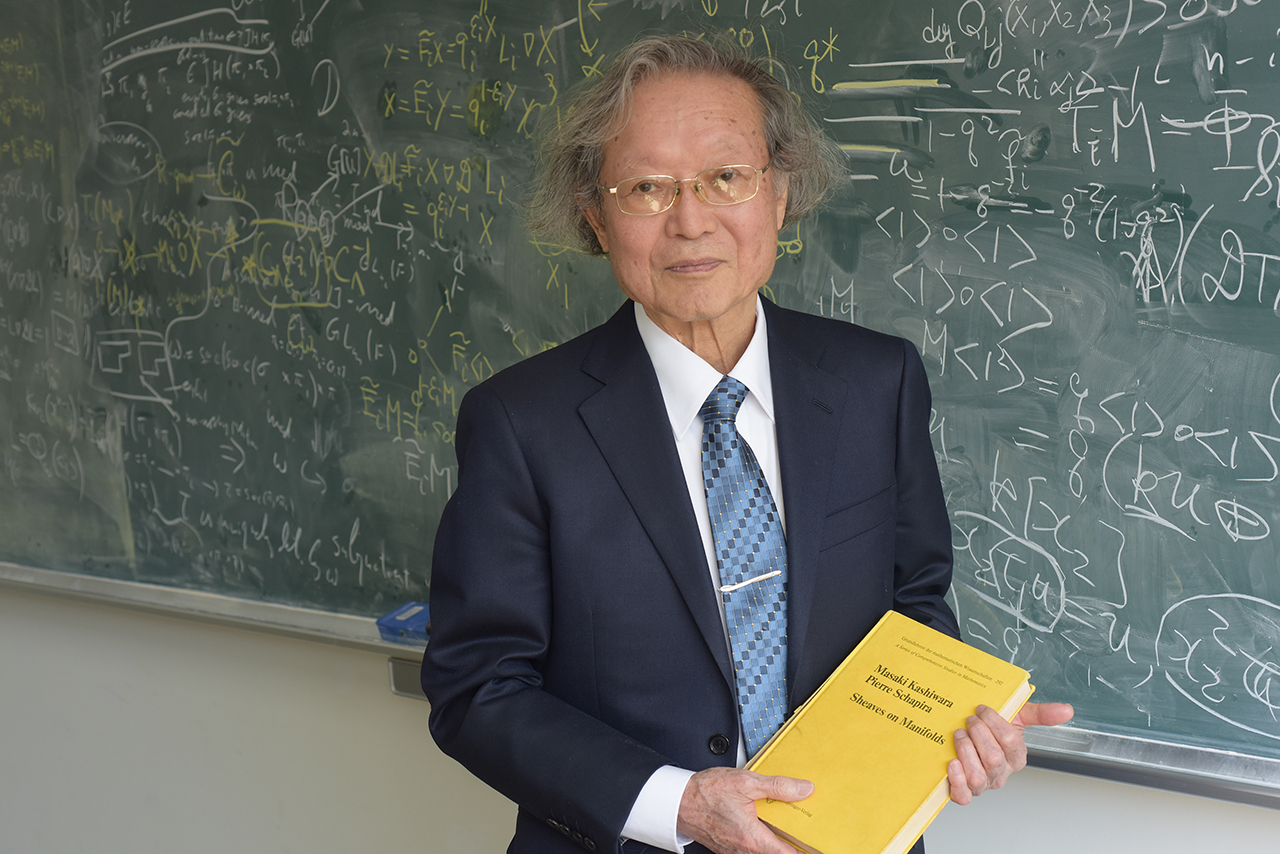
Abel at the IAS. This year’s annual symposium following the final meeting of the Abel Prize Committee took place at the Institute of Advanced Study, Princeton, USA, on 28 January 2026. Visit the symposium webpage on the Abel Prize website for details and, for the recordings of the lectures, visit this playlist on IAS’s YouTube channel.
The CNRS and the Web of Science
Since the beginning of this year, the CNRS no longer funds access to Clarivate Analytics’ Web of Science, and the Core Collection and Journal Citation Reports.
According to an article published in December 2025, “the context underpinning the CNRS’s decision to cut access to Clarivate Analytics’ Web of Science (WoS)” has been taking form since the publication of CNRS's Roadmap for Open Science in 2019, with the implementation of “a policy of opening up research results and changing the way scientists are evaluated”. For further details, interested readers are referred to CNRS’s article.
News from the International Commission on Mathematical Instruction (ICMI)

ICMI AMOR first webinar — save the date: February 24, 2026. In order to make the ICMI AMOR Project better known and promote its use, the ICMI AMOR Advisory Board has decided to launch a series of webinars. The first webinar will be held on Tuesday, February 24, 2026. In order to reach as many people as possible around the world, the webinar will take place once at 7 am UTC and will be repeated at 5 pm UTC.
The purpose of this first webinar will be to present the whole project and to discuss some of its uses. The first part of the webinar will be presented by Michèle Artigue, Marianna Bosch, Jean-Luc Dorier, and Anna Sfard and the second part will include people who used AMOR in their teaching at various levels and in different contexts.
The details and the link will be sent in early February through various lists and will be posted on the ICMI AMOR Project website.
Good news about past ICMI Study Volumes. We are pleased to announce that all ICMI Study Volumes are now freely accessible online through our website.
Beginning with ICMI Study 23, ICMI established an agreement with Springer to ensure that all newly published volumes are available as open access. In addition, through the valuable support of Geoffrey Howson and his contact at Cambridge University Press, we succeeded in making ICMI Studies 1 to 5 openly accessible. We subsequently secured open-access availability for ICMI Studies 19, 21, and 22. We are now delighted to share that a new agreement with Springer allows us to make the remaining Study Volumes (ICMI Studies 6 to 18 and 20) available as PDF files on the ICMI website. These files are hosted with Springer’s permission, with copyright retained by Springer.
News from the Commission for Developing Countries (CDC)
 The next International Congress of Mathematicians will take place in Philadelphia, USA, from July 23 to July 30, 2026. The call for applications for the ICM 2026 Travel Support Program, which provides financial support to mathematicians from eligible developing countries to attend, has now closed. We are pleased to report that the program received an impressive number of applications from all continents, and notifications of results have been sent to applicants.
We warmly encourage everyone to register for the congress.
We are currently working on the organization of a special session dedicated to mathematics in developing countries at the ICM and will keep you informed as plans progress.
Finally, we remind you that the CDC strongly encourages mathematicians and students from developing countries to apply to our calls listed below and to contact us for further details via email.
Grants for institutions
- Volunteer Lecturer Program. Next deadline: April 1, 2026, for courses to be held between August 1, 2026, and August 1, 2027
Grants for conferences organizers
- Conference Support Program. Next deadline: April 15, 2026, for conferences starting after August 15, 2026
Grants for research visits
- Abel Visiting Scholar Program. There is currently no open call
- IMU-Simons Research Fellowship Program for Developing Countries. Next deadline: April 15, 2026, for research visits starting between August 15, 2026, and August 15, 2007
Grants for graduate students
- IMU-Breakout Graduate Fellowship Program. The 2026 call for nominations is open, with deadline May 30, 2026
- Graduate Research Assistantships in Developing Countries (GRAID) Program. The 2026 call for applications is open, with deadline May 15, 2026
News from the Committee for Women in Mathematics (CWM)
 CWM Newsletter Issue 14 — December 2025. CWM closed 2025 with the release of the 14th issue of its newsletter. In addition to several news items and announcements, the issue features a testimonial for Tony Ezome by Marie-Françoise Ouedraogo and the article Humanistic Mathematics, Humanizing Mathematics: Why Now? by Gizem Karaali.
The newsletter can be downloaded here and you can subscribe to the CWM Newsletter here.
SCGES Webinar: Women in Scientific Organizations: Global Evidence from Science Academies and Unions. On February 11, 2026, the Standing Committee for Gender Equality in Science (SCGES) will host its 13th webinar, Women in Scientific Organizations: Global Evidence from Science Academies and Unions, organized jointly with the International Science Council and the InterAcademy Partnership, as part of the Global Women’s Breakfast. The webinar will take place online from 14:00 to 16:00 UTC.
More information and the registration form can be found on the SCGES webpage (check also this page).
Since 2022, the regular SCGES Webinar Series has highlighted a wide range of topics aligned with the committee’s focus tasks. Recordings of all past SCGES webinars are available on the SCGES YouTube channel. The reader is also reminded that the fifth annual report of the SCGES is now accessible on their webpage, as mentioned above in a separate article on SCGES matters in this newsletter.
World Meeting for Women in Mathematics (WM)² 2026. Registration for the third edition of the World Meeting for Women in Mathematics (WM)², to be held on July 22, 2026, at the Pennsylvania Convention Center in Philadelphia, USA, will open soon. Please stay tuned to the (WM)² website for further updates.
Carolina Araujo and Hélène Barcelo
Chair and Vice-Chair of the IMU Committee for Women in Mathematics
News from the International Day of Mathematics (IDM)
 March 14 is approaching! The IDM Governing Board needs your help to spread the news of the IDM in national and local school networks and increase the number of schools celebrating the IDM, either in the classroom, or through a larger event. For that purpose, material for classroom activities is available. Invitations to the school networks of your country can be made using the invitation letters in the following languages:
If you wish to produce a letter in your own language, you can use the following English template.
IDM Map 2026. The 2026 IDM map is now open for posting. Please invite any organizer of an IDM celebration, including the celebrations taking place in schools, to publish their event on the IDM map by filling out this form.
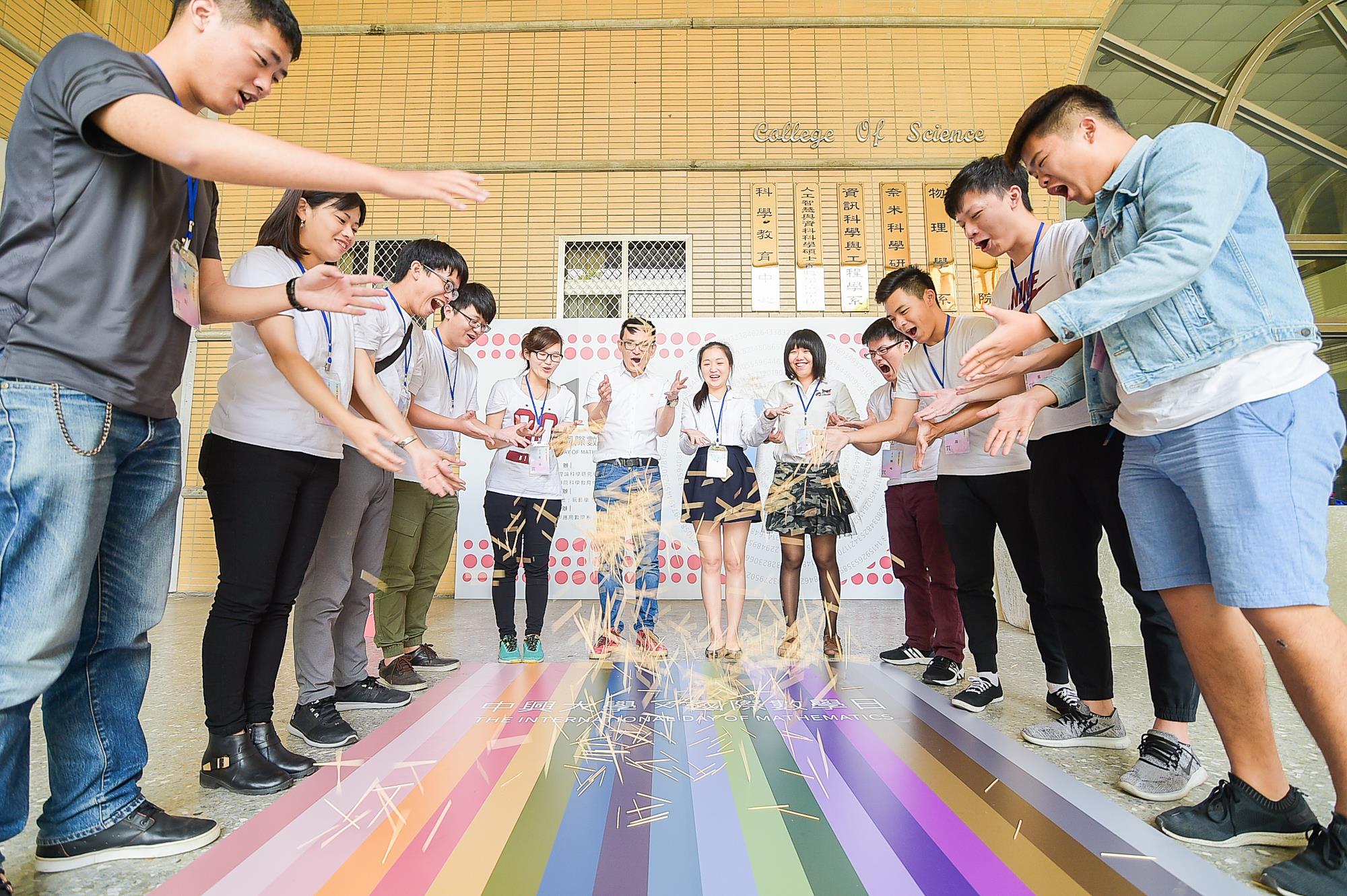 Activity page. Visit the activity page for suggestions of activities. Posters, pins and logos can be found at resources. In particular, the 2026 IDM poster will be available soon.
Mathematics and Hope Webinar. A joint IMU–IDM–UNESCO webinar, Mathematics and Hope, will take place on March 13, 2026, 13:00–14:30 UTC. Please spread the news and the registration link.
Register and receive the newsletter! Register for the IDM Newsletter to receive the latest news of IDM 2026.
Betül Tanbay
Chair of the IDM Governing Board
Subscribing to IMU News
To subscribe to IMU News, please click here. When you subscribe, you will receive an e-mail message to confirm your subscription so that misuse will be minimized.
IMU will not use the list of IMU News emails for any purpose other than sending IMU News, and will not make it available to others.
Previous issues can be seen here.