IMU News 134: November 2025
A Bimonthly Email Newsletter from the International Mathematical Union (pdf)
Editor: Yoshiharu Kohayakawa, Universidade de São Paulo, Brazil
Editorial
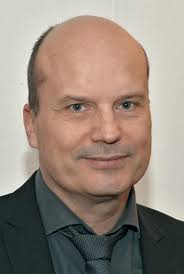
The IMU’s Bulletin No. 76, which reports on IMU activities in 2024, was released last week by the IMU Secretariat and distributed through a Circular Letter to its members.
The IMU Bulletin serves as the Union’s primary annual record of its activities. Typically published at the end of each year to report on the preceding one, the Bulletin is often overlooked, yet it plays a quiet but essential role in documenting the life of the International Mathematical Union. The Bulletins provide a carefully curated record of the Union’s organizational work, including decisions, activities, financial reports and audits, membership matters, international programs, ICM planning, and the annual reports of its commissions and committees. They are, in a sense, the institutional memory of the IMU.
The Bulletin traces its origin to an international mathematical news bulletin initiated in 1952. When the IMU was re-established in 1951, a means was required to disseminate news, reports, and other information to its members. Between 1952 and 1971, a predecessor of the IMU Bulletin appeared in the “International Mathematical News” published by the Austrian Mathematical Society (ÖMG). As Olli Lehto notes in his book “Mathematics without Borders” (1998), pp. 96–97:
“The Rome Assembly (1952) agreed that the Executive Committee should negotiate with the Österreichische Mathematische Gesellschaft (Austrian Mathematical Society) a contract for the publication of an international mathematical news bulletin continuing in a way suitable to the needs of the Union the work already undertaken by the ÖMG. The contract was concluded, and IMU news appeared for many years in the Austrian Internationale Mathematische Nachrichten as Bulletin of the IMU [...]”
Over the following years, as the IMU’s reports expanded, it became desirable to establish an independent publication, published and distributed directly by the IMU. In 1971, IMU President Henri Cartan announced the new IMU Bulletin in his foreword to IMU Bulletin No. 1 (1971), p. 3:
“The International Mathematical Union, in its present form, has completed twenty years of existence. Reports of the Union’s activities during this period have been sent out to member-countries as required under the statutes and by-laws. Some of them have also been published, by arrangement, in the Bulletin of the Austrian Mathematical Society. In view of the expanding role of the Union, it has seemed desirable to keep a continuous and easily accessible record of its activity. This is now being done in the form of an IMU Bulletin, of which this is the first issue [...]”
Since then, the IMU Bulletin has been published as an independent IMU publication and distributed to IMU members. After a period of hybrid release in both print and digital formats, the Bulletin has been available exclusively in electronic form since volume 69, December 2017. All issues of the IMU Bulletin are freely accessible on a dedicated webpage.
Happy reading!
Peter D. Lax – a giant in mathematics
On May 16, 2025, Peter Lax — a giant in mathematics — passed away at the age of 99. Over a long, distinguished career, Lax made many significant contributions, including perhaps most notably within the field of hyperbolic partial differential equations.[1]
Born in Hungary in 1926, Lax emigrated to the US in 1941 and spent essentially his entire career at New York University’s renowned Courant Institute, where he had completed his PhD in 1949 under the supervision of K.O. Friedrichs. In the 1950s and 60s, Lax completely transformed our understanding of systems of hyperbolic conservation laws, a class of nonlinear partial differential equations that can be used to describe the dynamics of conserved quantities in continuum mechanics — the Euler equations of fluid dynamics being a prime example. Lax gave the first complete solution of the so-called Riemann initial value problem, which describes the evolution of two constant states separated by a weak shock, i.e., a small discontinuity. Here he introduced the fundamental Lax entropy condition to select the one physical solution. Lax and Russian mathematicians — including Kruzkhov and Oleinik among others — developed a more or less complete theory for scalar conservation laws. Here we have, e.g., the Lax—Friedrichs as well as the Lax— Wendroff difference schemes, as well as the Lax—Wendroff theorem. The theory for hyperbolic conservation laws is a field where analytic and numerical results have been developed in parallel with extensive mutual interaction.
Any description of Peter Lax’s contributions would be incomplete without mentioning the “Lax pairs”. In the 1960s, Kruskal and colleagues started a revolution with the fundamental study of solitary solutions, i.e., single crest waves of the Korteweg—de Vries equation. These solitons interacted in a linear fashion. Lax discovered how one could understand this phenomenon by rewriting the Korteweg—de Vries equation as a Lax pair, which is a particular system of equations. Now the existence of a Lax pair is the hallmark of any integrable system, systems that are ubiquitous in mathematics and physics.
Peter Lax can equally be considered as one of the founders of computational mathematics. Lax realized early on the significant impact computers would have on mathematics, comparing this to the role of telescopes in astronomy and microscopes in biology.
During his career, the unprecedented development of computers was paralleled by a revolutionary development in numerical methods, making computational mathematics ubiquitous in most sciences. In 1982, the National Science Board published a very influential report, later called the Lax report, that laid out the plan for government research on supercomputers in the US.
In addition to his research papers, Lax wrote several textbooks, ranging from calculus to functional analysis and scattering theory. He was an excellent expositor, receiving the Chauvenet Prize of the Mathematical Association of America in 1974.
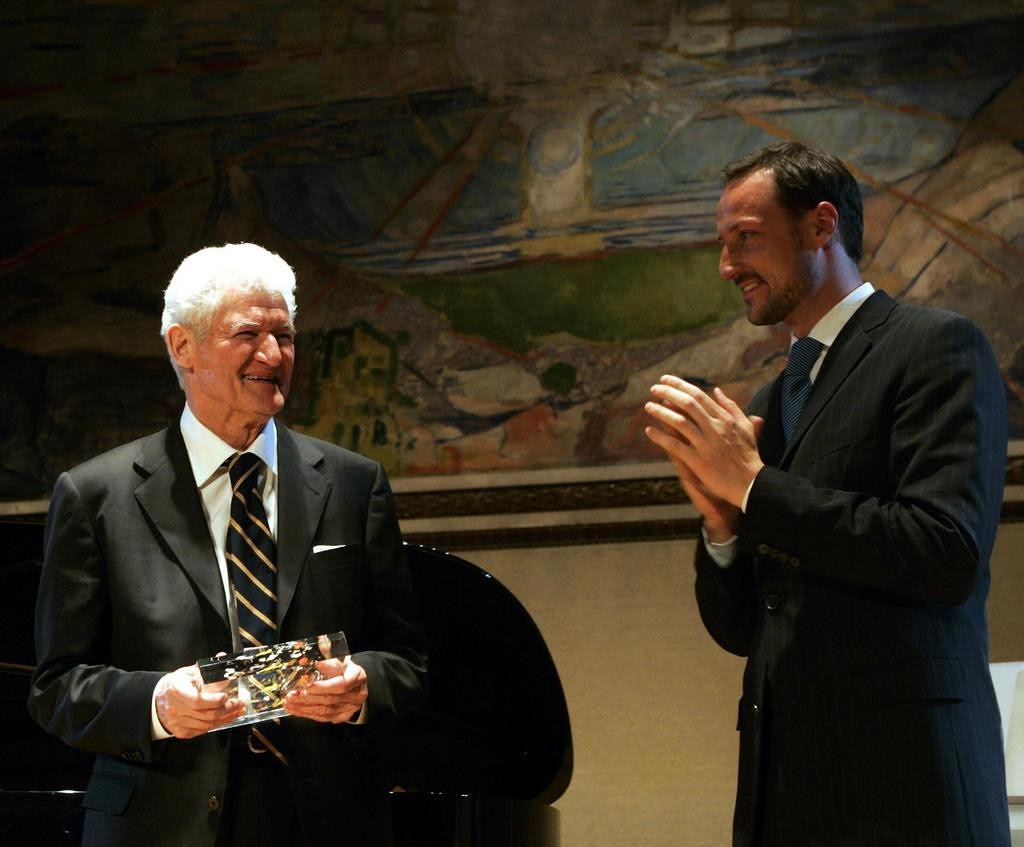
Peter Lax received many accolades for his outstanding contributions to mathematics, including the National Medal of Science (1986), the Wolf Prize (1987), and the AMS Steele Prize for Lifetime Achievement (1993). In 2005 Peter Lax received the Abel Prize[2]
“for his groundbreaking contributions to the theory and application of partial differential equations and to the computation of their solutions.”
Lax had an incredible influence on contemporary mathematics due not only to his scientific work, but also through his 55 PhD students and inimitable personality.[3]
On October 17, he was honored by a Memorial Conference at the Courant Institute with family, friends, and colleagues in attendance — an occasion which marked the end of a truly unique epoch both at NYU and in applied mathematics.
Chair of the Abel Prize Committee
Norwegian University of Science and Technology
[1] P. Lax: Selected Papers, Vols. I & II. Springer, 2005
[2] H. Holden, R. Piene (eds.): The Abel Prize 2003–2007. The First Five Years. Springer 2010
[3] R. Hersch: Peter Lax, Mathematician. An Illustrated Memoir. AMS, Providence 2015
Claudio Muñoz awarded the 2025 Ramanujan Prize
The Abdus Salam International Centre for Theoretical Physics (ICTP) and the International Mathematical Union (IMU) have awarded the 2025 Ramanujan Prize for young mathematicians from developing countries to Claudio Muñoz, “for his fundamental contributions to dispersive partial differential equations”.
Muñoz’s research interests are in non-linear dispersive equations, a special class of partial differential equations that includes some of the most important equations of physics, such as the Schrödinger equation and the wave equation. The award recognizes his remarkable work on the long-time behaviour of solutions to fundamental equations of mathematical physics, in particular on the asymptotic stability of soliton solutions and the dynamics of multi-solitons.
Muñoz is a professor at the University of Chile, a principal investigator at the Center for Mathematical Modeling (CMM), Chile, and chargé de recherche on leave at the French National Council for Scientific Research (CNRS).
The Shaw Prize Lecture in Mathematical Sciences 2025
The Shaw Prize Lecture “From Shapes to Spaces” by Kenji Fukaya, the recipient of the 2025 Shaw Prize in Mathematical Sciences, is now available on the Shaw Prize YouTube Channel. Readers are also warmly invited to watch this video profile of the laureate, as well as this video, in which Hélène Esnault, Chair of the Selection Committee, highlights his achievements.
Fukaya was awarded the 2025 Shaw Prize “for his pioneering work on symplectic geometry, especially for envisioning the existence of a category — nowadays called the Fukaya category — consisting of Lagrangians on a symplectic manifold, for leading the monumental task of constructing it, and for his subsequent ground-breaking and impactful contributions to symplectic topology, mirror symmetry, and gauge theory.”
The Abel Prize
 History. The Abel Prize was first awarded in 2003, but its history goes back over 100 years. The fascinating history of the prize is the topic of an article by Arild Stubhaug, published in the EMS Magazine.[1] In fact, his piece focuses on the “pre-history” of the prize; for the history around the successful establishment of the prize a century later, readers are referred to Kim G. Helsvig’s 2014 article.[2]
Abel at IAS. The next annual symposium following the final meeting of the Abel Prize Committee will take place at the Institute of Advanced Study, Princeton, USA, on 28 January 2026. Karen Uhlenbeck, the 2019 Abel Prize laureate, will give a lecture, along with Daniel Spielman, Hong Wang, and Curtis McMullen.
[1] Arild Stubhaug: The pre-history of the Abel Prize. Eur. Math. Soc. Mag. 137 (2025), 23–30
[2] K. G. Helsvig: The Abel Prize: the missing Nobel in mathematics?, Centaurus 56 (2014), 1–30
The 13th Heidelberg Laureate Forum
 The 13th Heidelberg Laureate Forum (HLF) will take place in Heidelberg, Germany, 13 to 18 September 2026.
All winners of the Fields Medal, the Abel Prize, the ACM A.M. Turing Award, the Nevanlinna Prize/IMU Abacus Medal, and the ACM Prize in Computing are invited to attend the HLFs. In addition, young and talented computer scientists and mathematicians are invited to apply for participation. The previous HLFs have all been exceptionally successful. The HLF serves as a great platform for interaction in the fields of mathematics and computer science.
Over the course of the week-long conference, young researchers will be able to connect with their scientific role models and find out how the laureates made it to the top of their fields.
Applications for participation at the 13th HLF are now open in three categories: Undergraduate/Pre-Master, Graduate PhD, and PostDocs.
The deadline for application is 11 February 2026, 11:59 p.m. Berlin time (CET/UTC+1). Visit the HLF applications website for details.
ICTP-INdAM Collaborative Grants and Research in Pairs 2026
The Abdus Salam International Centre for Theoretical Physics (ICTP) and the Istituto Nazionale di Alta Matematica (INdAM) have launched a joint programme of “Research in Pairs” aimed at funding research projects in mathematics to be carried out at the ICTP in Trieste. The projects should involve collaboration between mathematicians from developing countries and INdAM members. The current call is for the period between 1 March 2026 and 31 December 2026.
Applicants must be citizens of a developing country, be affiliated to an institution in a developing country, and must have worked (or studied) in a developing country for at least 3 out of the last 5 years. Applicants are invited to indicate as their collaborator up to two INdAM members from one of the national research groups GNAMPA, GNCS, GNFM and GNSAGA.
For details, visit this webpage.
News from the Commission for Developing Countries (CDC)
 The next International Congress of Mathematicians will take place in Philadelphia, USA, from July 23 to July 30, 2026. The call for applications for the ICM 2026 Travel Support Program, which provides financial support to mathematicians from eligible developing countries to attend, has now closed. We are pleased to report that the program received an impressive number of applications from across all continents, and notifications of results have been sent to applicants. We warmly encourage everyone to register for the congress.
We are currently working on the organization of a special session dedicated to mathematics in developing countries at the ICM and will keep you informed as plans progress.
Finally, we remind you that the CDC strongly encourages mathematicians and students from developing countries to apply to our calls listed below and to contact us for further details via email.
Grants for institutions. The Volunteer Lecturer Program, established in 2008, is designed to foster research and international cooperation between mathematicians in developing countries and the global mathematical community. It provides financial support to universities in developing countries to host a volunteer lecturer for an intensive course. This program is partially funded by the American Mathematical Society and the Niels Henrik Abel Board (Norway).
Next deadline: January 15, 2026, for courses scheduled between May 1, 2026, and May 1, 2027
Grants for conferences organizers. The Conference Support Program provides partial support to mathematical science-based conferences and research schools organized in developing countries. The grant is intended to help organizers cover travel and accommodation expenses for invited speakers and/or participants from developing countries.
Next deadline: January 15, 2026, for conferences starting after May 15, 2026
Grants for research visits. The CDC currently offers a distinguished program supporting research visits. The IMU-Simons Research Fellowship Program for Developing Countries enables mathematicians from developing countries to undertake collaborative research visits of up to three months at a mathematical institution. Awards range from USD 5,000 to USD 15,000. This program is funded by the Simons Foundation (USA).
Next deadline: January 15, 2026, for research visits starting between June 1, 2026, and June 1, 2027
Grants for graduate students. The CDC offers two scholarship schemes to support graduate studies in a developing country leading to a Master’s or PhD degree in the mathematical sciences.
Graduate Research Assistantships in Developing Countries (GRAID) Program. This program provides modest support to emerging research groups in developing countries listed in Priority 1 or 2 of the IMU Definition, enabling them to fund their most talented students to pursue full-time Master’s or PhD studies in mathematics. Applications are invited from teams consisting of a Principal Investigator and their research group, together with an International Partner. The GRAID Program is funded through voluntary donations from mathematicians and mathematical institutions worldwide.
The 2026 call for nominations will open in early 2026.
IMU-Breakout Graduate Fellowship Program. Thanks to a generous donation from all winners of the Breakthrough Prizes in Mathematics, the International Mathematical Union, with the support of the FIMU, launched in 2016 a fellowship program to support postgraduate studies in a developing country leading to a PhD degree in the mathematical sciences. The IMU-Breakout Graduate Fellowships offer a limited number of grants for outstanding students from developing countries.
The 2026 call for nominations will open in early 2026.
News from the Committee for Women in Mathematics (CWM)
 Update on the (WM)² and Postponement of the CWM Call 2026. The CWM community is excited about the upcoming third edition of the World Meeting for Women in Mathematics (WM)², scheduled to take place on July 22nd, 2026, at the Pennsylvania Convention Center in Philadelphia, USA. The (WM)² is held every four years in conjunction with the ICM and is dedicated to building a thriving worldwide community of women mathematicians.
The (WM)² and the CWM Call are CWM’s main signature events, and while we are thrilled to host both initiatives in 2026, their co-occurrence will have a significant impact on our annual budget, requiring careful financial management. To ensure responsible stewardship of our resources, CWM has decided to temporarily postpone the launch of its call for proposals until we have a clearer picture of our budgetary constraints.
Please stay tuned for further updates regarding the (WM)² and the CWM Call. We expect to open registration for the (WM)² in December 2025 and to launch the CWM Call later in 2026.
In Memory of Tony Ezome. It is with great sadness that we announce the untimely passing of our friend and colleague Tony Ezome, who died in an accident on October 5, 2025, in Libreville, Gabon, at the age of 45.
Tony was appointed a member of CWM in 2019 by the IMU Executive Committee and was reappointed for a second term in 2023. Throughout these years, he served CWM with great commitment and enthusiasm, demonstrating remarkable vision and leadership, especially on issues related to Africa. He was also actively involved in numerous projects aimed at developing mathematics across the continent. We have lost a wonderful colleague, a great friend, and a strong ally.
Tony’s passing is a profound loss. Our thoughts and heartfelt sympathies are with his family, students, and colleagues. May he rest in peace.
Several institutions prepared tributes to Tony. Follow the links below to access them:
- African Network for Arithmetic Geometry and Applications (ANAGA)
- ICTP
- Société Mathématique de France (SMF)
- Institut National de Recherche en Informatique et en Automatique (INRIA)
- CIMPA newsletter
Carolina Araujo and Hélène Barcelo
Chair and Vice-Chair of the IMU Committee for Women in Mathematics
News from the International Day of Mathematics (IDM)
 IDM 2026. The next IDM will take place on March 14, 2026, under the theme “Mathematics and Hope”.
IDM 2026 School Program. The IDM School Program connects schools worldwide for several weeks before the International Day of Mathematics (IDM) on March 14, 2026. In 2026 it will take place in English, French, Spanish, and Arabic. After a virtual workshop in each language explaining the functioning of the program, schools join the group chat of their chosen language to collaborate, exchange ideas, and share experiences with other teachers from different countries sharing the same language.
Please pass on the word to the schools and school networks of your country, if their language group is listed below. Time is short: the first workshop is on December 8!
Workshops will take place on the following dates and times:
- English workshop: Monday, December 8, 2025, 15:00 UTC
- Spanish workshop: Wednesday, December 10, 2025, 15:00 UTC
- French workshop: Thursday, December 11, 2025, 15:00 UTC
- Arabic workshop: Sunday, January 19, 2026, 9:00 UTC
For more information, download the IDM School Program document in any of the following languages:
A survey on the IDM. Together with NaWiK, a survey has been prepared about the activities surrounding the International Day of Mathematics (IDM), including the IDM website, its materials, and communication activities. If you are involved in the IDM, please fill the form. More information and the link to the survey is here.
More things coming soon. Like every year, many resources will be available to help you celebrate. Starting in December, you can expect:
- Our interactive event map, where you can tell the world of your IDM celebration
- A new activity and a new poster, with this year’s theme: “Mathematics and Hope”
- A webinar organized together with UNESCO from Miletus, home of Thales
- And more!
Betül Tanbay
Chair of the IDM Governing Board
Subscribing to IMU News
To subscribe to IMU News, please click here. When you subscribe, you will receive an e-mail message to confirm your subscription so that misuse will be minimized.
IMU will not use the list of IMU News emails for any purpose other than sending IMU News, and will not make it available to others.
Previous issues can be seen here.