IMU News 139: September 2026
A Bimonthly Email Newsletter from the International Mathematical Union (pdf)
Editor: Yoshiharu Kohayakawa, Universidade de São Paulo, Brazil
Editorial: Mathematics in a time of change
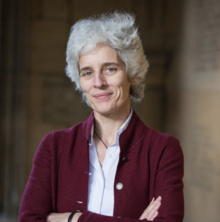
Two years ago, I was asked whether I would stand for the IMU presidency. As a Vice-President, I had some understanding of the responsibilities involved, and many national and international roles had prepared me. I knew that the position would be demanding, as previous Presidents had faced extraordinary challenges, from a global pandemic to profound political crises. But I also felt strongly that, if we want more women in visible leadership roles in mathematics, women must be willing to put themselves forward. It is a great honour to have been elected.
I did not anticipate quite how different the world of mathematics would look by the time I take office in January.
Two years ago, AI models were already becoming increasingly powerful, producing impressive attempts at International Mathematical Olympiad problems. A year later, newer models were achieving striking results on university-level examinations, prompting lecturers to reconsider how to teach and assess. Over the past twelve months, excitement has grown, alongside considerable apprehension, as some colleagues have experimented using AI tools to accelerate their research. The incredible pace of progress was plain to see. Yet even against this background, reports last month of an AI-generated solution to the Navier–Stokes Millennium Prize Problem, apparently produced with limited direct human intervention, came as a shock. An even greater shock followed earlier this month, when hundreds of AI-generated outputs were made public, claiming solutions to significant mathematical problems and advances across a wide range of research programmes.
The reaction in our community has been intense and varied: excitement and curiosity, but also anger and disbelief, fear and mourning for an era lost. Many mathematicians feel deeply frustrated that developments of such importance are taking place beyond their control. The most powerful models remain inaccessible to much of our community, whether because of cost or the fact that they are frontier models available only to employees of the AI companies developing them. We are therefore left in the awkward position of having to respond to claims and demonstrations whose underlying processes we cannot fully inspect or independently reproduce.
One thing, however, is clear: we cannot simply wish this new reality away.
AI systems are beginning to demonstrate capabilities in research mathematics that many of us would regard as substantial contributions if they came from human researchers in the traditional way. At the same time, the outputs released so far are not necessarily the kind of scholarly work that we expect from our colleagues. In many cases, the relationship to previous work, the attribution of ideas and the extent to which existing results have been used remain insufficiently clear. Questions have also been raised about how ideas developed by mathematicians using AI tools may have found their way into these outputs. Such concerns require careful investigation rather than speculation, but they cannot be ignored. Here we need clarity from the AI companies.
These developments raise fundamental questions of research ethics, intellectual credit and scholarly responsibility. They also force us to examine something more basic: what do we value in mathematics, and how do we want to practise it in the future?
What will this mean for the future of mathematics? What should we expect of our graduate students? How should we train the next generation of mathematicians when the relationship between solving a problem, understanding its solution and developing the ideas that lead to it is changing? How should we evaluate research contributions, and how might our standards of proof, exposition and originality need to evolve? Even when a problem is solved, the work is not finished. We must still establish that the proposed proof is correct, understand why it works, identify the ideas on which it depends and determine how it relates to the wider body of mathematics. A result that cannot be checked, explained or connected to existing knowledge is difficult to integrate into our discipline. Making sense of new results, and incorporating them into the mathematical canon, may become one of our most important tasks.
We must also consider the immediate consequences for early-career mathematicians. As after the pandemic, appropriate support is needed to give them time to adapt, while the community considers how research and academic careers should evolve.
I have already been asked whether there will be another ICM, and whether Fields Medals will be awarded in future. My answer to both questions is a clear yes. Their future forms may evolve, but their role in bringing mathematicians together from all over the world and recognising outstanding mathematical contributions remains. Although the ways in which we practise it may change profoundly, I am confident that mathematics itself, developed and refined over millennia, will continue to flourish. It is one of the great achievements of human civilisation, and its importance to our lives is only increasing. Modern technology, science and society depend on mathematics in countless ways; AI itself is a product of mathematical thought. Mathematics will also be essential to understanding the limitations of AI and addressing the challenges it presents, not least the crucial problem of AI safety.
But confidence in the future of mathematics should not be mistaken for complacency about the changes ahead.
There will be no single answer to these challenges, and we should not expect one. We need honest, open and sustained debate about what we value, what we wish to preserve and what we are prepared to change. With the Leiden Declaration, endorsed by the IMU, the community has already started a process of serious reflection working towards a community response. The most recent events have sparked quite diverse responses. Given the different motivations, traditions and approaches within mathematics, we should regard this diversity as a strength, provided that we remain willing to listen to one another and engage seriously with the arguments.
The IMU has an important role to play here. It cannot resolve these questions on its own, nor should it presume to speak for every mathematician. But it can help create the space for international discussion, bring together perspectives from different fields and regions, and engage with AI developers, research institutions and funding organisations. An international response must also take account of inequalities in access to these technologies and ensure that mathematicians from different regions and institutional settings can contribute to shaping the future of the discipline. I look forward to working with Secretary General Christoph Sorger and the Executive Committee to help the IMU fulfil this role and to foster open, constructive dialogue across our community.
The location of the next ICM has already been chosen. At the 2026 General Assembly in July, the successful Glasgow team placed human collaboration at the centre of their bid, recognising that the ICM is fundamentally about people. It seemed an excellent choice this summer, and it feels even more fitting this autumn. There is much hard work and serious thinking to be done before then. We will need to reconsider some of our assumptions and develop new ways of working, while preserving the openness and intellectual integrity on which mathematics depends. I am confident that our global community has the collective wisdom, creativity and resilience to meet this challenge. The task before us is to decide together what makes our discipline distinctive and how best to sustain it, so that the next chapter of mathematics is one in which human understanding, intellectual curiosity and collaboration continue to flourish.
Ulrike Tillmann
President-Elect of the IMU
19 October 2026
ICM 2026
The International Congress of Mathematicians 2026 took place in Philadelphia, USA, 23 to 30 July 2026, bringing together mathematicians from around the world for lectures, discussions, award ceremonies, and other activities celebrating mathematics and its global community. Interested readers will be happy to know that recordings of numerous talks, discussions, panels, etc., are available on the Simons Foundation YouTube channel. Do have a look!
Statements on Mathematics and AI
Recent events in our field related to the use of AI have generated a great deal of discussion, to say the least, and some institutions have produced formal position statements. The International Council for Industrial and Applied Mathematics (ICIAM) has put forward the document Mathematics and Artificial Intelligence—Discovery, Understanding and Trust, while the Mathematical Union of Latin America and the Caribbean (UMALCA) has circulated the UMALCA Statement on the Responsible Use of Artificial Intelligence in the Academic and Scientific Community. The European Mathematical Society (EMS) has published the EMS statement on recent Navier–Stokes announcement.
The IMU has endorsed the Leiden Declaration. We invite the mathematical community to read the editorial in IMU News 137, by IMU Secretary General Christoph Sorger, which provides context for the declaration, summarizes its main points, and explains the IMU’s endorsement. The IMU is currently listening carefully to the different views and feedback being received, including through recommendations from the IMU’s commissions and committees and from the Adhering Organizations.
Kakde awarded the 2026 Ramanujan Prize
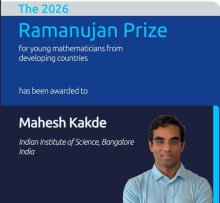
The Abdus Salam International Centre for Theoretical Physics (ICTP) and the International Mathematical Union (IMU) have awarded the 2026 Ramanujan Prize for young mathematicians from developing countries to Mahesh Kakde “for his important contributions to algebraic number theory”.
As detailed in the prize announcement, “the award recognizes his fundamental results on noncommutative Iwasawa theory, as well as his outstanding work on the Gross–Stark and Brumer–Stark conjectures, with implications for Hilbert’s 12th problem, one of the famous 23 unsolved problems listed by David Hilbert in 1900.”
Mahesh Kakde received his Bachelor of Mathematics degree from the Indian Statistical Institute in Bangalore, India, in 2004. He completed his doctoral studies at the University of Cambridge, United Kingdom, in 2008. After positions at Princeton University, University College London and King’s College London, he was appointed Professor at the Indian Institute of Science in Bangalore in 2019. Kakde was an invited speaker at ICM 2022, jointly with Samit Dasgupta.
Bernstein and Kazhdan awarded the 2026 Wolf Prize in Mathematics
The 2026 Wolf Prize in Mathematics has been awarded to Joseph Bernstein and David Kazhdan, “for foundational work on representation theory, automorphic forms and algebraic geometry, and their role in creating geometric representation theory”.
The laureates’ “groundbreaking ideas created new bridges between algebra, geometry, and analysis, and helped lay the foundations of a major field in modern mathematics—geometric representation theory. The concepts and tools they developed have become cornerstones of mathematical research and continue to play a central role in addressing deep problems across many areas, from group theory to the Langlands program.”
Joseph Bernstein received his doctorate from Moscow State University in 1972. He was a professor at Harvard from 1983 to 1993 and a visiting scholar at the Institute for Advanced Study in 1985-86 and in 1997-98. In 1993, he joined Tel Aviv University, where he became Professor Emeritus in 2014. Bernstein is a member of the Israel Academy of Sciences and Humanities and the United States National Academy of Sciences. Bernstein was awarded the Israel Prize for Mathematics in 2004. He was an Invited Speaker of the International Congress of Mathematicians in Berlin in 1998.
David Kazhdan received his doctorate from Moscow State University in 1969. He joined Harvard in 1975 and was a professor there from 1977 to 2002, when he became Professor Emeritus. He was a visiting scholar at the Institute for Advanced Study in 1976, 1986 and 1988, and a Distinguished Visiting Professor there in 1996-97. In 2002, he became Professor at the Hebrew University of Jerusalem. Kazhdan is a member of the United States National Academy of Sciences, the Israel Academy of Sciences and Humanities, the American Academy of Arts and Sciences and the Academia Europaea. Kazhdan was awarded the Israel Prize for Mathematics in 2012 and the Shaw Prize in Mathematical Sciences in 2020. He was an Invited Speaker of the International Congress of Mathematicians in Nice in 1970 and a Plenary Speaker at the (virtual) ICM 2022.
Jean-Pierre Serre Centenary
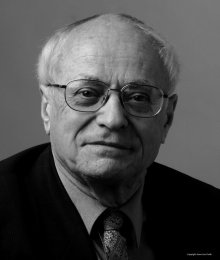
A conference in honour of Jean-Pierre Serre on the occasion of his 100th birthday took place at the Institut Henri Poincaré, Paris, 15 and 16 September 2026. The programme featured talks by Pierre Deligne, Ramon van Handel, Peter Sarnak, Maryna Viazovska, Don Zagier and Jean-Pierre Serre himself. The playlist Serre 100, with the recordings of the talks, is available on IHP’s YouTube channel (English subtitles for the talks by Deligne, Serre and Zagier are in preparation).
Readers may also be interested to learn that, to mark Serre’s centenary, EMS Magazine No. 141 featured an extensive interview with him.
The 13th Heidelberg Laureate Forum

The 13th Heidelberg Laureate Forum (HLF) took place in Heidelberg, Germany, 13 to 18 September 2026. As is well known, all winners of the Fields Medal, the Abel Prize, the ACM A.M. Turing Award, the Nevanlinna Prize/IMU Abacus Medal, and the ACM Prize in Computing are invited to attend the HLFs. In addition, young and talented computer scientists and mathematicians are invited to apply for participation. Thus, over the course of the week-long conference, young researchers are able to connect with the laureates of the most prestigious awards in mathematics and computer science.
Many events of the HLFs are streamed live and are made available on the HLF’s YouTube channel. One highlight of the 13th HLF, likely to interest most readers of this newsletter, was the panel discussion AI in Mathematical Research.
IMU Bulletin 77
IMU Bulletin No. 77, reporting on IMU activities in 2025, has been released and is now available on the IMU website. The IMU Bulletin serves as the Union’s primary annual record of its activities. Read more about the IMU Bulletins in the editorial of IMU News 134.
ICIAM 2027
The next ICIAM Congress will take place 12 to 16 July 2027 in The Hague, the Netherlands. This congress, the 11th in the ICIAM series, has the theme Mathematics for a Sustainable Future.
Visit the website of the congress and, to receive updates about ICIAM 2027, fill in the contact form.
News from the International Commission on Mathematical Instruction (ICMI)

ICMI Online Seminar Series for Capacity Building: Strengthening mathematics teacher education, by Susanne Prediger, Ram Ramanujam, Mercy Kazima, Cristina Sabena, ICMI EC Members 2025–2028
To promote capacity building and international exchange about mathematics teacher education practices, the ICMI executive committee has decided to establish an online seminar series, which started on October 12, 2026. Please spread the program to all potentially interested teacher educators.
Goal: With the new ICMI Online Seminar Series Strengthening Mathematics Teacher Education, we want to
- establish international dialogue on good content-specific practices to strengthen mathematics teacher educators for mathematics and mathematics education courses and
- hear experienced and inspiring mathematics teacher educators report on their work and offer core activities for individual adaptation in other contexts.
Challenge to be addressed: Mathematics teacher educators for pre-service and in-service mathematics teachers continuously work on improving their teacher education practices on mathematics and mathematics education, but often in isolation. While excellent mathematics teacher education approaches have been developed all over the world, they are rarely shared and discussed across countries. So far, international discourses often focus on research findings or content-independent practices. And, the discourses are still dominated by ideas from affluent countries, which work under different conditions from those in under-resourced contexts.
Yet, the highly valuable practical work with specific mathematical content (in mathematics-for-teaching courses as well as in mathematics education courses) deserves to be shared, discussed, and distributed across countries.
Target group: We cordially invite mathematics teacher educators in pre-service (and in-service) teacher education. The online format allows for wide participation even among those who are alone in their institutions or cannot travel to international conferences. We dedicate the online series mainly (but not exclusively) to teacher education in under-resourced contexts.
Structure: Each seminar in the series is structured as a two-hour online meeting, with
- 45-min input from an experienced and inspiring mathematics teacher educator,
- 45-min tryout of core activities and discussion about potential adaptations in small group work in breakout rooms with similar contexts,
- then a 30-min plenary discussion.
Material to take home: To ensure practical utility, the speakers plan to provide some material to take home: Materials for core activities will be offered from each seminar that can be adapted and used in different contexts, e.g., with slides or worksheets. The material will be collected on an internal website and with links to further internet sources.
Dates and Speakers: The seminars on teacher education on mathematics and on mathematics education can be attended separately. The first four seminars are given by the following high-profile international experts: Anjum Halai (Pakistan), Ruchi Kumar (India), Patricio Felmer (Chile) and Nicky Roberts (South Africa). For details of the series, including the schedule and registration (required for each seminar), please visit the webpage of this seminar series.
Dissemination of information and registration: Please, disseminate the information about this series to all colleagues in near and far teacher education colleges and universities.
ICMI AMOR Second Webinar, by Jean-Luc Dorier, ICMI Secretary General, on behalf of the ICMI AMOR Advisory Board
We are happy to announce that the second webinar in the series devoted to the ICMI Awardees Multimedia Online Resources project (ICMI AMOR) will take place on Wednesday, October 28, 2026.
There will be a first session at 10am UTC in English and a second session at 4pm UTC in Portuguese. Check the time in your respective countries and be aware of possible daylight saving time changes around this period.
This webinar will be devoted to:
- Ubiratan D’Ambrosio unit (Felix Klein Award 2005) made by Milton Rosa and Daniel Clark Orey and
- Terezinha Nunes unit (Hans Freudenthal Award 2017) made by herself,
with presentations of the authors of the units and also some testimonies of people who used these units in different contexts.
To be kept informed, and to receive the Zoom link for each webinar session a few days before the event, please subscribe to the ICMI Newsletter. Please note that when connecting to a webinar session you agree that the session is recorded and that the recording is posted on the ICMI Website and the ICMI AMOR YouTube Channel. You can keep your video and microphone closed during the whole session.
We remind you that a video of the first webinar including the presentations and the two sessions of open discussion is available on the ICMI AMOR Website or directly on the YouTube channel. Participants are encouraged to visit the ICMI AMOR website and/or our YouTube channel prior to the webinar.
For any questions or technical issues, please get in touch.
Launch of the 28th ICMI Study and news from ICMI Studies 26 and 27
During its last EC meeting, after a debate on all the various propositions sent to us after our call, we decided to launch a new ICMI study with the following theme: Where is the mathematics in mathematics education?
The International Program Committee of this new ICMI Study has just been appointed:
Co-chairs
- Marianna Bosch (University of Barcelona, Spain)
- Dave Wagner (University of New Brunswick, Canada)
IPC members
- Lisa Darragh (University of Auckland, New Zealand)
- Patricio Herbst (University of Michigan, USA)
- Aisling Leavy (Mary Immaculate College, Limerick, Ireland)
- Oi-Lam Ng (The Chinese University of Hong Kong)
- Mary Ochieng (Strathmore University, Kenya)
- Michal Tabach (Tel Aviv University, Israel)
- Aldo Parra (University of Cauca, Popayán, Colombia)
- Carl Winsløw (University of Copenhagen, Denmark)
Ex-Officio Members
- Merrilyn Goos (ICMI President)
- Jean-Luc Dorier (ICMI Secretary-General)
Hopefully the first IPC meeting will take place before the end of 2026 and the Discussion Document (with the call for contributions) will be published in early 2027 for a conference at the end of 2027 or early in 2028.
The ICMI Study 26 volume has just been sent to Springer for production and should be published in January 2027. ICMI Study 27 is progressing very well and we hope that the volume will appear in the second half of 2027.
News from the Commission for Developing Countries (CDC)
Following the successful CDC Special Activity held at ICM 2026 in Philadelphia on July 28, which brought together mathematicians and representatives of several institutions and organizations to discuss the challenges and opportunities involved in strengthening mathematical research in the Global South, the CDC continues its work through a wide range of programs supporting mathematicians and mathematical research in developing countries.
We are pleased to announce the results of the 2026 calls for two of these programs: the IMU Breakout Graduate Fellowship Program and the Graduate Research Assistantships in Developing Countries (GRAID) Program.
This year, four students were awarded IMU Breakout Graduate Fellowships, supporting their PhD studies in the mathematical sciences in developing countries. Through the GRAID Program, seven graduate students from six research groups were awarded funding to pursue PhD studies while contributing to the development of emerging research groups in developing countries. We warmly congratulate all the 2026 awardees and wish them every success in their studies and research.
Learn more about the 2026 awardees and their research here:
Those interested in helping the IMU CDC create similar opportunities for future graduate students can also learn more about supporting our programs here.
Current opportunities and deadlines. Several CDC-supported programs and opportunities are currently open and accepting applications:
- Conference Support Program. Next deadline: January 15, 2027, for conferences starting after May 15, 2027
- IMU-Simons Research Fellowship Program for Developing Countries. Next deadline: January 15, 2027, for research visits starting between June 1, 2027, and June 1, 2028. This is the last call for applications since this program will end after this call.
- Volunteer Lecturer Program. Next deadline: January 15, 2027, for courses to be held between May 1, 2027, and May 1, 2028
News from the Committee for Women in Mathematics (CWM)
CWM Newsletter Issue 15 – August 2026. The 15th issue of the CWM Newsletter was released in August 2026. In addition to various news items and announcements, it features a short report on the third edition of the World Meeting for Women in Mathematics, (WM)², held on 22 July 2026 in Philadelphia, USA, the day before ICM 2026. It also includes the article Formalizing Mathematics and Making Its Women Visible, by Valeria de Paiva of the Topos Institute.
The newsletter can be downloaded here, and you can subscribe to the CWM Newsletter here.
Launch of the SCGES Directory. The Standing Committee for Gender Equality in Science (SCGES) has launched a worldwide online directory to increase the visibility of initiatives aimed at advancing gender equality in the global scientific community. These initiatives operate at the local, national, regional, and international levels, both within individual disciplines and across disciplinary boundaries. The directory can be found here.
As the directory is new, it currently contains only a small number of entries. Please help us expand it by promoting the directory and submitting relevant initiatives.
Carolina Araujo and Hélène Barcelo
Chair and Vice-Chair of the IMU Committee for Women in Mathematics
Subscribing to IMU News
To subscribe to IMU News, please click here. When you subscribe, you will receive an e-mail message to confirm your subscription so that misuse will be minimized.
IMU will not use the list of IMU News emails for any purpose other than sending IMU News, and will not make it available to others.
Previous issues can be seen here.